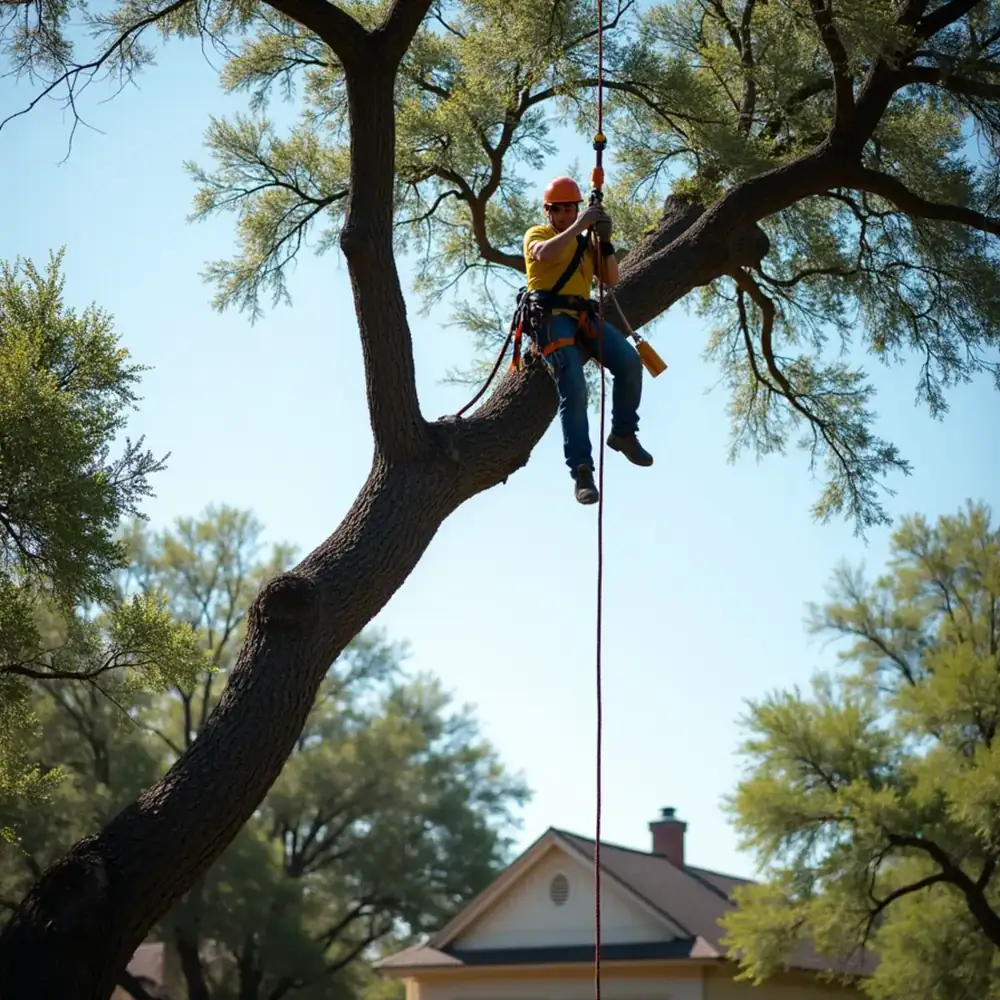
Hazardous tree and limb removal in San Antonio takes down the dead, leaning, and storm-cracked trees over your home before they fall on their own — after a free hazard check that tells you plainly whether it's a real risk.
The most dangerous trees are the ones still standing. A dead limb over the patio, a leaning trunk after a storm, a cracked fork above the driveway — these are the failures waiting to happen, and they almost always fail at the worst time. Cowboy Tree Care And Services removes hazardous trees and limbs across San Antonio before they come down on their own.
Not sure if a tree is actually dangerous? That's what our free hazard check is for. We assess the tree, tell you plainly whether it's a real risk, and lay out your options — which might be removing a few limbs, cabling a weak fork, or taking the whole tree down.
Signs You Need Hazardous Tree & Limb Removal
Dead limbs over the house
Brittle branches poised to drop on the roof, patio, or people.
Leaning tree
A trunk that's tilted, especially after a storm or wet spell.
Cracked or splitting trunk
Visible seams or a weak, included-bark fork.
Dead tree standing
A fully dead tree that will fail — the only question is when.
What Our Hazardous Tree & Limb Removal Includes
Every hazardous tree & limb removal job in San Antonio is scoped in writing, so you know exactly what you're getting. Here's what's covered:
Free hazard check
We assess the tree's structure, defects, and what's in the fall zone.
Dead & hanging limb removal
Widow-makers and dead branches over the house, patio, or drive taken out.
Cabling & bracing
Structurally weak but salvageable unions supported so a valued tree can stay.
Full hazard-tree removal
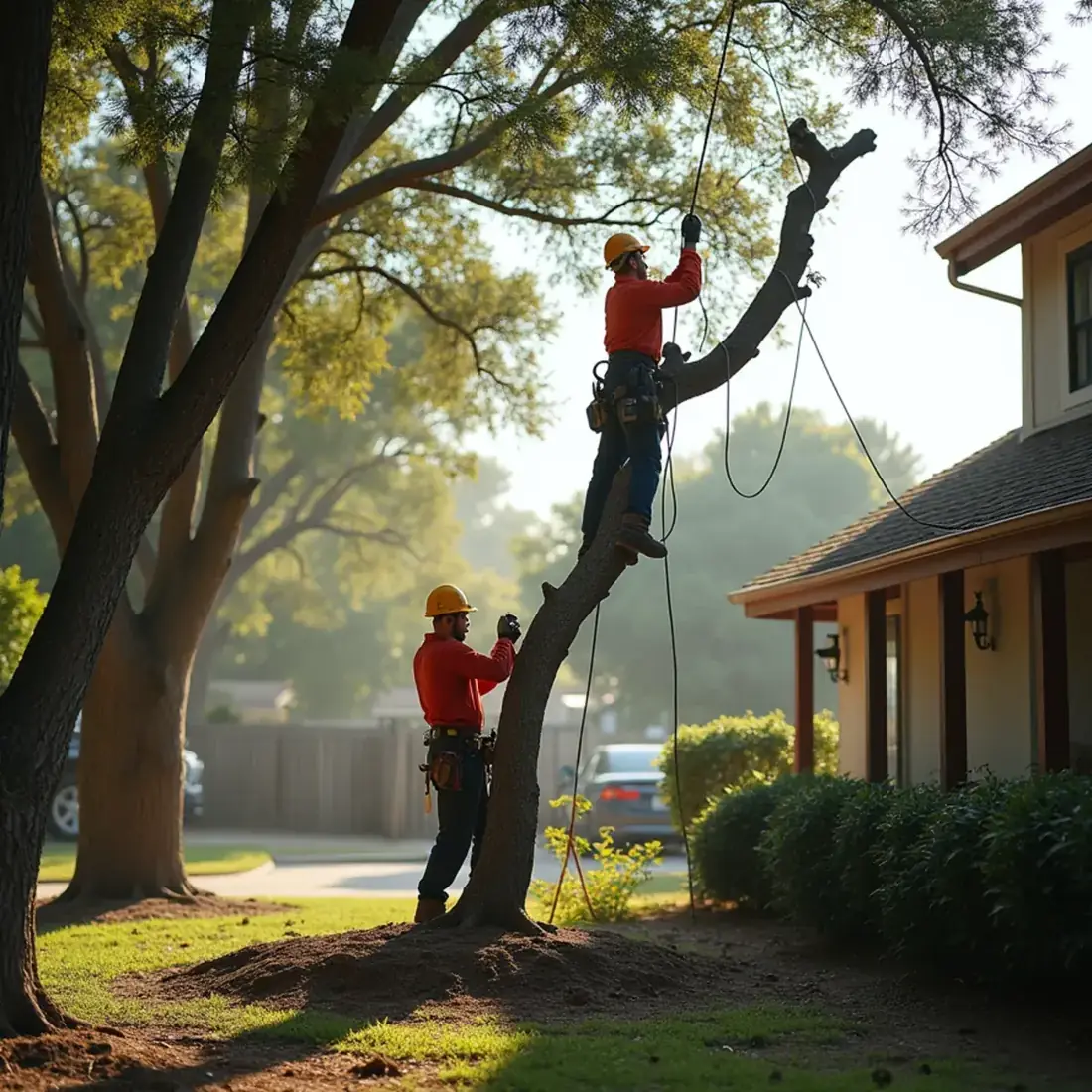
Rigging or crane work over structures when the whole tree must come down.
Property protection & cleanup
Limbs lowered, property protected, debris chipped and hauled.
Warning Signs of a Hazardous Tree
From a safe distance, these are the signs worth a professional look:
- Dead or hanging limbs: Bare branches or 'widow-makers' hung up in the canopy.
- New or worsening lean: A tree that shifted after wind, rain, or root damage.
- Trunk cracks & cavities: Vertical splits, seams, or open cavities and decay.
- Lifted roots or soil: Heaving ground on one side — a sign the root plate is failing.
- Fungal conks: Mushrooms or shelf fungus at the base, pointing to internal rot.
Removal, or Something Less
A hazard doesn't always mean the whole tree. Often the fix is removing specific dead or overextended limbs, or cabling and bracing a structurally weak union so a valued tree can stay. We'll recommend the least-invasive option that actually makes the tree safe — and only remove the whole tree when that's genuinely the right call. Larger removals over structures may involve rigging or a crane, and protected trees may need permit documentation.
Our Hazardous Tree & Limb Removal Process
- 1
Free hazard check
We assess the tree's structure, defects, and what's in the fall zone.
- 2
Honest recommendation
Limb removal, cabling, or full removal — the least you need to be safe.
- 3
Controlled removal
Rigging or crane work over structures, with property protection.
- 4
Cleanup
Debris chipped and hauled, site left clean.
Ready for Hazardous Tree & Limb Removal in San Antonio?
Call for a free, written estimate — same-day and emergency service available across San Antonio, Bexar County & the Texas Hill Country.
What Affects the Price
We don't post one-size-fits-all prices, because no two trees are the same. Every job is quoted in writing after we see it. These are the factors that move the number up or down:
- Whether it's limb work, cabling, or full removal
- Tree size and defect severity
- Proximity to structures and lines (rigging/crane)
- Access and haul-away
- Permits for protected trees
Why San Antonio Chooses Us for Hazardous Tree & Limb Removal
Least-invasive first
Often the fix is a few limbs or a cable, not the whole tree — we recommend the minimum that makes it safe.
Honest hazard read
The free check tells you if a tree is genuinely dangerous or just looks alarming.
Standards-based
ANSI Z133 and OSHA practices for cutting near structures and lines.
Permit-aware
Protected trees documented for the city process where required.
Hazardous Tree & Limb Removal Across San Antonio & Beyond
We handle hazard trees across Bexar County — oversized oaks on small mid-century lots in Castle Hills, storm-cracked cedar elms in Kirby, and dead limbs over homes everywhere in between. Trees over a structure are our most common hazard call.
Don't see your area? We serve 68 communities across Bexar County and the Hill Country.