
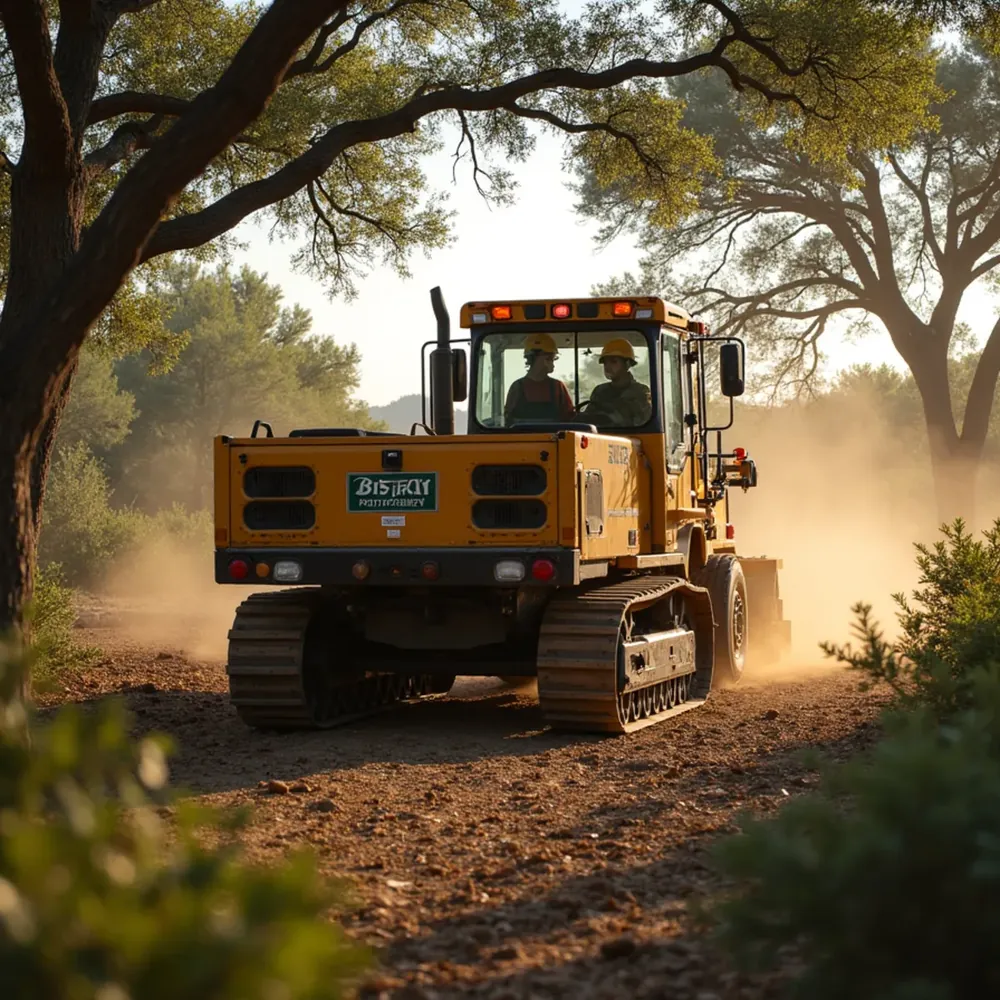
Forestry mulching in San Antonio and the Hill Country grinds cedar, brush, and small trees into mulch where they stand with one machine, clearing land selectively without burn piles, hauling, or stripping the soil.
Forestry mulching clears overgrown land with a single machine: a skid steer or tracked carrier fitted with a mulching head that grinds standing cedar, brush, and small trees into chips and spreads them across the ground in one pass. There's no piling, no hauling, and no burn pile to babysit through a Texas burn ban.
It's the method we reach for on Hill Country acreage around San Antonio, where the goal is usually to open up a cedar-choked property, cut fire fuel, or create trails and sightlines while keeping the live oaks and the soil in place. When a project needs a bare building pad or stump-free ground, our broader land and lot clearing service is the better fit, and we'll tell you which one your property calls for.
Forestry Mulching is a specialty part of our land & lot clearing service in San Antonio — same crew, same written estimates, same cleanup standard.
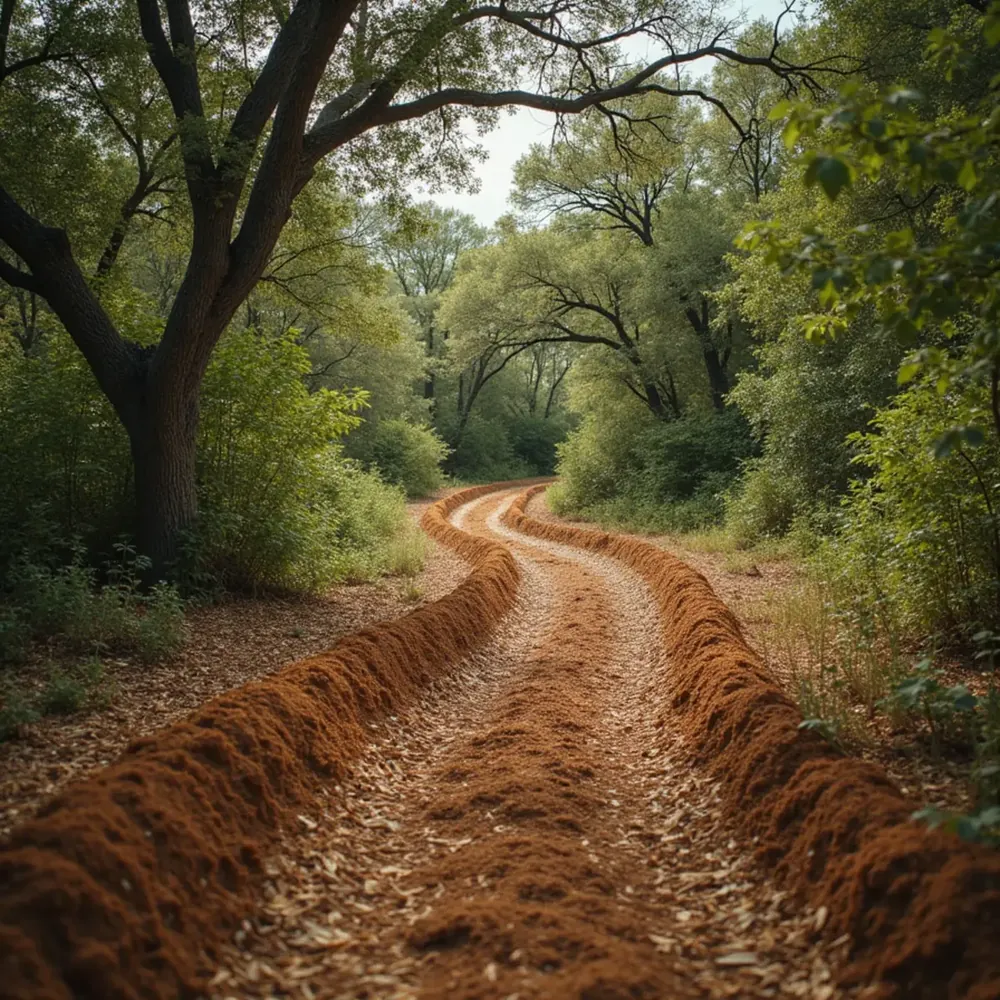
Signs You Need Forestry Mulching
Cedar crowding out oaks
Juniper filling the understory and competing with live oaks for water.
Overgrown acreage
Brush so thick you can't walk the property or find the fence line.
Wildfire fuel near the house
Cedar and brush within striking distance of structures.
Burning isn't an option
Burn bans, neighbors, or HOA rules that rule out burn piles.
What Our Forestry Mulching Includes
Every forestry mulching job in San Antonio is scoped in writing, so you know exactly what you're getting. Here's what's covered:
Property walk and tree marking
Keeper oaks, fence lines, and features flagged before the machine starts.
Selective mulching
Cedar, brush, and saplings ground in place around the trees you keep.
Mulch left as ground cover
Chips spread across the cleared area to hold soil and moisture.
Trail and fence-line cutting
Clean access paths, survey lines, and fence corridors.
Oak-wilt precautions
Oak areas scheduled outside the high-risk season, with any wounds painted.
Resprout notes
A list of brush species likely to come back and how to handle them.
What Forestry Mulching Is Good For
Forestry mulching does one thing very well: it removes vegetation selectively and leaves the ground covered. That makes it a natural match for most clearing work on properties outside the city:
- Cedar (Ashe juniper) thinning: Removing dense cedar to open pasture, restore views, and let oaks and native grasses recover.
- Understory clearing: Grinding yaupon, mesquite, huisache, and brushy regrowth beneath a canopy of trees you want to keep.
- Fire-fuel reduction: Creating defensible space and fuel breaks around homes on wooded acreage.
- Trails, fence lines & survey lines: Cutting clean, mulched paths for access, fencing, or a surveyor.
- Pre-construction brush clearing: Opening a lot ahead of excavation so the builder can see the land and the trees worth saving.
Why Landowners Choose Mulching Over Push-and-Burn
The traditional way to clear cedar is to push it over with a dozer, stack it, and burn the piles. That still has a place on big ranch projects, but it disturbs the topsoil, leaves bare ground that washes in the first heavy rain, and depends on burn conditions that can stall a job for weeks during a burn ban.
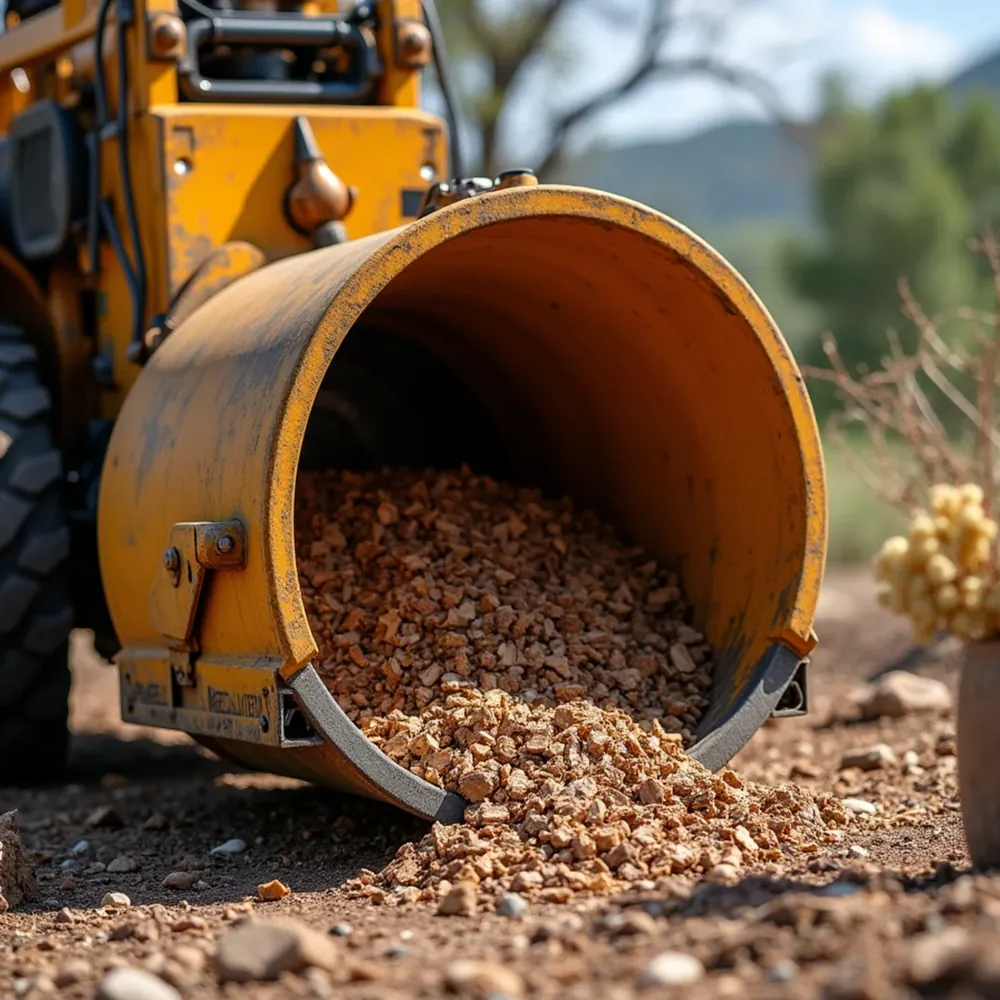
Mulching leaves the roots of the plants you keep and the thin Hill Country soil where they are. The chip layer slows runoff, holds moisture, and breaks down over time. And because the operator works around the trees you mark, it's far more selective than a dozer — a live-oak motte can stay untouched while the cedar crowding it disappears.
Limits and Trade-Offs to Know
Mulching isn't the answer for every project, and the drawbacks are worth knowing before you hire anyone:
- Stumps stay: Stumps are ground to or near ground level, but roots remain — fine for pasture and trails, not for a foundation pad.
- Resprouting brush: Cedar won't come back from a low cut, but mesquite, huisache, and some other brush resprout and need follow-up.
- Mulch depth: Dense cedar can leave a thick chip layer that takes time to break down and can smother grass for a season.
- Rocky ground: Exposed limestone wears teeth and slows the machine, which shows up in the per-acre cost on rocky slopes.
Protecting Oaks — and Avoiding Fire — During Mulching
On oak-wilt country properties, a mulching head can scrape bark and wound oak roots as easily as it grinds cedar. We mark keeper trees before work starts, keep the machine off their trunks and root flares, and schedule work in oak-heavy areas outside the February–June period when the beetles that spread oak wilt are most active. Any accidental oak wound is painted immediately.
We also watch the weather. Mulching teeth can strike rock and throw sparks, so on dry, windy days we follow burn-ban and red-flag conditions and keep water on hand. Fire safety is one of the main reasons people clear brush; the work itself shouldn't start one.
How Mulching Is Priced
Forestry mulching is usually priced by the acre or by machine time. Published figures from San Antonio-area land-clearing companies give a sense of scale: one lists typical land clearing at about $2,500–$6,000 per acre, and another puts skid-steer mulcher work at around $3,000 per day. Where your project lands depends on vegetation density, trunk sizes, terrain, rock, and how selective the clearing needs to be. We walk the property and quote it in writing.
Our Forestry Mulching Process
- 1
Property walk & marking
We walk the land with you and flag the oaks and features to keep.
- 2
Written per-acre or day-rate quote
Scope, access, and any follow-up work spelled out before the machine arrives.
- 3
Selective mulching
Cedar and brush ground in place around marked trees, with oak-wilt precautions.
- 4
Final walk & follow-up plan
We review the result with you and note any resprouting species to watch.

Clear the Cedar, Keep the Oaks — Free Acreage Walk
We'll walk your land, mark the trees worth keeping, and quote mulching by the acre or by machine time — with oak-wilt timing built into the schedule.
- Selective, one-pass clearing
- Mulch left to protect the soil
- No burn piles, no hauling
What Affects the Price
We don't post one-size-fits-all prices, because no two trees are the same. Every job is quoted in writing after we see it. These are the factors that move the number up or down:
- Acreage and how dense the cedar and brush are
- Trunk diameters of the material being mulched
- Slope, rock outcrops, and access for the machine
- Selective clearing around keeper trees vs. full clearing
- Transport and setup for the equipment
- Follow-up treatment of resprouting brush
Why San Antonio Chooses Us for Forestry Mulching
Selective by default
We clear around the trees that make your land worth owning, not through them.
Honest method choice
If your project needs stump removal or a bare pad, we recommend full clearing instead.
Oak-wilt aware
Equipment and timing are managed around the oaks, the disease, and the season.
Clear per-acre pricing
You get a written scope based on what's actually on the ground.
Forestry Mulching Across San Antonio & Beyond
Most of our mulching work is on acreage north and west of San Antonio — Helotes, Fair Oaks Ranch, Boerne, Bulverde, Bandera, and Pipe Creek — where cedar has filled in old pasture. We also mulch overgrown lots in Timberwood Park, Cross Mountain, and the far west side of Bexar County.
Don't see your area? We serve 68 communities across Bexar County and the Hill Country.