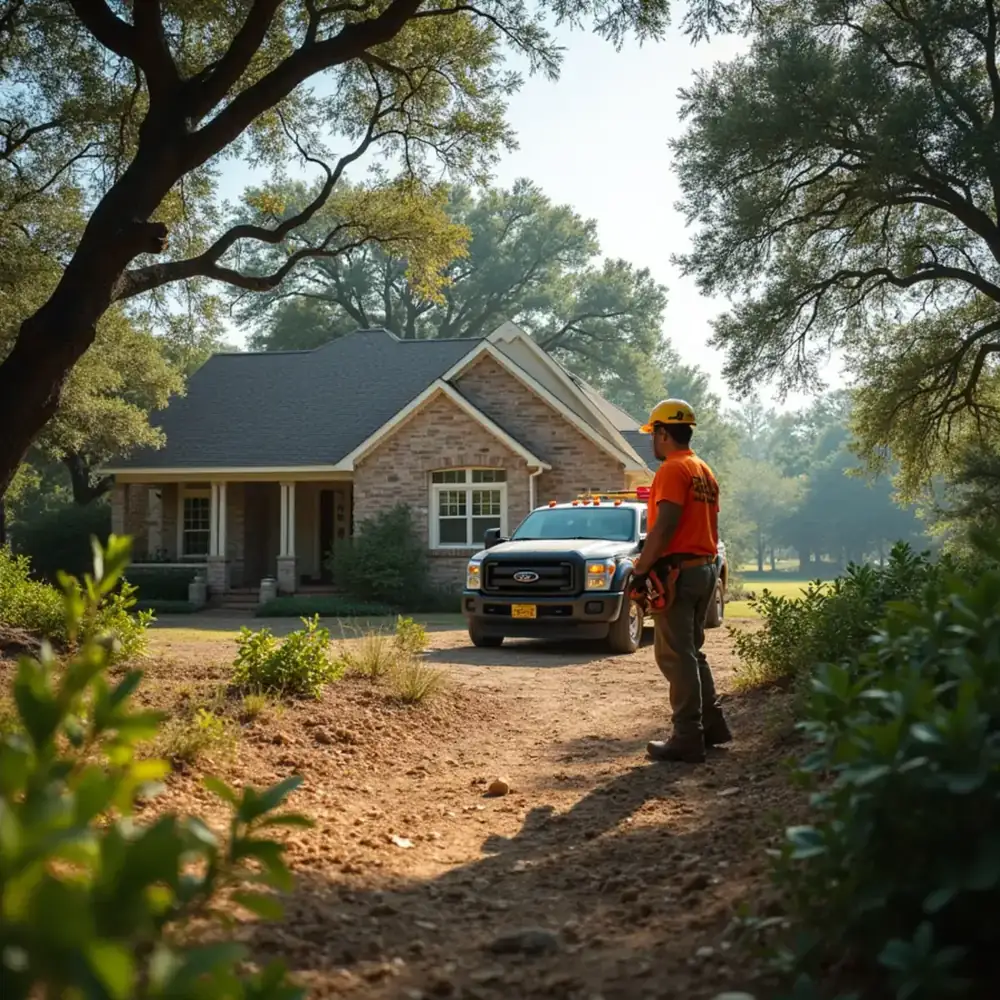
If you own acreage in the Hill Country, wildfire isn't a distant worry — it's a live risk, and dense Ashe juniper (cedar) is the fuel. Creating defensible space around your home is one of the highest-value projects you can undertake, and it doesn't mean stripping your land bare. Here's a practical, zone-by-zone checklist.
Key Takeaways
- Zone 1 (0–30 ft): remove cedar entirely, space trees, limb up, clear the roof and gutters.
- Zone 2 (30–100 ft): thin dense cedar and break up continuous fuel; keep well-spaced oaks.
- Zone 3 (100+ ft): thin overgrowth and remove dead, downed wood.
- Clear near oaks in the safe season and paint any oak wounds.
Why Cedar Is the Problem
Ashe juniper is loaded with volatile oils and burns hot and fast. A dense cedar stand next to a house is a ladder for fire to climb right up to the structure. Thinning and clearing cedar strategically around your home is the single most effective step you can take, which is why defensible space work in cedar country is really cedar-management work.
Zone 1: 0–30 Feet from the House
This immediate zone is the most critical. The goal is lean, clean, and green:
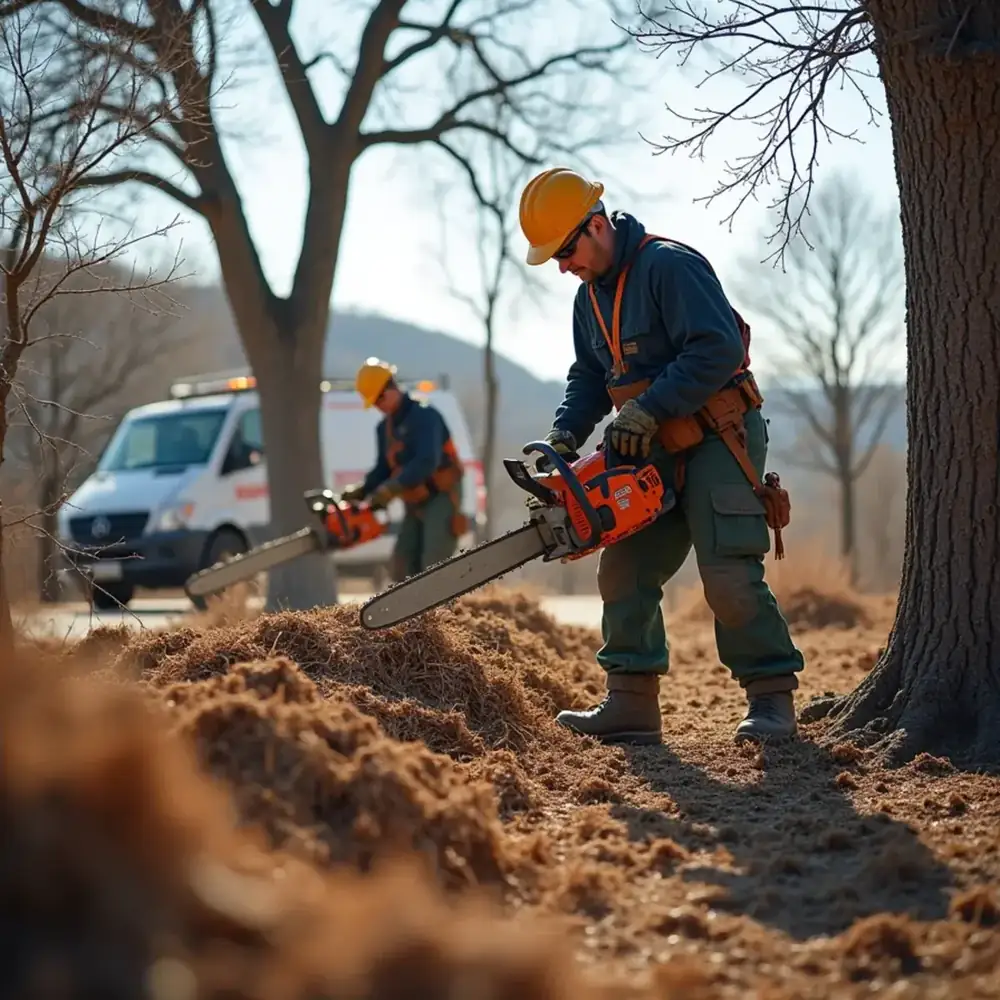
- Remove cedar entirely: Clear Ashe juniper and other flammable brush from this zone.
- Space out remaining trees: Keep tree canopies separated, not touching the house or each other.
- Limb up: Remove low branches so ground fire can't climb into canopies.
- Clear the roof and gutters: No overhanging limbs, and keep gutters free of needles and leaves.
Zone 2: 30–100 Feet
In this zone you're thinning, not clearing. Break up the continuous fuel: thin dense cedar, create gaps between tree groups, and remove dead material and ground litter. The aim is to slow a fire and reduce its intensity before it reaches Zone 1. This is where preserving your oaks pays off — well-spaced, healthy hardwoods are far less flammable than a solid cedar thicket.
Zone 3: 100+ Feet
The outer zone is about general forest health: thin overgrown areas, remove dead and downed wood, and maintain some spacing. You don't need to clear it, just keep it from being a wall of continuous fuel. On larger estates in places like Shavano Park, this outer-zone thinning also improves the health of the oaks and the look of the property.
Protect the Oaks While You Clear
Defensible space and healthy oaks go together — but clearing near oaks has to respect oak-wilt rules. Do cedar clearing in the safe season (fall through winter), keep equipment off oak root zones, and if any oak must be cut, paint the wound immediately. In oak-wilt-prone areas like Helotes, careless clearing can trade a fire risk for a disease outbreak, so timing and technique matter.
Make It a Maintenance Habit
Defensible space isn't one-and-done. Cedar regrows, brush returns, and dead material accumulates. A clearing project followed by periodic maintenance keeps your protection intact. Scheduling the initial work in fall or winter gets you into the ideal window and ahead of the dry, high-risk season.
Related Services & Areas
Frequently Asked
Can I prune a live oak between February 1 and July 1?
How much does tree service cost in San Antonio?
How far does Cowboy Tree Care serve?
The Bottom Line
Work outward in zones, break the fuel ladder, keep your best oaks, and maintain it. Defensible space is the highest-value project on Hill Country acreage — and it doesn't have to look bare.
Need Help With Your Trees?
Get a free, no-pressure written estimate from a local, fully insured crew. Same-day and 24/7 emergency service available across San Antonio, Bexar County & the Texas Hill Country.