Ball moss removal in San Antonio combines hand-cleaning of the gray air-plant clumps with deadwood pruning and light thinning, so the shaded, cluttered canopy that lets ball moss build up is corrected, not just sprayed.
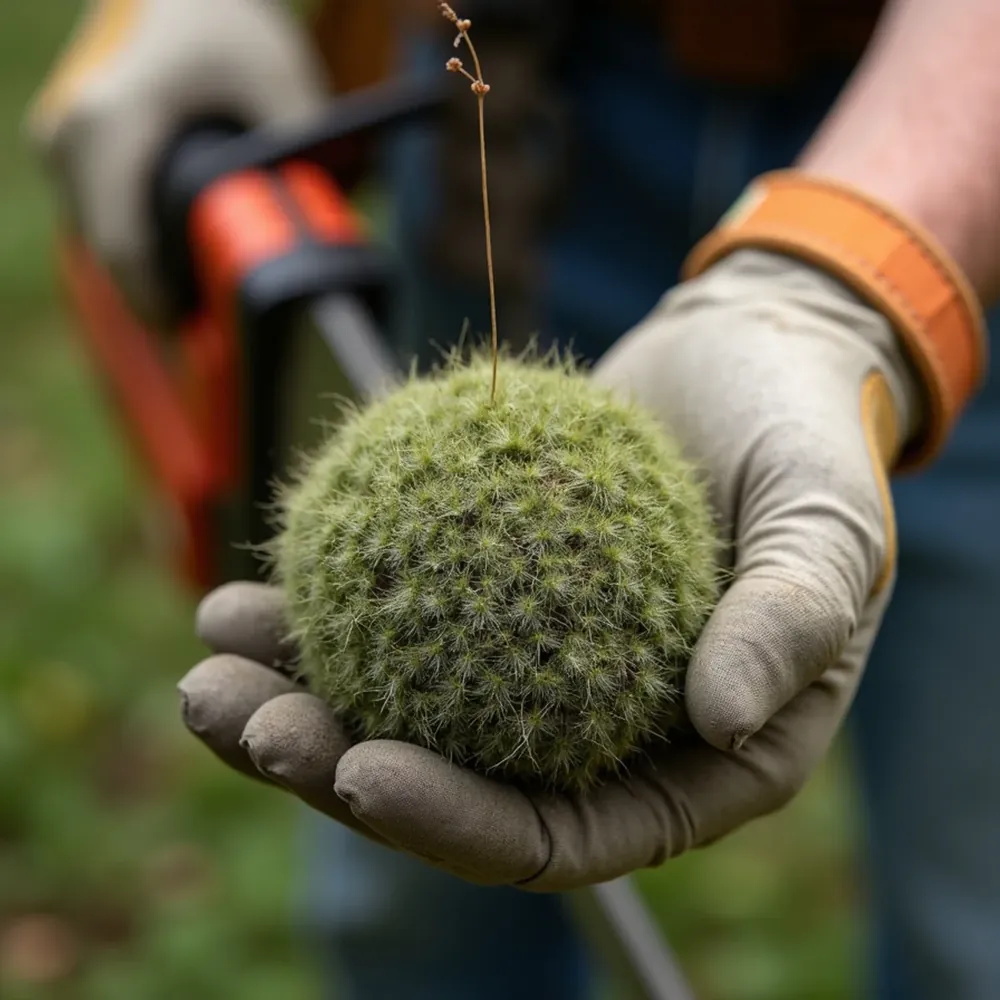
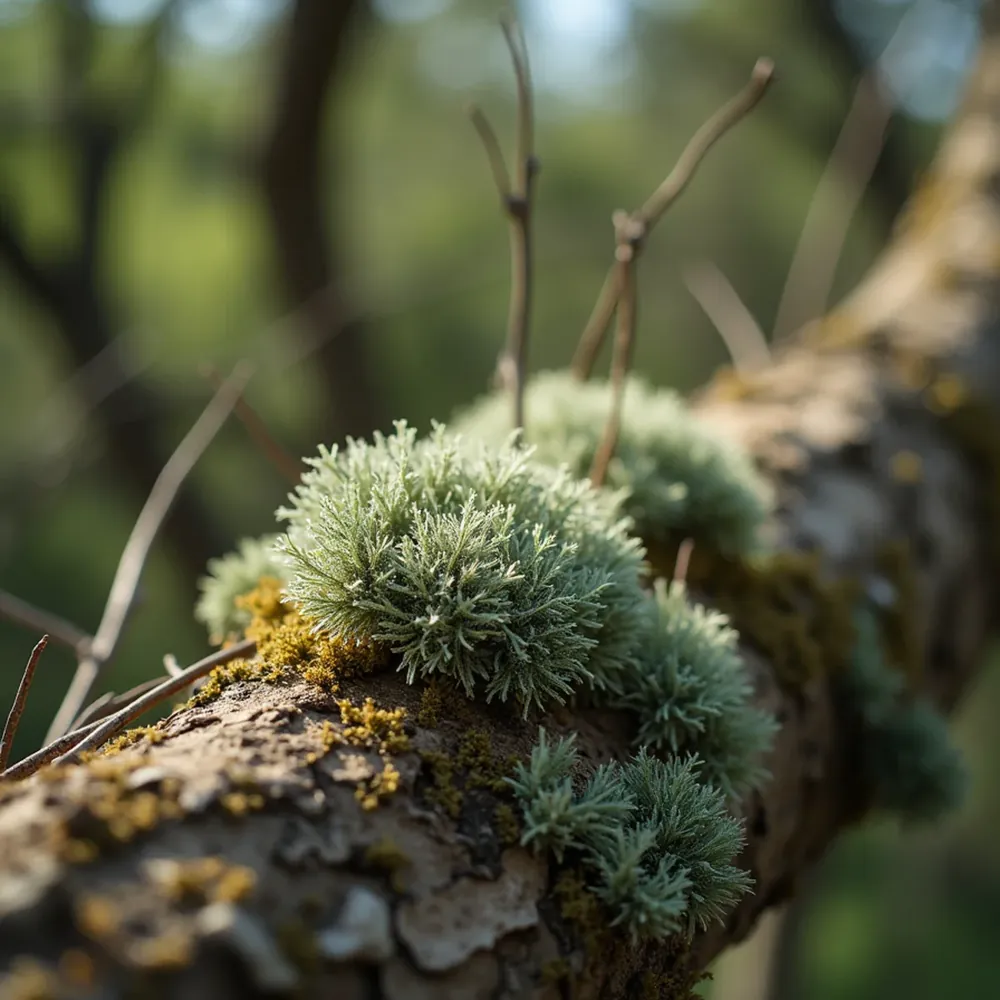
Ball moss is the gray-green tuft clinging to the inner branches of live oaks, cedar elms, and hackberries across San Antonio. It isn't a true moss and it isn't a parasite — it's a small air plant related to Spanish moss that takes water and nutrients from the air. When it builds up thick on the shaded interior of a tree, though, it usually points to the same conditions: too little light, a lot of dead twigs, and a canopy that's overdue for a cleanout.
Our ball moss removal pairs hand-cleaning with the pruning that fixes those conditions. We pull the clumps, remove the dead and dying interior limbs where it collects, and thin the canopy enough to open it to light and air — following the oak-wilt calendar on every live oak we work in.
Ball Moss Removal is a specialty part of our tree trimming & pruning service in San Antonio — same crew, same written estimates, same cleanup standard.
Signs You Need Ball Moss Removal
Gray clumps on inner limbs
Thick ball moss along the shaded interior branches.
Lots of dead twigs
Brittle interior twigs and small limbs throughout the canopy.
Dense, dark canopy
A tree that hasn't been thinned in years.
Moss spreading tree to tree
Neighboring trees loading up, with new clumps appearing every year.
What Our Ball Moss Removal Includes
Every ball moss removal job in San Antonio is scoped in writing, so you know exactly what you're getting. Here's what's covered:
Hand removal of clumps
Ball moss pulled from interior limbs and branch unions.
Interior deadwood pruning
Dead, shaded twigs and small limbs cut out at proper collars.
Selective thinning
Light opened to the inner canopy without stripping the interior bare.
Oak-wilt wound care
Every oak cut painted; oak cleanouts scheduled July through January.
Full cleanup
Moss and branches raked up, chipped, and hauled away.
Maintenance recommendation
A practical schedule for keeping the canopy open.
Is Ball Moss Hurting My Tree?
Usually not directly. Ball moss anchors itself with small root-like holdfasts but doesn't draw sap from the tree. It thrives where light is low and air moves slowly, which describes the inside of a dense, unpruned oak canopy — the same place where small branches die naturally from shade.
That's why people see heavy ball moss on dead twigs and assume the moss killed them. More often the twig was already declining and the moss found good habitat. The real concerns are practical: a heavy load adds weight and shade, hides deadwood that should come out, and makes a tree look worse than it is. On a tree that's already struggling, a thick ball moss load is a good reason to have the whole tree looked at.
How We Remove Ball Moss
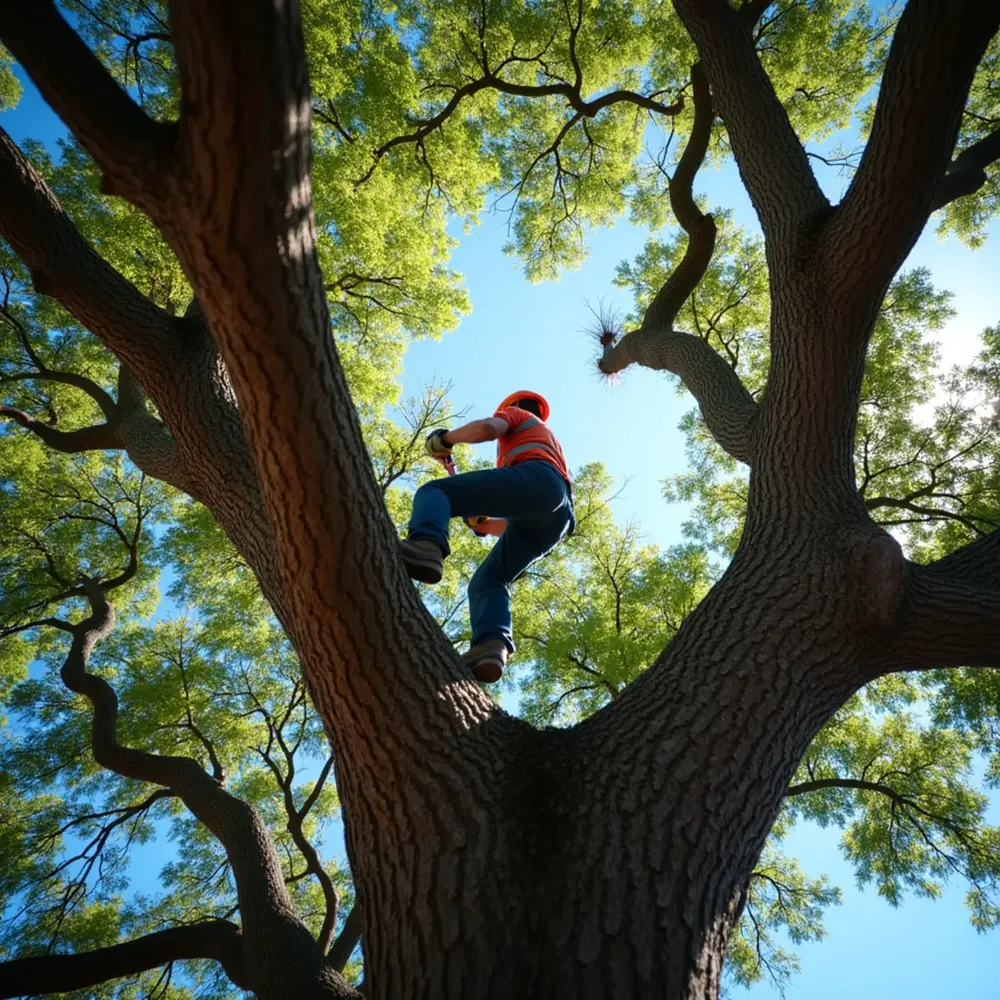
We treat ball moss as a canopy problem, not a spraying problem:
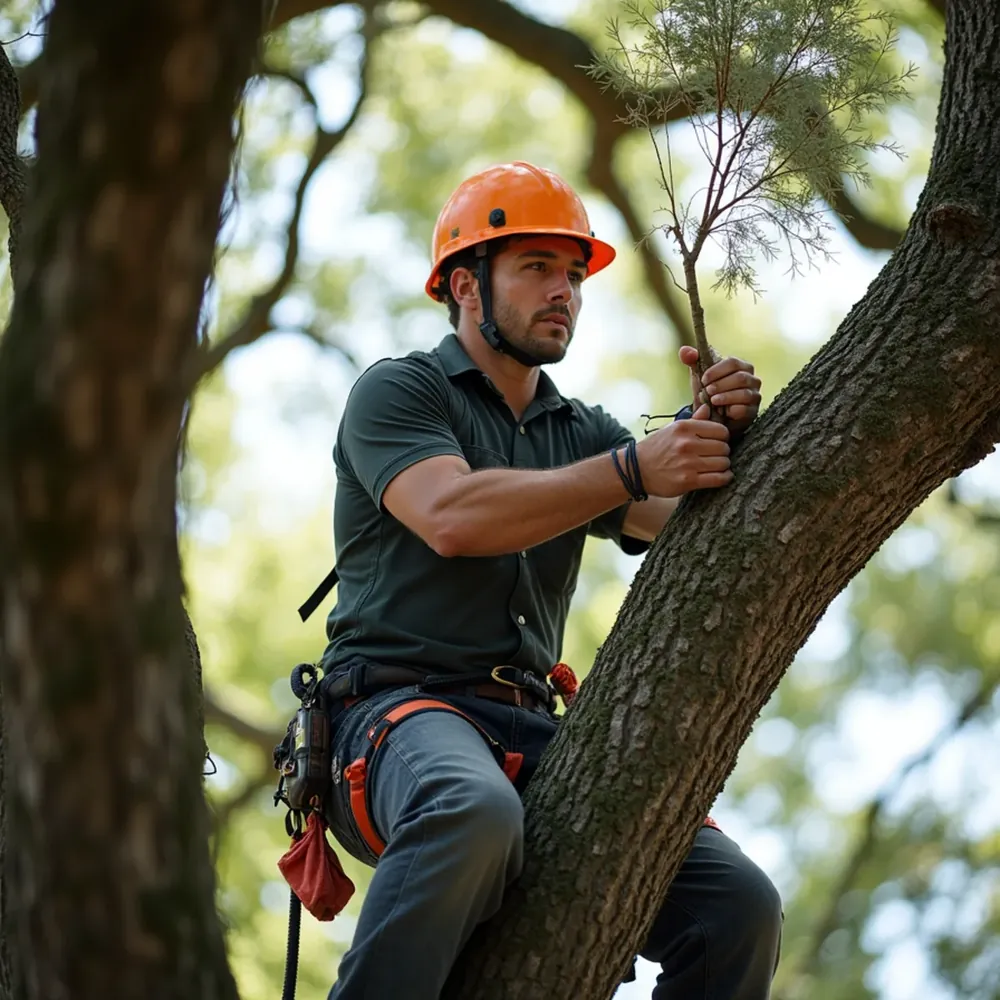
- Hand-cleaning: Climbers pull clumps from interior limbs and branch unions where they can be reached.
- Deadwood pruning: Dead and dying shaded twigs, where most ball moss collects, are cut out at proper branch collars.
- Light crown thinning: Selective interior thinning lets sunlight and wind reach the inside of the tree again.
- Cleanup: All moss and pruned material is gathered, chipped, and hauled away.
What About Spraying?
Some property owners and companies spray ball moss with labeled products. A spray can kill the plant, but the dead clumps often hang on for months, the spray does nothing about the dead wood underneath, and getting good coverage inside a large oak is difficult. If you ask about spraying, we'll explain the trade-offs, and if a treatment makes sense for your tree, we use only products labeled for that use, applied as the label directs.
For most San Antonio yards, physical removal combined with good pruning gives a cleaner result that lasts longer, because it changes the shaded, cluttered conditions that let ball moss build up in the first place.
Timing Around Oak Wilt
Pulling ball moss by hand doesn't wound a tree, but the deadwood pruning that goes with it does — and on live oaks and red oaks, fresh cuts between February 1 and July 1 can attract the beetles that spread oak wilt. We schedule full ball moss cleanouts on oaks for July through January and paint every oak cut immediately, whatever the date. Cedar elms, hackberries, and other non-oak species can be cleaned out any time of year.
Keeping Ball Moss From Building Back Up
Ball moss spreads by tiny wind-blown seeds, so some will return, especially if neighboring trees are loaded. The goal is a canopy open enough that it never builds up heavily again. For most mature oaks that means maintenance pruning every few years — the same visit that keeps deadwood out of the tree and limbs off your roof.
Our Ball Moss Removal Process
- 1
Canopy inspection
We check how heavy the moss is and how much deadwood is underneath it.
- 2
Written cleanout plan
Moss removal, deadwood pruning, and thinning described and priced.
- 3
Hand-cleaning & pruning
Clumps pulled and dead interior wood cut out to ANSI A300 standards.
- 4
Cleanup & maintenance advice
Debris hauled away and a realistic schedule for future maintenance.
Clean Out the Ball Moss — and the Deadwood Under It
We hand-clean the clumps, prune out the shaded twigs they grow on, and open the canopy to light — scheduled in the oak-safe months.
- Hand removal plus deadwood pruning
- No lion-tailing
- Oak cleanouts July through January
What Affects the Price
We don't post one-size-fits-all prices, because no two trees are the same. Every job is quoted in writing after we see it. These are the factors that move the number up or down:
- Number and size of trees
- How heavy the ball moss load is
- Amount of deadwood and thinning needed
- Climbing access and nearby structures
- Oak-wilt timing for live oaks and red oaks
- Debris volume to haul away
Why San Antonio Chooses Us for Ball Moss Removal
We fix the cause
Pruning out the shade and deadwood is what keeps ball moss from piling back up.
No lion-tailing
We thin evenly instead of stripping the interior, which weakens limbs.
Oak-safe calendar
Live-oak work is booked in the lower-risk months, with every wound sealed.
Straight talk on sprays
If spraying isn't worth it for your tree, we'll tell you why.
Ball Moss Removal Across San Antonio & Beyond
Ball moss shows up wherever old live oaks and cedar elms shade the yard — Alamo Heights, Olmos Park, Windcrest, Castle Hills, Leon Valley, and the established neighborhoods inside Loop 410 — and on Hill Country oaks in Helotes, Boerne, and Fair Oaks Ranch.
Don't see your area? We serve 68 communities across Bexar County and the Hill Country.