
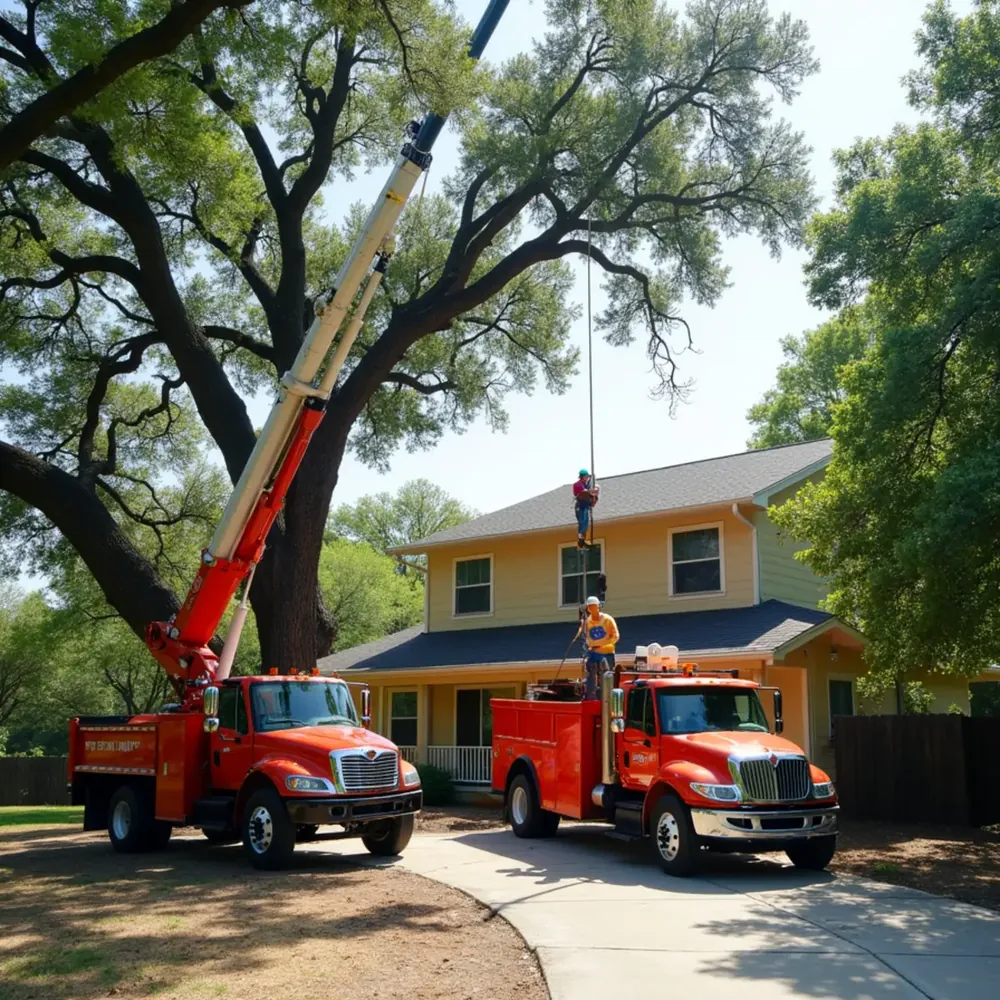
Crane tree removal in San Antonio is how we take down large or dangerous trees that hang over homes, pools, and tight backyards: each section is rigged to a crane and lifted out instead of being lowered or dropped next to the house.
Some trees can't be climbed and lowered safely. A dead pecan leaning over a two-story roof, a live oak wedged between a pool and a fence, a storm-split elm hanging over the neighbor's garage — for these, a crane turns a risky multi-day climb into a controlled lift. A climber or bucket operator rigs each section to the crane hook, makes the cut, and the operator swings the piece over the house to the ground crew in the driveway or street.
Crane work is the specialized end of our tree removal service in San Antonio, and it's also where quotes vary the most. We visit the site first, check where a crane can set up and how far it has to reach, and give you a written price that lists the crane, operator, rigging, permits, and cleanup separately.
Crane Tree Removal is a specialty part of our tree removal service in San Antonio — same crew, same written estimates, same cleanup standard.
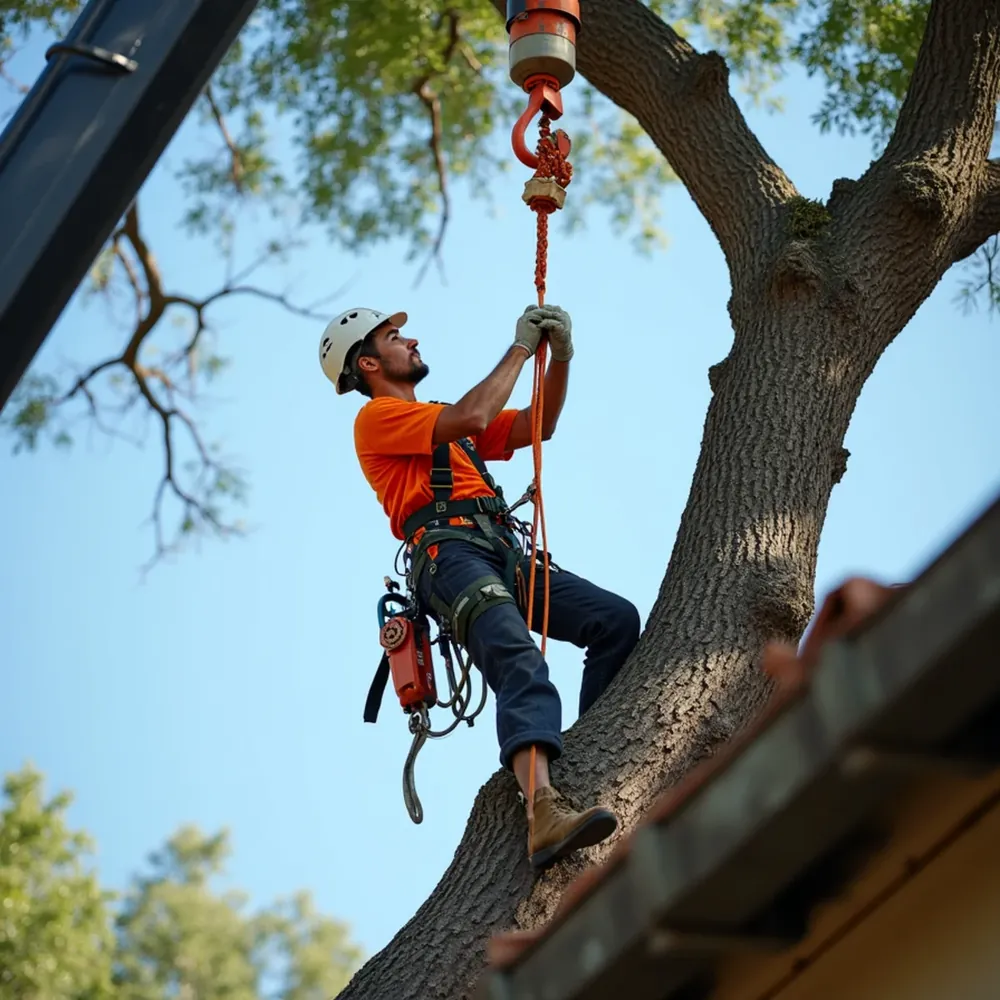
Signs You Need Crane Tree Removal
Large tree over the house
Heavy limbs or a whole canopy hanging over the roof, pool, or garage.
Too dead to climb
Brittle, hollow, or fungus-riddled wood that isn't safe to tie into.
Backyard with no access
Fenced lots where everything has to come out over the house.
Storm-damaged and loaded
A tree resting on a roof or hung up in another tree.
What Our Crane Tree Removal Includes
Every crane tree removal job in San Antonio is scoped in writing, so you know exactly what you're getting. Here's what's covered:
Site and reach assessment
Setup location, crane reach, ground conditions, and overhead lines checked before we quote.
Crane and operator
A crane sized to the heaviest pick and the distance from the setup spot to the tree.
Climber or bucket rigging
Slings set on each section before the cut so the crane holds the weight.
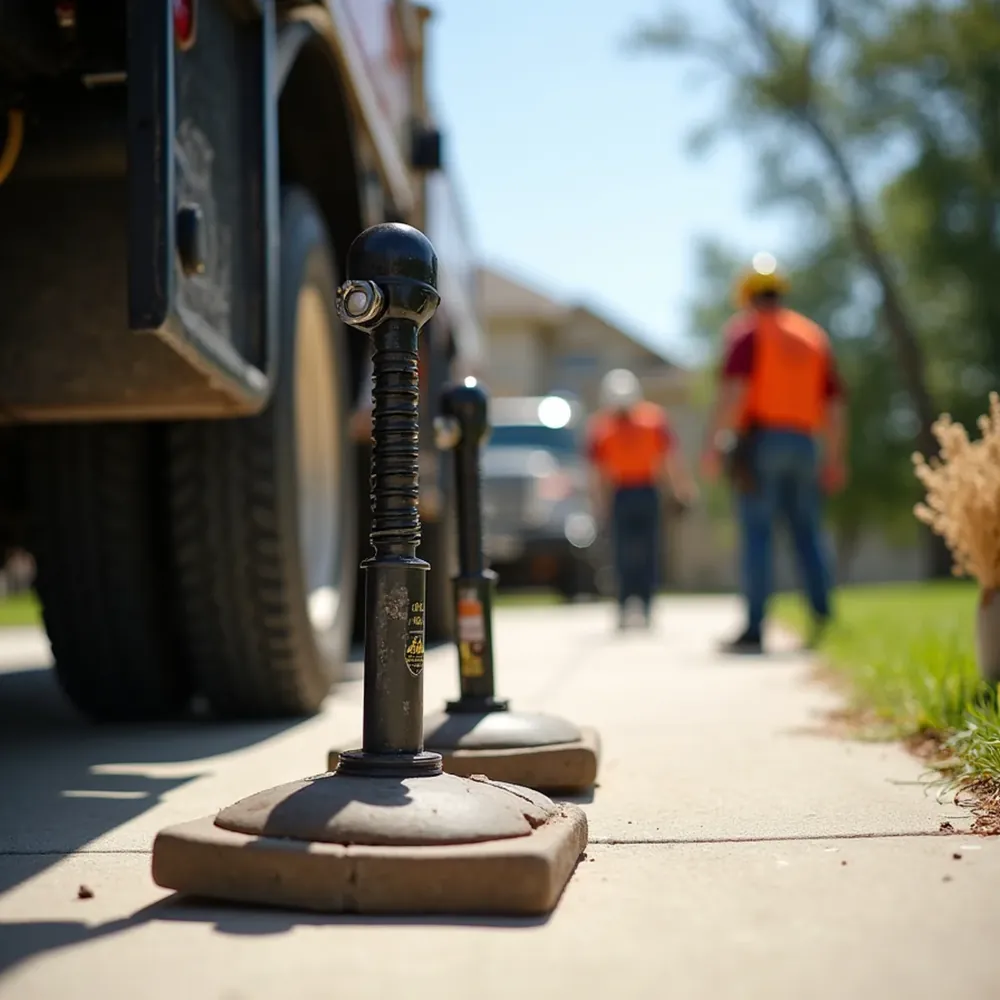
Outrigger pads and site protection
Cribbing under the outriggers and protection for driveways, walks, and beds.
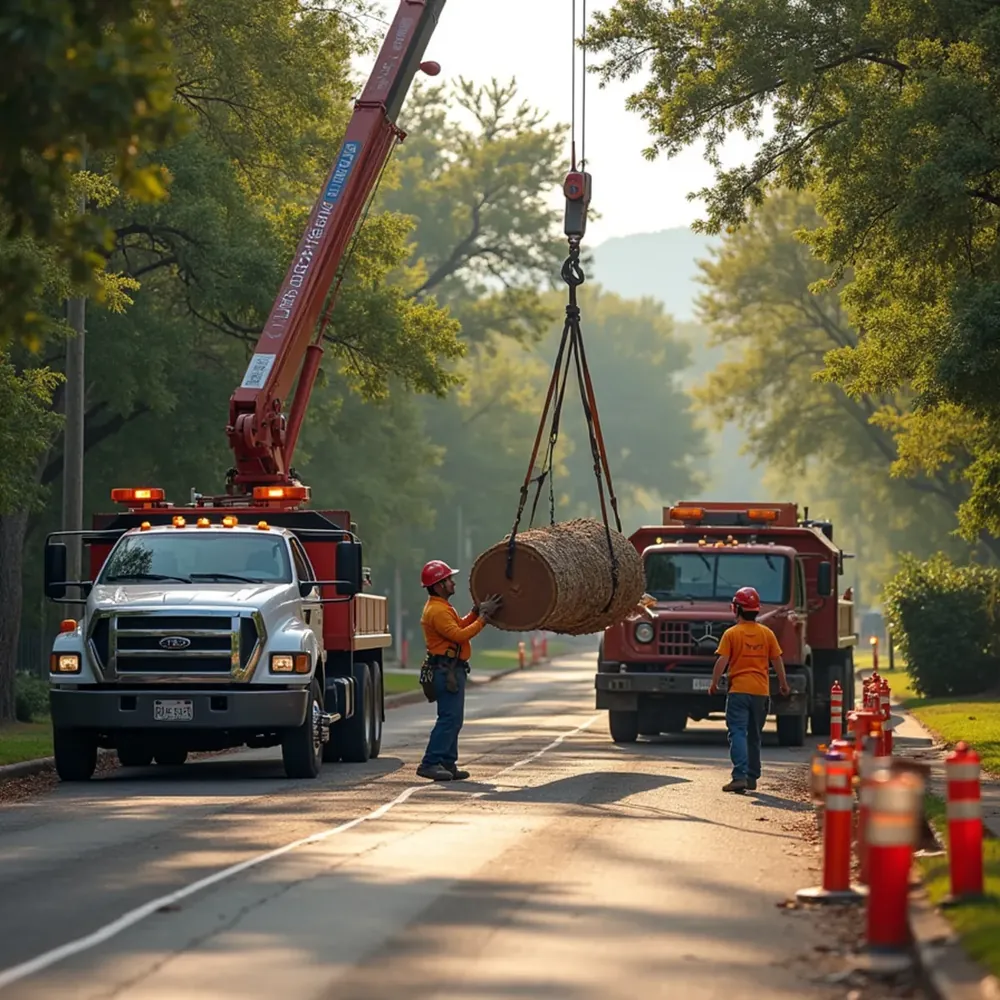
Traffic control when needed
Cones and a flagger for street setups, plus right-of-way permits where required.
Chipping and haul-away
Brush chipped and wood hauled the same day, or cut to firewood length if you want it.
When a Crane Is the Right Call
Most removals in San Antonio don't need a crane. We recommend one only when it makes the job safer, faster, or less damaging than the alternatives:
- Tree over a structure: Large limbs or a whole canopy over a roof, pool, or outbuilding, where even lowered pieces would swing into something.
- Dead or decayed wood: Trees too brittle or hollow to climb or tie rigging into — common with drought-killed oaks and hypoxylon-infected trees.
- No room to lower: Backyards fenced in on every side with no clear drop zone, where every piece has to come out over the house.
- Storm-loaded trees: A tree resting on a roof or another tree, holding tension that's safer released on a crane line than with a saw cut from below.
- Very large trunks: Trunk sections too heavy for ropes and lowering devices, especially big pecans and mature live oaks.
How a Crane Removal Works
Setup decides everything. We look for a spot within reach of the tree where the crane's outriggers can sit on firm ground — usually the driveway or the street in front of the house. On a residential street that can mean cones and a flagger, and some streets require a right-of-way permit; we tell you up front if yours does.
Once the crane is set, a climber ties in and attaches slings to the first section. The operator takes the weight before the cut is made, so the piece never drops — it's lifted clear and swung to the ground crew, who buck it up and feed the brush into the chipper. The tree comes down top to bottom in controlled picks until the trunk is left, and the last pieces are lifted out or lowered.
Because the crane carries the weight, nobody is hanging heavy rigging off a compromised tree. That's the real advantage: fewer people in the tree for less time, and nothing swinging toward the roof.
What Crane Removal Costs in San Antonio
Published local ranges for crane-assisted removal run roughly $4,000 to $18,000, compared with about $3,500 to $12,000 for large mature-tree removal without one. Most of that spread comes from crane size and time on site: a small crane for a half-day pick costs far less than a large-capacity crane reaching over a two-story house from the street.
The crane isn't automatically the expensive option. On a tree that would take a climbing crew two or three days to piece down by rope, a crane can finish in one day, and the labor savings offset much of its cost. When both methods are possible, we quote it both ways so you can compare in writing.
Protecting Your Driveway, Lawn & Roof
A loaded crane puts real weight through its outriggers. We set them on cribbing pads to spread the load, keep the heaviest equipment on pavement whenever we can, and plan the swing path so loads never pass over people. If the crane has to set up on a lawn or soft ground, you'll know beforehand what marks to expect and how we'll limit them.
Before the first pick we walk the property with you and note the existing condition of the roof, gutters, and fences, so there's no question afterward about what was already there.
Crane Removals Near Power Lines
Crane booms and energized lines are a dangerous combination. When a tree or the crane's swing path is anywhere near overhead lines, we coordinate with CPS Energy before setup, and federal crane-safety rules set minimum clearances the operator has to keep. Sometimes the utility needs to de-energize or cover a line first, which can add days to scheduling — we build that into the plan instead of discovering it on the morning of the job.
Our Crane Tree Removal Process
- 1
Site visit & crane plan
We measure the reach, find a setup spot, check for lines, and decide whether a crane is actually needed.
- 2
Written quote & scheduling
Crane, operator, rigging, permits, haul-away, and stump work are listed separately.
- 3
Controlled lift-out
Each section is rigged to the crane, cut, and lifted clear — nothing is dropped near the house.
- 4
Cleanup & stump options
Brush chipped, wood hauled or cut to length, and the stump ground if you want it gone.
Big Tree Over the House? Get a Crane Plan
We'll check the street, the reach, and the lines, then quote the crane, operator, rigging, permits, and cleanup separately — with a non-crane option when it makes sense.
- Site visit and reach check
- Crane and non-crane pricing compared
- Nothing dropped near the house
What Affects the Price
We don't post one-size-fits-all prices, because no two trees are the same. Every job is quoted in writing after we see it. These are the factors that move the number up or down:
- Crane size and how far it must reach from the setup spot
- Hours on site, including setup and breakdown
- Tree height, trunk diameter, and wood condition
- Street or right-of-way permits and traffic control
- Utility coordination near overhead lines
- Haul-away volume and optional stump grinding
Why San Antonio Chooses Us for Crane Tree Removal
A crane only when it earns its cost
If climbing and lowering is just as safe, we quote that too so you can compare.
Weight taken before every cut
The operator loads the line before the saw goes in, so pieces lift clear instead of swinging.
Itemized crane pricing
Crane hours, permits, and cleanup are separate lines, not buried in one number.
Utility coordination built in
Lines near the tree or the boom path are handled with CPS Energy before setup day.
Crane Tree Removal Across San Antonio & Beyond
Crane removals come up most in older neighborhoods with big trees and narrow lots — Alamo Heights, Olmos Park, Monte Vista, and the inner-west streets around Woodlawn Lake — and on Hill Country lots in Helotes and Boerne where a large oak stands between the house and a steep slope. Setup space is the deciding factor, so we look at the street before we price the job.
Don't see your area? We serve 68 communities across Bexar County and the Hill Country.