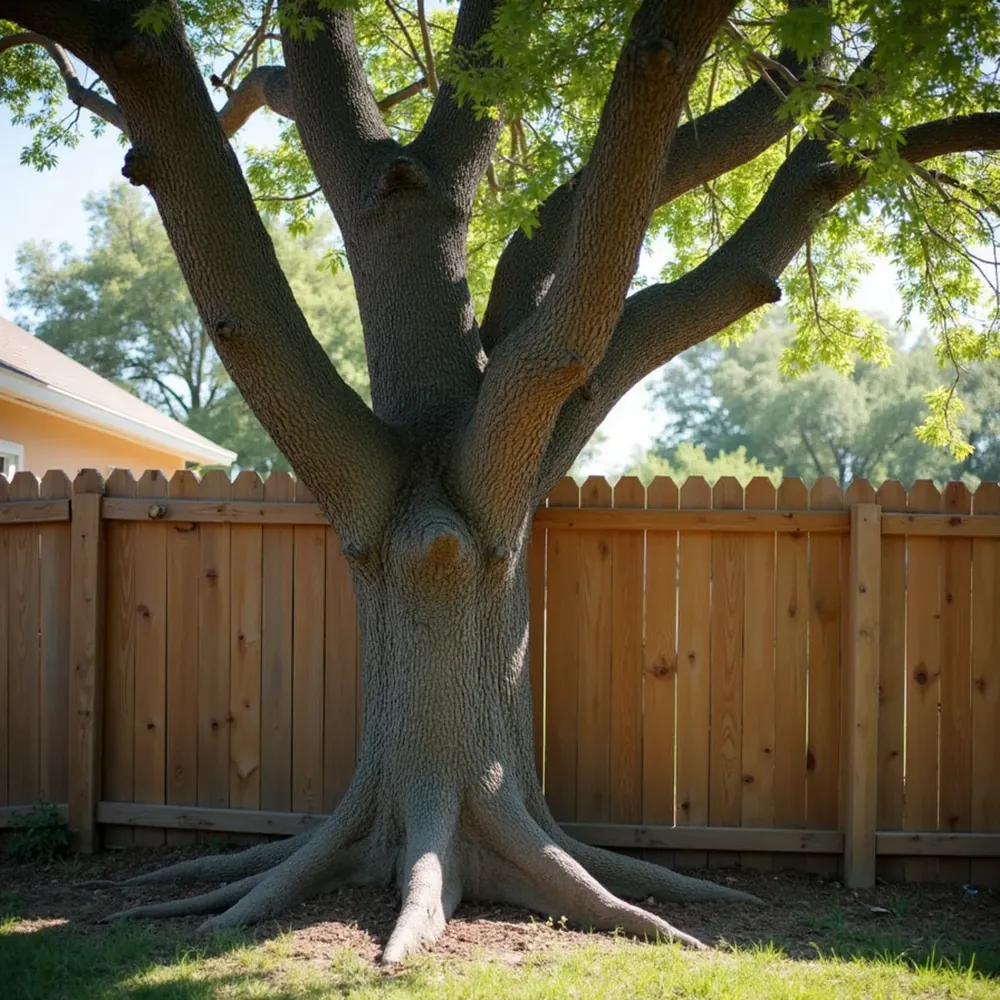
Plenty of trees lean. A live oak reaching out from under a bigger tree toward the sun, a mesquite that's grown at an angle for decades, a cedar elm along a fence line — many of them have leaned their whole lives and are perfectly stable.
The lean that worries an arborist is the one that's new, getting worse, or showing signs at the base that the roots are letting go. Here's how to tell the difference and what to do about it.
Key Takeaways
- A tree that has leaned for years and curves upward is often stable; a new or increasing lean is a warning.
- Heaving soil, exposed roots, a gap at the base, and trunk cracks mean the anchorage may be failing.
- A lean beyond about 15 degrees deserves a professional look, but the base matters more than the angle.
- Young trees can be staked; mature trees can't be straightened — only lightened, supported, or removed.
A Natural Lean vs. a Dangerous One
Trees that grow leaning, usually toward light, build extra wood to support the angle. Look at the trunk: a tree that's leaned for years often curves back upward toward the top, and the root plate on the far side is stable. That kind of lean is usually not an emergency.
A lean becomes a concern when it appears suddenly — often after a storm or heavy rain — or slowly increases over months. Either means something structural changed: roots broke, soil gave way, or the trunk is failing.
Warning Signs at the Base
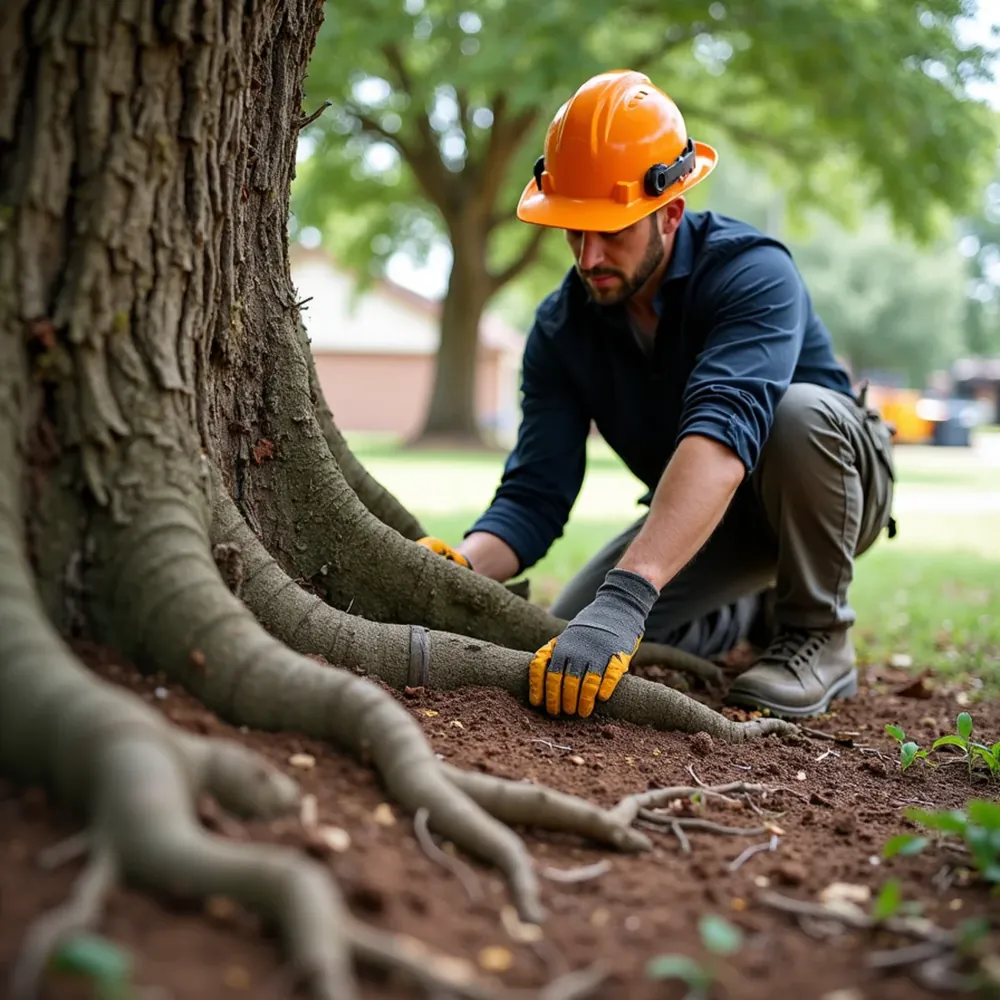
Walk around the tree and look closely at the ground and the trunk:
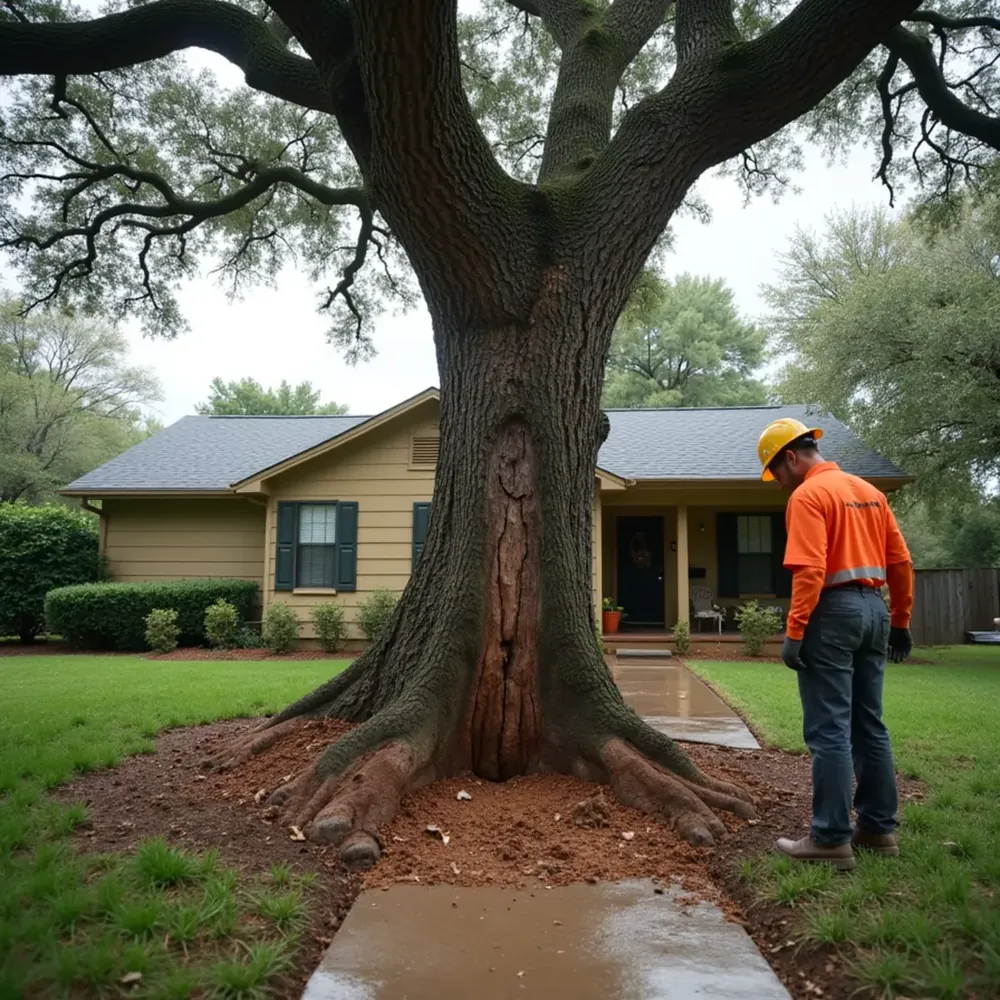
- Soil heaving: Raised, cracked, or mounded soil on the side opposite the lean means the root plate is lifting.
- Exposed or snapped roots: Roots pulled out of the ground or broken on the tension side.
- A gap at the base: A space opening between the trunk and the soil.
- Cracks in the trunk: Splits or buckled bark on the leaning side.
- Fungus and decay: Mushrooms or soft wood at the root flare, which weaken anchorage.
- Saturated soil: A lean that appeared after days of rain, when wet clay loses its grip on the roots.
Measuring and Tracking the Lean
A rough guideline many arborists use is that a lean of more than about 15 degrees from vertical deserves a professional look, especially combined with any of the warning signs above. Angle alone doesn't decide it: a 20-degree lean on a stable old mesquite may be fine, while a 10-degree lean that appeared overnight on a big oak over the house is urgent.
Track it. Drive a stake or take a photo from the same spot every few weeks. If the angle changes, the tree is moving.
Can a Leaning Tree Be Straightened?
Young trees — generally those planted within the last year or two — can often be gently staked or guyed back toward vertical while new roots establish. Mature trees can't be pulled straight. The roots and trunk have grown around the lean, and forcing them only causes more damage.
For a mature tree with a stable lean but heavy limbs, crown reduction can take weight off the leaning side, and cabling or bracing can help support weak forks. When the root plate itself is failing, no hardware fixes it, and removal is the safe option.
What to Do Right Now
If you're worried about a leaning tree today:
- Keep people clear: Stay out of the zone the tree would fall into — at least its full height — especially in wind.
- Check for lines: If the tree leans toward or touches a power line, call CPS Energy and keep away.
- Don't add stress: Keep vehicles off the root zone, and don't attach ropes or chains to the tree yourself.
- Document it: Photograph the tree and its base; it helps with the assessment and any insurance question.
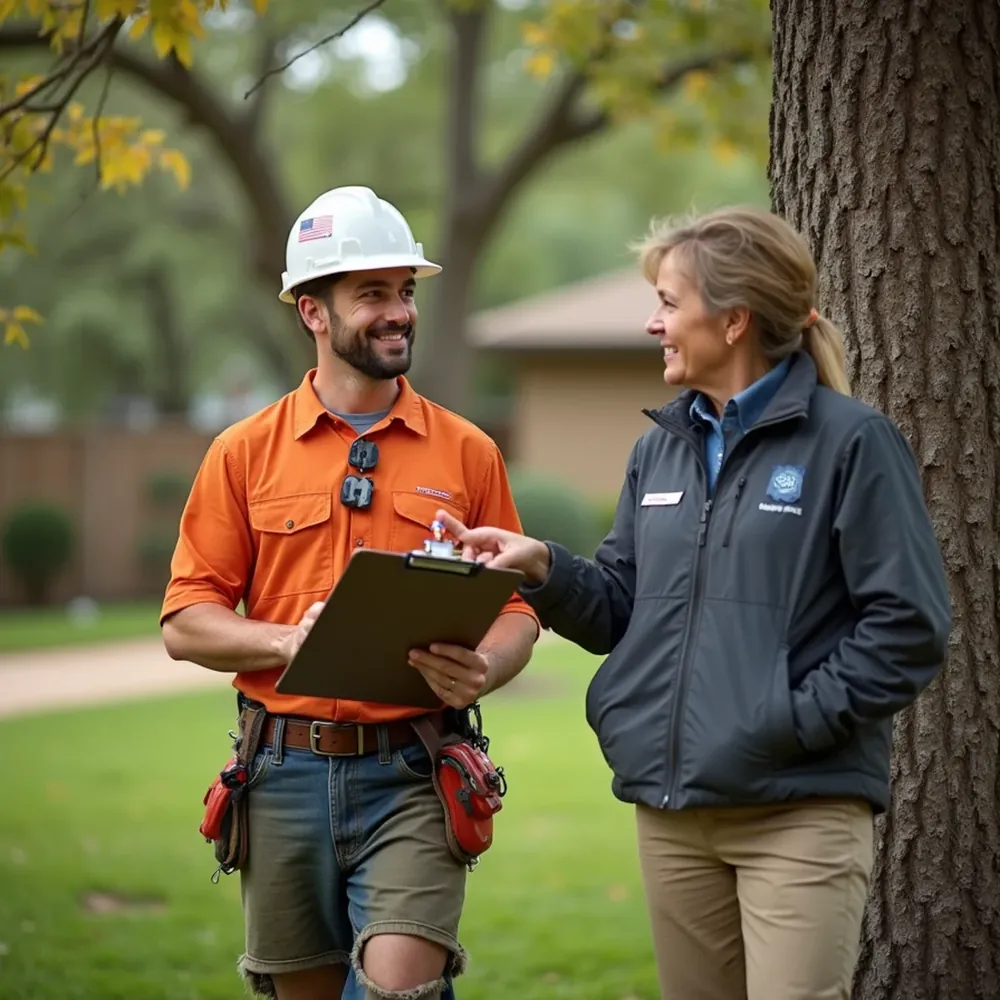
- Call for an assessment: A sudden lean over a house, street, or play area is an emergency call, not a wait-and-see.
Related Services & Areas
Frequently Asked
When is a leaning tree dangerous?
Can a leaning tree be straightened?
How do I know whether a damaged tree needs removal?
The Bottom Line
A lean by itself isn't a death sentence for a tree. What matters is whether it's old and stable or new and moving. Watch the base, keep people clear of anything that looks like it's shifting, and get a professional assessment before a tree near your home makes the decision for you.
Need Help With Your Trees?
Get a free, no-pressure written estimate from a local, fully insured crew. Same-day and 24/7 emergency service available across San Antonio, Bexar County & the Texas Hill Country.