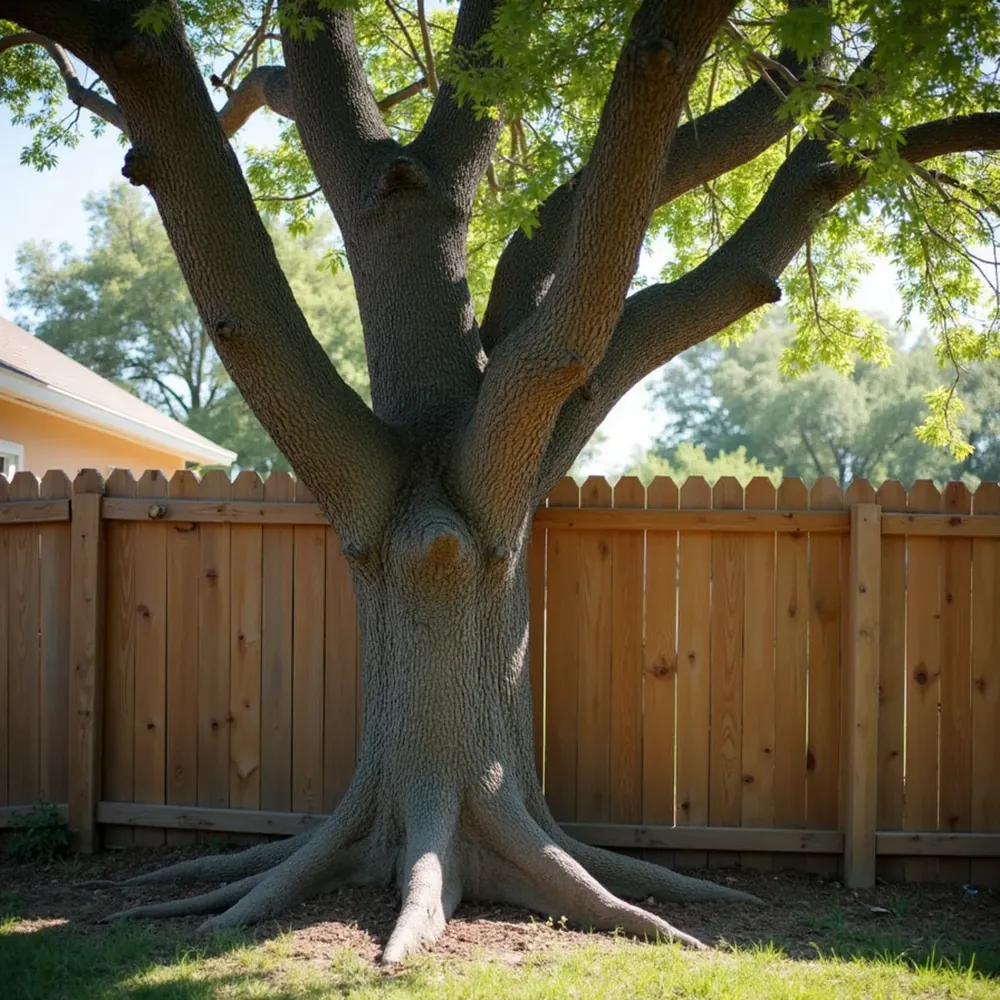
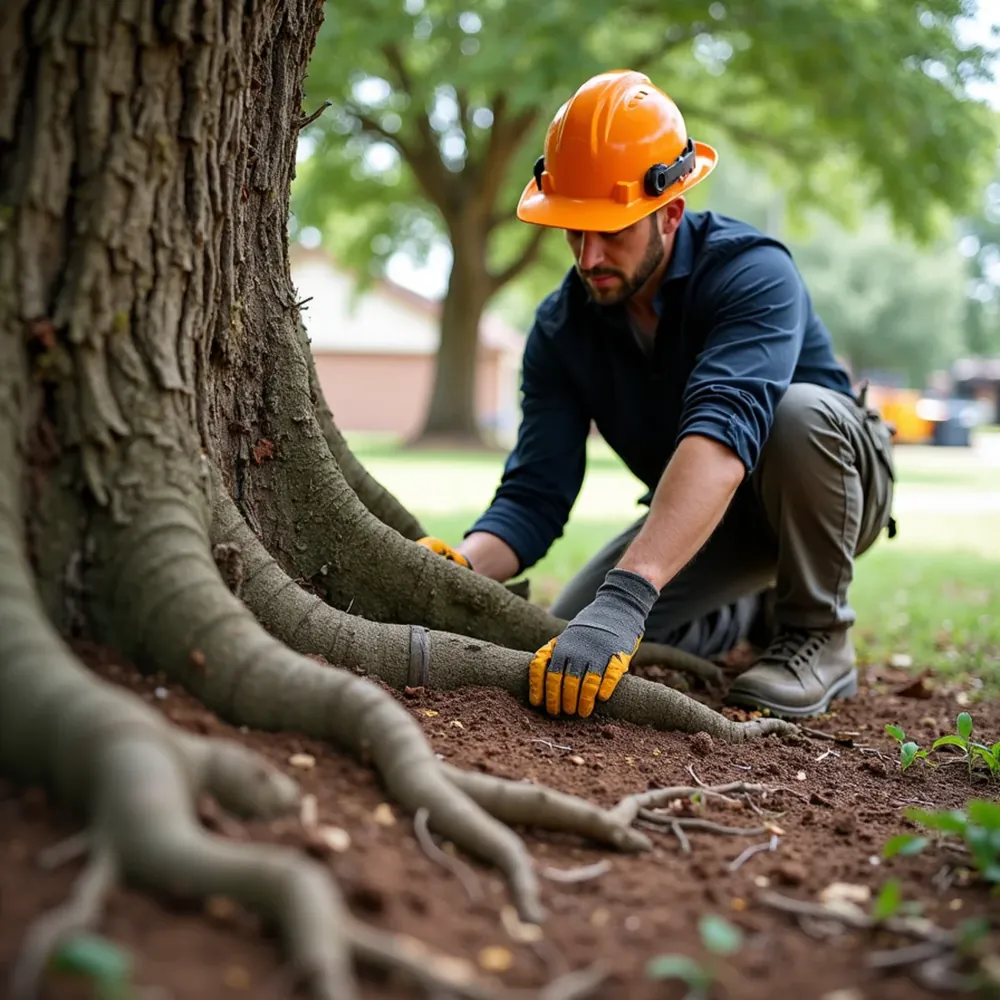
Foundation repair is a big business in San Antonio, and a big tree near the house often gets the blame. Sometimes that's fair. Often it's more complicated: the tree is part of the story, but the soil is the main character.
Here's how trees and foundations actually interact in Bexar County's soils, which situations deserve real concern, and why cutting roots or removing a tree in a hurry can make things worse.
Key Takeaways
- Roots rarely break slabs directly; they dry out expansive clay, which makes part of a foundation settle.
- Plumbing leaks and drainage problems mimic root damage, so get the foundation evaluated first.
- Avoid cutting roots closer than about 3–5 times the trunk diameter; bad root cuts can make a tree fall.
- Root barriers and steady watering can reduce problems without removing a healthy tree.
It's Usually the Soil, Not the Root
Tree roots rarely punch through a concrete slab. What they do is pull water out of the soil. In much of San Antonio, especially east and south of downtown, that soil is expansive clay that swells when wet and shrinks when dry. A large tree drawing moisture from under one corner of a house can make that corner shrink and settle more than the rest, especially through a long drought.
On the north and west sides, where many homes sit on thin soil over limestone, movement tends to be less dramatic — but drainage and irrigation patterns still matter.
Signs a Tree May Be Involved
These patterns suggest a tree may be contributing to foundation movement:
- Cracks concentrated near the tree: Drywall, brick, or slab cracks on the side of the house closest to a large tree.
- Seasonal movement: Doors and windows that stick during summer drought and free up after wet weather.
- Gaps at the slab edge: Soil pulling away from the foundation on the tree side in dry months.
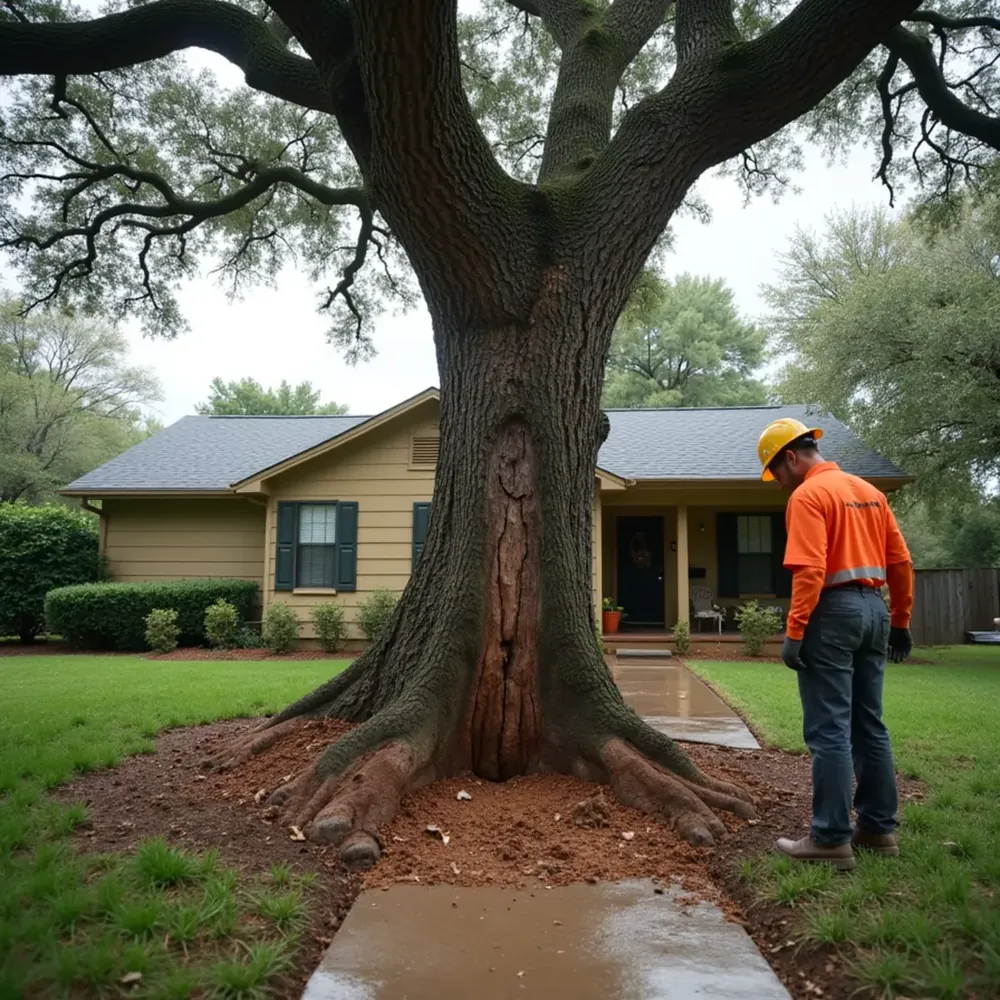
- Surface roots near the house: Large roots visible within a few feet of the slab, or lifting walks and patios.
Who to Call First
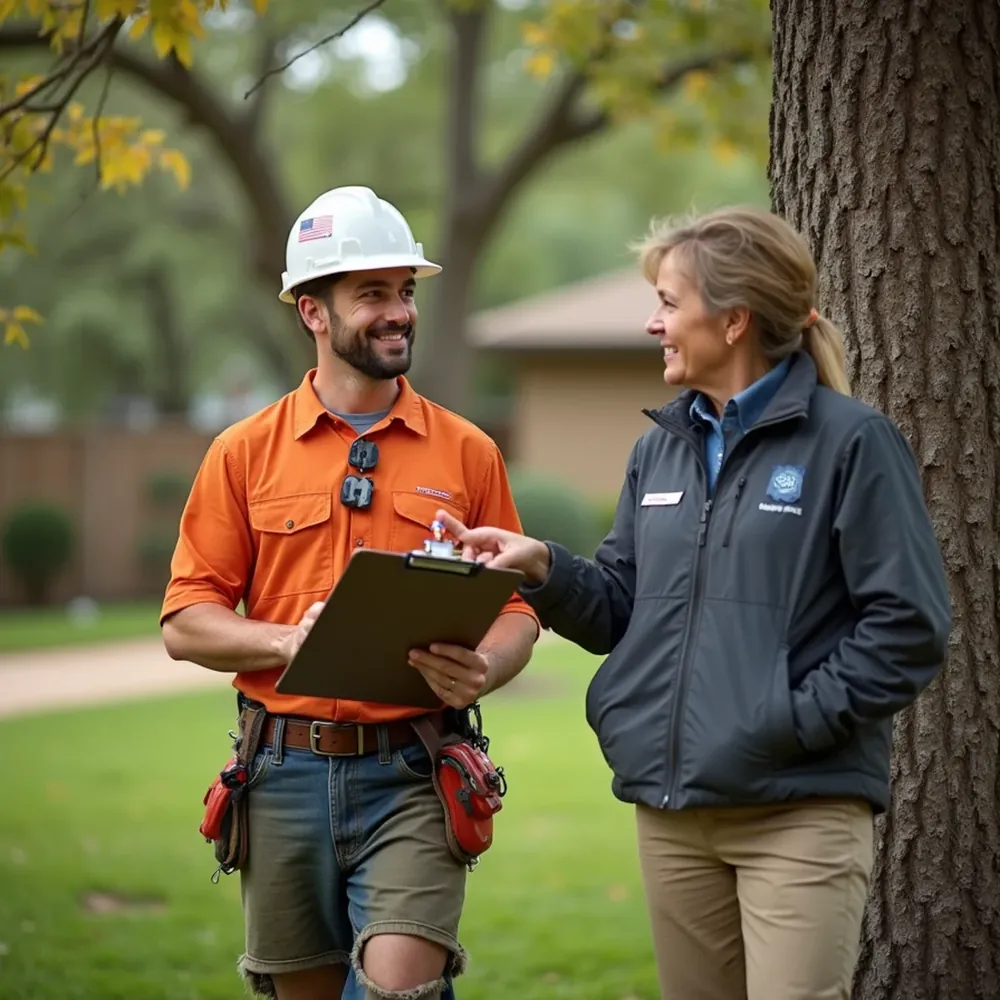
Start with a foundation professional if you see structural cracks. They can measure elevation differences and tell you whether the house is moving, and where. If a tree is suspected, an arborist can evaluate its size, species, root zone, and health, and the two assessments together point to the right fix.
Plumbing leaks and drainage problems produce the same symptoms as root-driven soil movement, so ruling them out first can save you from removing a healthy tree for nothing.
Root Barriers and Steady Watering
Root barriers — vertical panels set in a trench between the tree and the foundation — can redirect roots downward and away from the slab. They work best when installed before a tree's roots dominate the area, and installation means cutting the roots along the trench line, so placement and distance from the tree matter.
Consistent soil moisture helps too. Many foundation professionals recommend keeping moisture around the slab steady through dry spells with soaker hoses or drip lines, which also benefits the tree. Follow the current SAWS watering rules when you do.
Be Careful Cutting Roots
Cutting a large root close to the trunk can destabilize a tree or start decay that kills it over a few years. A common arborist rule of thumb is to avoid cutting roots closer than about three to five times the trunk diameter from the trunk — the closer distance is mostly about stability, the farther one about long-term health. A tree with its roots cut on one side can become the tree that falls on the house, which is exactly the outcome you were trying to prevent.
When Removal Makes Sense
Sometimes removal is the right answer — a fast-growing, water-hungry species planted too close to the house, or a tree whose roots have already been badly cut. If removal is the plan, know that the soil under the house may rehydrate and swell over the following seasons, so coordinate timing with your foundation professional. Large trees inside San Antonio city limits may also fall under tree-preservation rules.
Related Services & Areas
Frequently Asked
Can tree roots damage a foundation?
Do root barriers work?
Is it safe to cut tree roots near a foundation?
The Bottom Line
Tree roots and San Antonio clay can cause foundation movement, but the tree is rarely the whole story. Get the foundation and the tree assessed, fix water problems first, and treat root cutting with caution — a rushed decision can trade a cracked wall for a fallen tree.
Need Help With Your Trees?
Get a free, no-pressure written estimate from a local, fully insured crew. Same-day and 24/7 emergency service available across San Antonio, Bexar County & the Texas Hill Country.