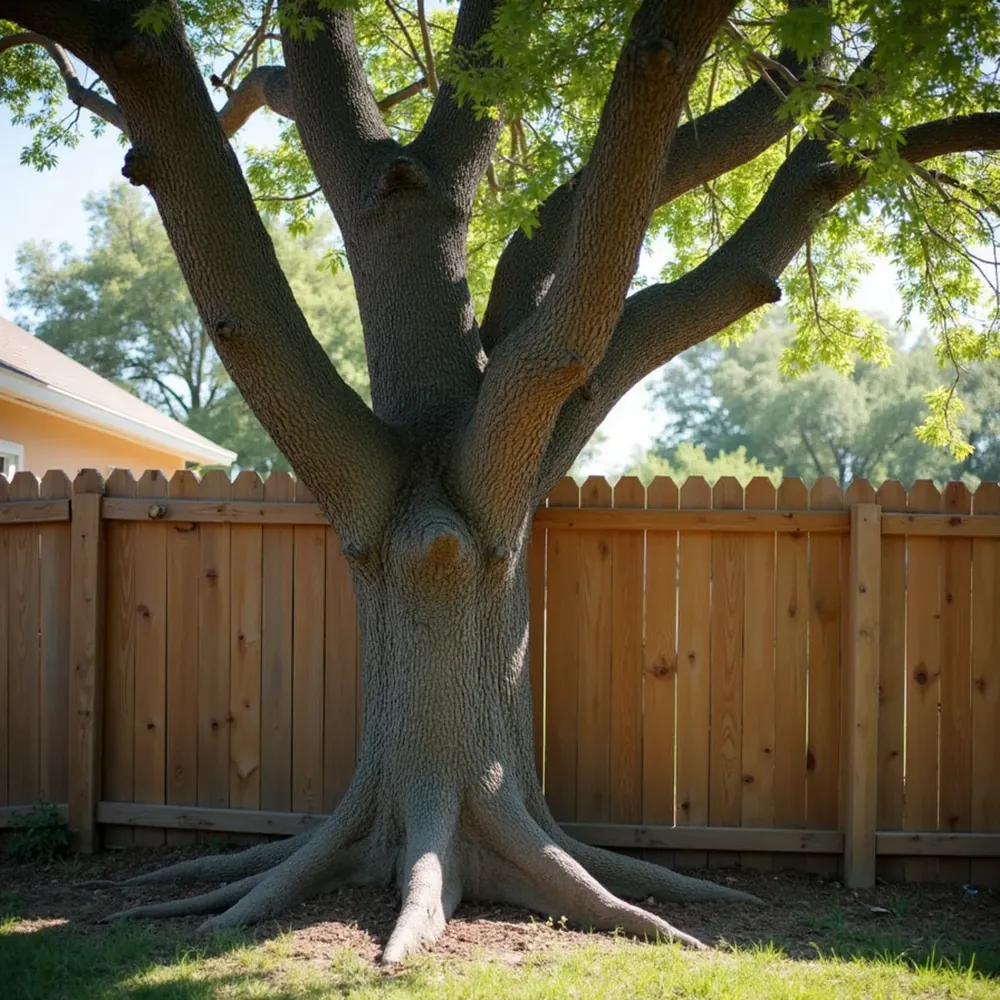
If a tree came up on its own along your fence line, there's a good chance it's a hackberry. Birds eat the small berries and drop the seeds everywhere, and the seedlings grow fast. Ask around and you'll hear hackberry called everything from a useful native shade tree to a trash tree.
The truth is somewhere in the middle. Here's what hackberries do well, where they cause trouble, and how to decide whether to keep, prune, or remove the ones on your property.
Key Takeaways
- Hackberry is a tough native shade and wildlife tree, but its wood is weak and decays with age.
- Leaf galls and sticky honeydew are mostly cosmetic; trunk decay is the real safety issue.
- Keep healthy hackberries that are well away from structures and prune them regularly.
- Remove decayed trees over the house and volunteers growing into fences and foundations.
What a Hackberry Is
The common hackberry in San Antonio is sugar hackberry, a native tree with smooth gray bark covered in corky warts and ridges. It tolerates drought, poor soil, and heat, grows quickly, and produces small berries that birds love. Those strengths are why it shows up in fence rows, alleys, and against foundations where nobody planted it.
Why Hackberries Get a Bad Reputation
The same fast growth that makes hackberry useful creates its main problems:
- Weak wood: Hackberry limbs break more readily in wind and ice than oak limbs.
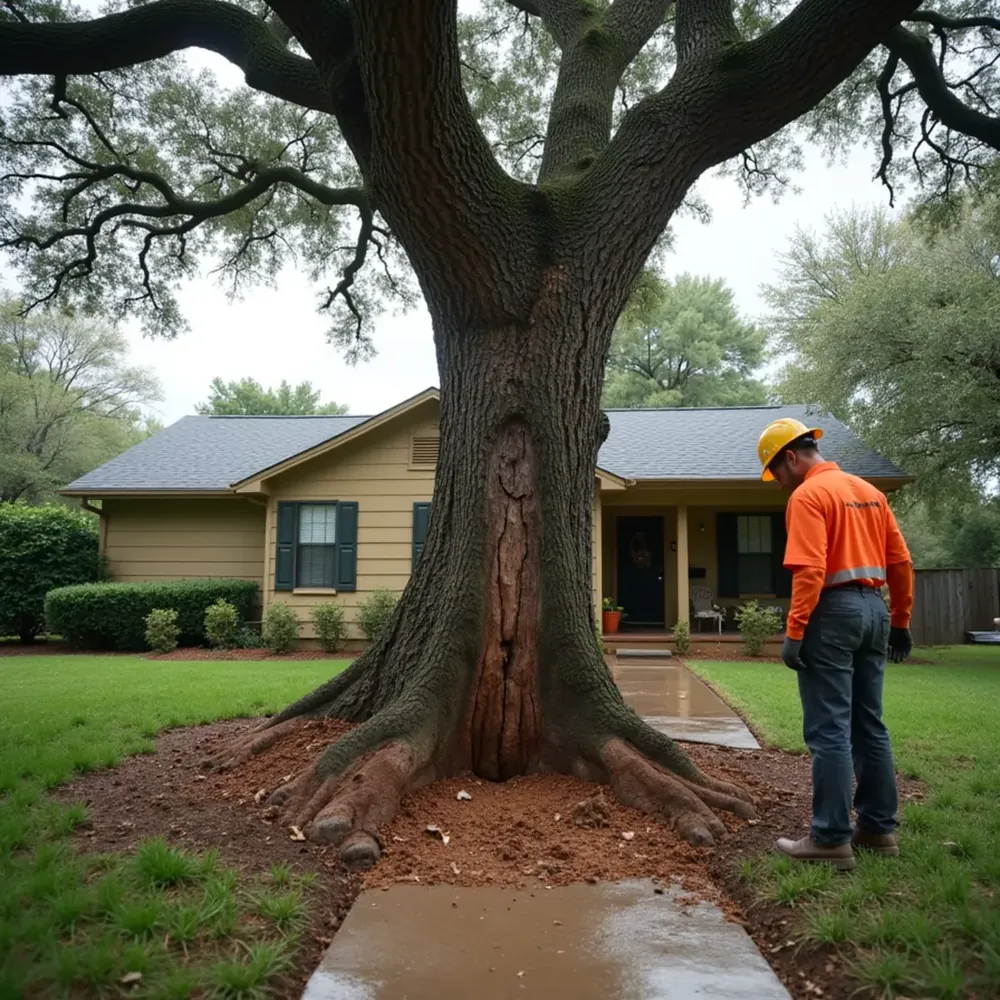
- Decay with age: Older hackberries often develop internal rot, especially where large limbs were cut.
- Bad locations: Volunteers sprout against fences, walls, and foundations and grow into them.
- Sticky honeydew: Aphids feeding on the leaves drip honeydew on cars and patios, and black sooty mold grows on it.
Common Hackberry Problems
Small bumps on the leaves are usually galls caused by tiny insects called psyllids. They look alarming but are mostly cosmetic and don't threaten a healthy tree. Woolly aphids can coat branches with white, fluffy insects in late summer and fall, and the honeydew they produce is what turns cars and outdoor furniture sticky. Decay in the trunk and large limbs is the problem that actually matters for safety.
When to Keep a Hackberry
A healthy hackberry growing in a reasonable spot — away from the house, not wedged against a fence or wall — can be a perfectly good shade and wildlife tree. With regular pruning to remove deadwood and weak limbs, it can provide years of shade, especially in yards where nothing else has been planted.
When to Remove One
Removal usually makes sense when:
- There's significant decay: Cavities, fungus, or soft wood in the trunk or main limbs.
- It's large and over the house: A big hackberry with weak limbs over the roof is a real risk in storms.
- It's growing into a structure: Volunteers against foundations, walls, and fences cause damage as they grow.
- It's crowding a better tree: Removing a hackberry can give a nearby oak or pecan room to thrive.
Hackberries Near Foundations and Fences
A hackberry seedling that sprouts against a slab, wall, or fence post is worth removing while it's small. As the trunk thickens it can push against fences, crack walkways, and trap moisture against siding, and removing it later means working in a tight space with more risk to the structure. In older yards, large hackberries growing right beside foundations are often removed and replaced with a better tree planted farther from the house.
Removing a Hackberry the Right Way
Small volunteers are easy to cut, but hackberry can resprout from the stump and roots, so grinding the stump or cutting sprouts as they appear keeps it from coming back. Larger hackberries near houses should be taken down in sections by a crew. Our tree removal quotes list removal, haul-away, and stump grinding as separate lines, and if you're keeping the tree, pruning to remove deadwood and weak limbs is the best way to make it safer.
Related Services & Areas
Frequently Asked
Is hackberry a trash tree?
Why is my hackberry dripping sticky sap on my car?
What are the bumps on my hackberry leaves?
The Bottom Line
Hackberry isn't a villain or a prize — it's a fast, tough tree that needs the right spot and some upkeep. Keep the healthy ones that are well placed, and remove the decayed and the badly located before they cause damage.
Need Help With Your Trees?
Get a free, no-pressure written estimate from a local, fully insured crew. Same-day and 24/7 emergency service available across San Antonio, Bexar County & the Texas Hill Country.