That big oak in your yard might be legally protected. San Antonio, like many Texas cities, has a tree preservation ordinance designed to keep its mature canopy intact — and removing a large tree without checking the rules can lead to fines and costly mitigation requirements.
Here's a plain-English overview of how protected-tree rules generally work in San Antonio. Ordinances change, so always confirm the current requirements with the city before you plan a removal.
Key Takeaways
- San Antonio protects significant and heritage trees, with heritage status often near 24-inch diameter and up.
- A permit is commonly required before removing or heavily altering a protected tree.
- Dead, diseased, or dangerous trees generally qualify for an exemption — but usually need documentation.
- Removing a protected tree without cause can trigger fines and mitigation costs.
Significant vs. Heritage Trees
San Antonio's ordinance measures trees by diameter at breast height (DBH) and generally distinguishes 'significant' trees from larger 'heritage' trees. Heritage status typically applies to the biggest trees — often around 24 inches in diameter and up for many protected species — and carries the strongest protections and the steepest replacement requirements if the tree is removed. Species matters, too: the rules focus on the native and desirable trees the city most wants to preserve.
When a Permit Comes Into Play
Protected-tree rules most often apply during development, construction, and significant lot changes, and they can also govern the removal of large protected trees on residential property. The practical takeaway: before removing, topping, or heavily altering a big tree, it's worth confirming whether it's protected and whether a permit is required. Getting this wrong is far more expensive than checking first.
The Dead, Diseased & Dangerous Exemption
There is a critical exemption. Trees that are genuinely dead, diseased, or an imminent hazard generally qualify for removal without the same restrictions — Texas law (including provisions often referenced as HB 2190) supports a property owner's ability to remove trees that pose a real danger. But 'I think it's dying' isn't enough; the condition usually needs to be documented by a qualified professional. That documentation is exactly what protects you if the removal is ever questioned.
Mitigation: The Cost of Removing a Big Tree
When a protected tree is removed without qualifying for an exemption, the city typically requires mitigation — replanting a certain amount of new tree canopy, or paying into a tree fund, based on the size of what was removed. For a large heritage tree, that obligation can be substantial. It's one more reason to preserve a big tree when you can and to document conditions carefully when removal is truly necessary.
How We Help
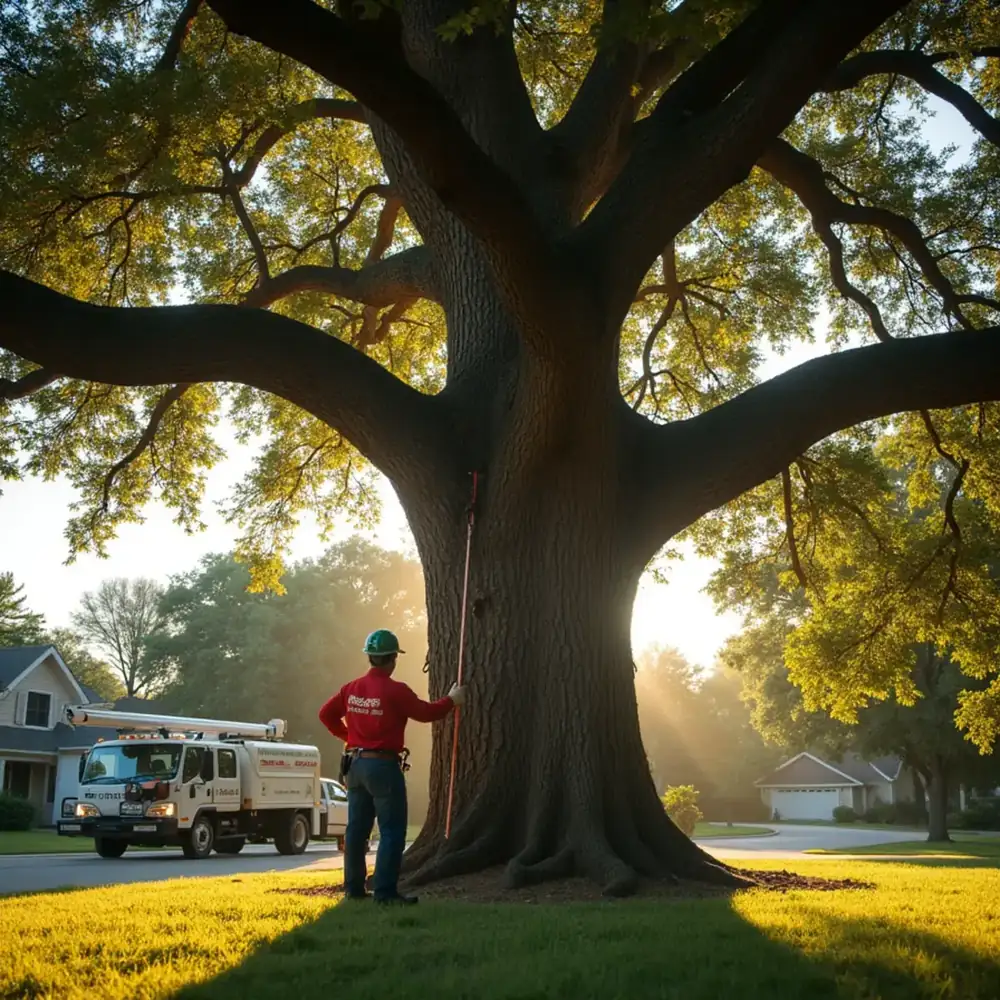
We measure the tree's DBH, identify the species, and tell you whether it's likely significant or heritage. If it qualifies for the dead/diseased/dangerous exemption, we document the condition. If it doesn't, we help you navigate the city's process and understand the mitigation involved. And whenever possible — especially with the irreplaceable heritage oaks in places like Alamo Heights — we look first at whether the tree can be preserved with proper care instead of removed at all.
Related Services & Areas
Frequently Asked
Do I need a permit to remove a tree in San Antonio?
How do I know whether a damaged tree needs removal?
Does San Antonio require a Tree Maintenance License for tree contractors?
The Bottom Line
Before touching a big tree in San Antonio, confirm its status and document its condition. A little paperwork up front is far cheaper than a fine and a replanting order later.
Need Help With Your Trees?
Get a free, no-pressure written estimate from a local, fully insured crew. Same-day and 24/7 emergency service available across San Antonio, Bexar County & the Texas Hill Country.