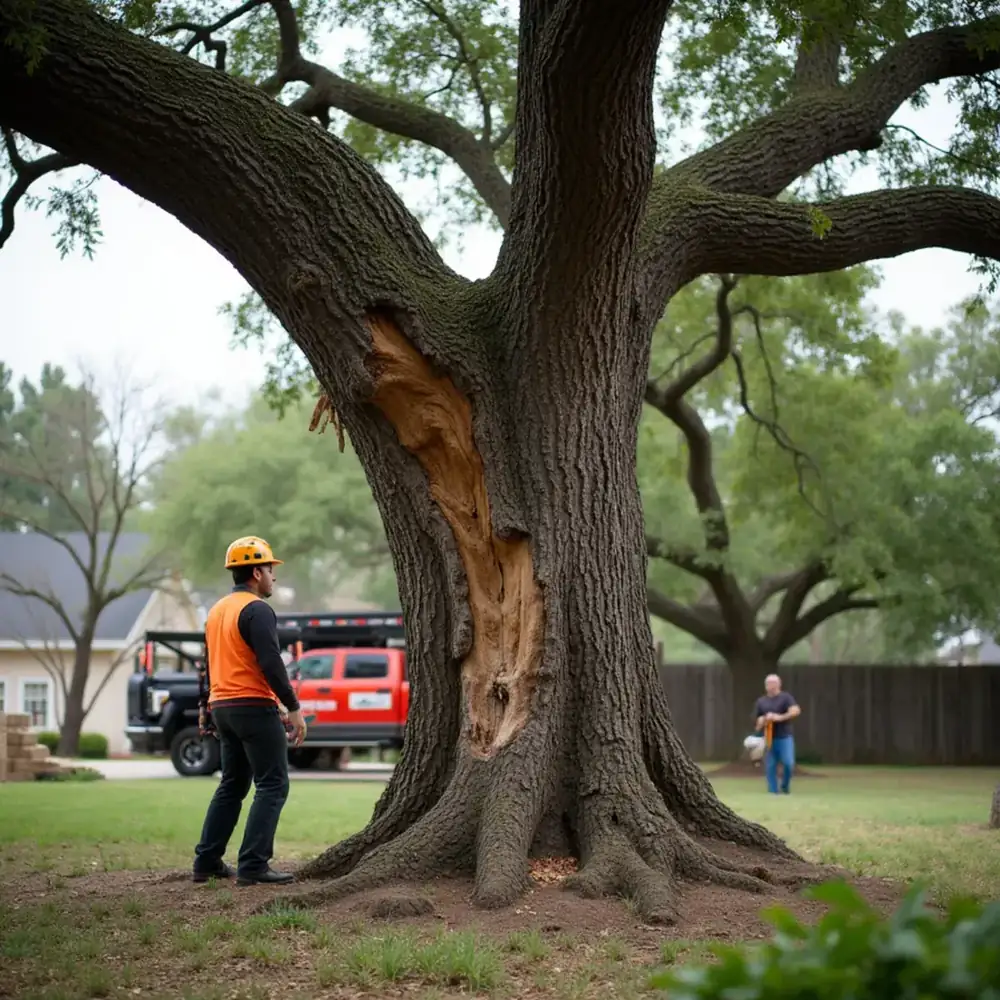
Across San Antonio, homeowners keep asking the same question: why is my live oak dying? Often the answer is a one-two punch — years of drought stress that weaken the tree, followed by hypoxylon canker, an opportunistic fungus that colonizes trees already on the ropes.
Understanding the difference between a tree that can be saved and one that's past the point of return can save you money and heartbreak.
Key Takeaways
- Drought stress weakens a tree; hypoxylon canker is the opportunist that finishes it.
- The tan-to-silver dusty spore layer under sloughing bark is usually a late, serious sign.
- There's no cure — management is prevention (keep trees vigorous) and safety.
- Canker in the trunk means a growing failure hazard, especially over a structure.
How Drought Sets the Stage
San Antonio's live oaks grow on shallow soil over limestone, with limited room for roots and water. Long droughts — increasingly common — push these trees into chronic stress: scorched leaf margins, early leaf drop, and dieback starting in the upper canopy. A stressed tree spends its reserves just surviving, leaving little to defend itself against pests and disease.
Then Comes Hypoxylon Canker
Hypoxylon canker (Biscogniauxia) is an opportunist. Its spores are essentially always present in the environment, but a healthy tree fends them off. When drought, root damage, or construction stress weakens a tree, the fungus moves in and colonizes the wood. The tell-tale sign is patches of bark sloughing off to reveal a tan, brownish, or silvery-gray dusty layer of spores underneath — usually a sign the disease is well established.
By the time you see those spore mats on the trunk or major limbs, that part of the tree is typically already dying.
The Hard Truth: No Cure for Hypoxylon
There's no spray or injection that cures hypoxylon canker. Because it takes hold in already-declining trees, the management focus is prevention and honesty. If the canker is confined to a limb, removing that limb and improving the tree's overall vigor may buy time. If it's in the main trunk, the tree is usually failing and becomes a safety concern as the colonized wood weakens.
What You Can Actually Do
The real defense is keeping trees healthy enough to resist the fungus in the first place:
- Water deeply in drought: Slow, deep, occasional watering out to the drip line beats frequent shallow sprinkling.
- Mulch properly: A wide, shallow mulch ring (not piled on the trunk) conserves moisture and moderates soil temperature.
- Avoid root damage: Keep construction, trenching, and soil compaction away from the root zone.
- Don't over-prune stressed trees: Removing too much live canopy stresses an already-struggling tree further.
When to Call — and Why It's Urgent
A tree with hypoxylon canker in the trunk is a growing hazard: the wood becomes brittle and prone to sudden failure, especially over a house or driveway. In areas like Stone Oak with lots of drought-stressed oaks near homes, an assessment can tell you whether you're looking at a manageable limb issue or a removal that shouldn't wait. We'll give you the straight answer, not a treatment plan for a disease that can't be cured.
Related Services & Areas
Frequently Asked
How do I know whether a damaged tree needs removal?
What is oak wilt and how does it affect Central Texas live oaks?
When is the best time to schedule preventive tree pruning in San Antonio?
The Bottom Line
You can't cure hypoxylon, but you can outrun it by keeping oaks vigorous through our droughts — and by removing a trunk-cankered tree before it decides to come down on its own.
Need Help With Your Trees?
Get a free, no-pressure written estimate from a local, fully insured crew. Same-day and 24/7 emergency service available across San Antonio, Bexar County & the Texas Hill Country.