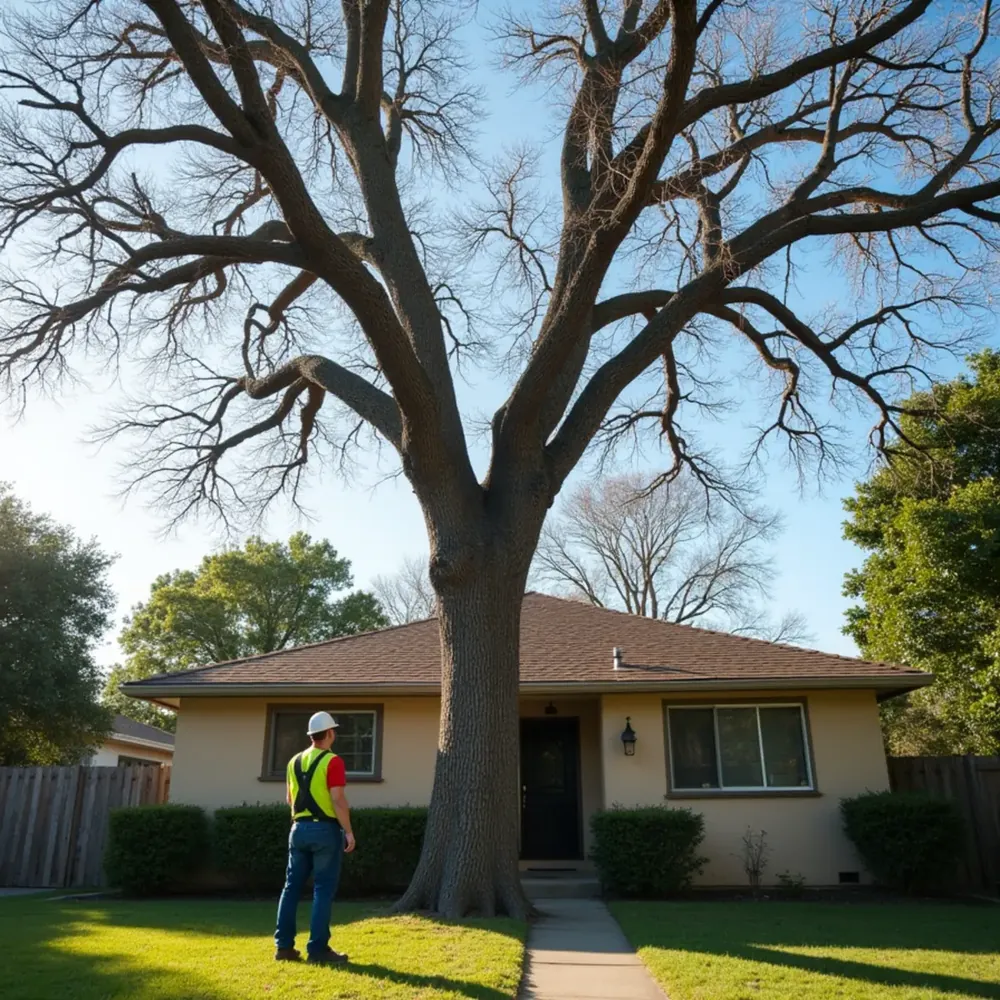
Drive through almost any San Antonio neighborhood built a few decades ago and you'll see Arizona ash — big, round-headed shade trees that went in because they grew fast. That speed came with a cost. Arizona ash is relatively short-lived here, and a lot of those trees are now well into decline.
If you have one, it's worth knowing what to watch for, what pruning can and can't fix, and when replacing it is the smarter investment.
Key Takeaways
- Arizona ash grows fast but is relatively short-lived in San Antonio, and many older trees are declining.
- Old topping cuts, decay, drought stress, and weak V-shaped forks are the main problems.
- Pruning helps a sound tree; it can't fix extensive trunk decay.
- Plant a long-lived replacement early so shade is in place when the ash comes out.
Why Arizona Ash Was Planted Everywhere
Builders and homeowners chose Arizona ash because it shades a new yard quickly and tolerates heat. In a new subdivision with no trees, a fast grower looked like the obvious choice. The trade-off is weaker wood, a tendency to form tight, weak forks, and a shorter lifespan than slower-growing trees like live oak or cedar elm.
Why So Many Are Declining Now
Several problems tend to stack up as Arizona ash ages. Old pruning wounds — especially from topping, which was common on these trees — let decay into the trunk and main limbs. Drought and heat stress weaken the tree, and stressed ash attract wood-boring insects. Tight V-shaped forks with bark trapped inside them become split points as the limbs get heavier.
Emerald ash borer, an invasive beetle that kills ash trees, has been confirmed in parts of North and East Texas. Check Texas A&M Forest Service updates for its current range; for now, most Arizona ash decline around San Antonio comes from age, decay, and stress.
Warning Signs Your Ash Is Failing
Have the tree looked at if you see any of these:
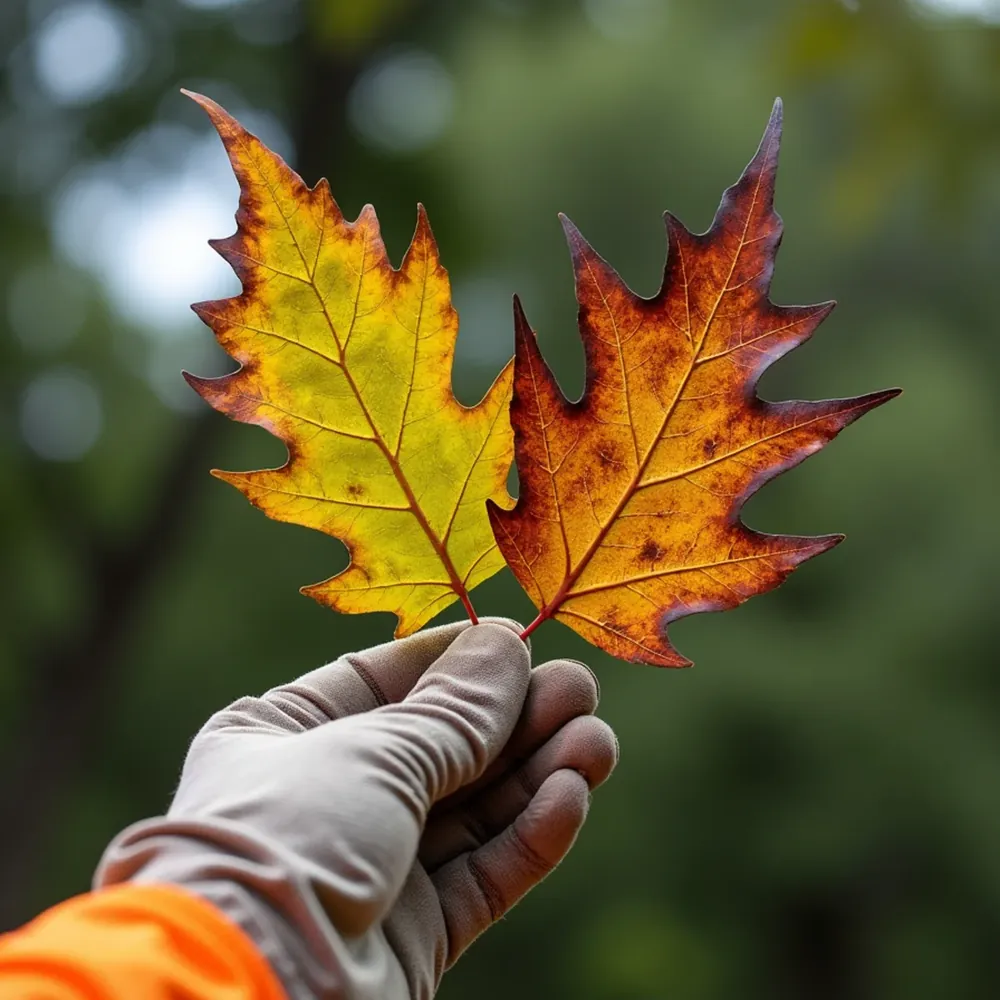
- Dieback in the upper crown: Dead branch tips and bare limbs at the top of the tree.
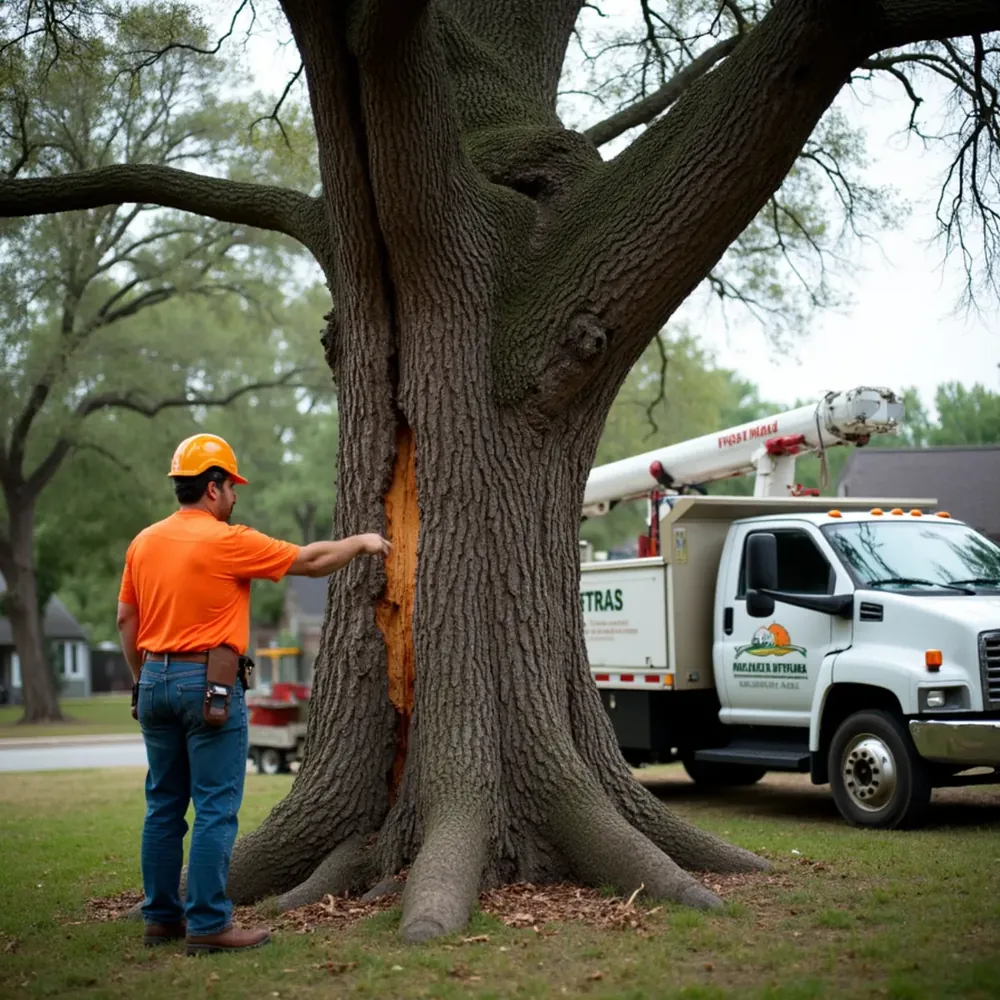
- Fungus on the trunk or roots: Mushrooms or shelf-like conks signal internal decay.
- Cracks and splits at forks: Especially at tight, V-shaped unions.
- Cavities and soft wood: Often where large limbs were cut or the tree was topped.
- Bark splitting or falling away: Exposed wood on the trunk or major limbs.
Can Pruning Save It?
Pruning helps a healthy Arizona ash: removing deadwood, reducing heavy limbs, and correcting weak forks while the tree is still sound. It can't reverse extensive decay. If the trunk or main unions are hollowing out, pruning only buys a little time, and the money is better spent on removal and a replacement tree.
One thing to avoid: topping. Cutting an ash back to stubs creates a flush of weakly attached sprouts and opens large wounds to decay — the very problems that shorten these trees' lives.
Keep, Prune, or Replace?
Most decisions come down to three options:
- Keep and prune: The tree is healthy, has no major decay, and isn't over the house.
- Plan a replacement: The tree shows early decline; plant a long-lived tree nearby now so shade is in place when the ash comes out.
- Remove: There's significant decay, cracked unions, or dieback over a roof, driveway, or play area.
Removing a Declining Arizona Ash Safely
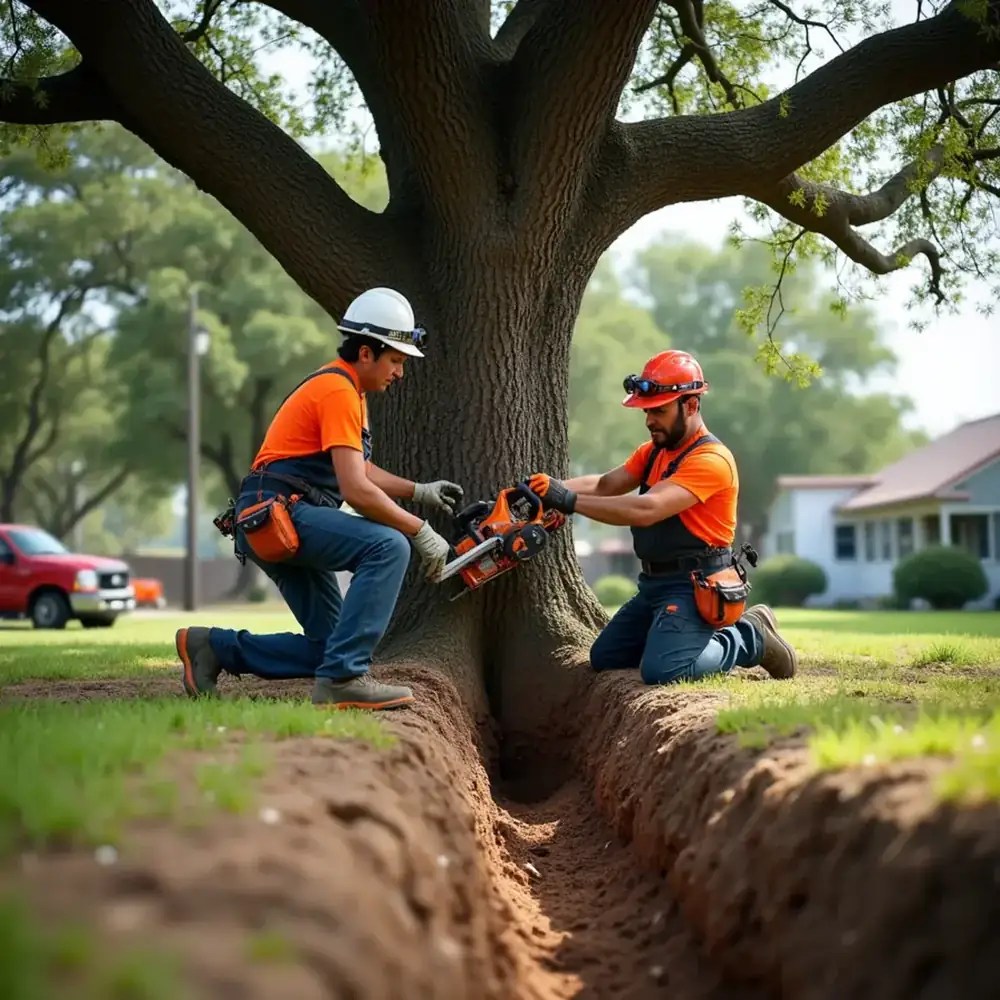
Decayed ash wood is unpredictable to climb and rig, and limbs can break where they look solid. Large Arizona ash near houses are usually taken down in controlled sections, sometimes with a bucket truck when the wood is too weak to climb safely. Grinding the stump afterward clears the way for replanting, ideally a few feet from the old trunk where the soil is undisturbed.
What to Plant Instead
Cedar elm, chinquapin oak, Monterrey oak, and bur oak are longer-lived shade trees that handle San Antonio's soils and heat. Plant the replacement in the cool season and water it deeply for its first two summers. See our full list of the best trees to plant in San Antonio, and if it's time for the old ash to go, our tree removal service can take it down without damage to the yard.
Related Services & Areas
Frequently Asked
How long do Arizona ash trees live in San Antonio?
Should I top my Arizona ash to make it safer?
Is emerald ash borer in San Antonio?
The Bottom Line
Arizona ash gave many San Antonio homes fast shade, but most are now on borrowed time. Keep a healthy one with good pruning, plan a replacement early, and remove trees with real decay before a storm decides for you.
Need Help With Your Trees?
Get a free, no-pressure written estimate from a local, fully insured crew. Same-day and 24/7 emergency service available across San Antonio, Bexar County & the Texas Hill Country.