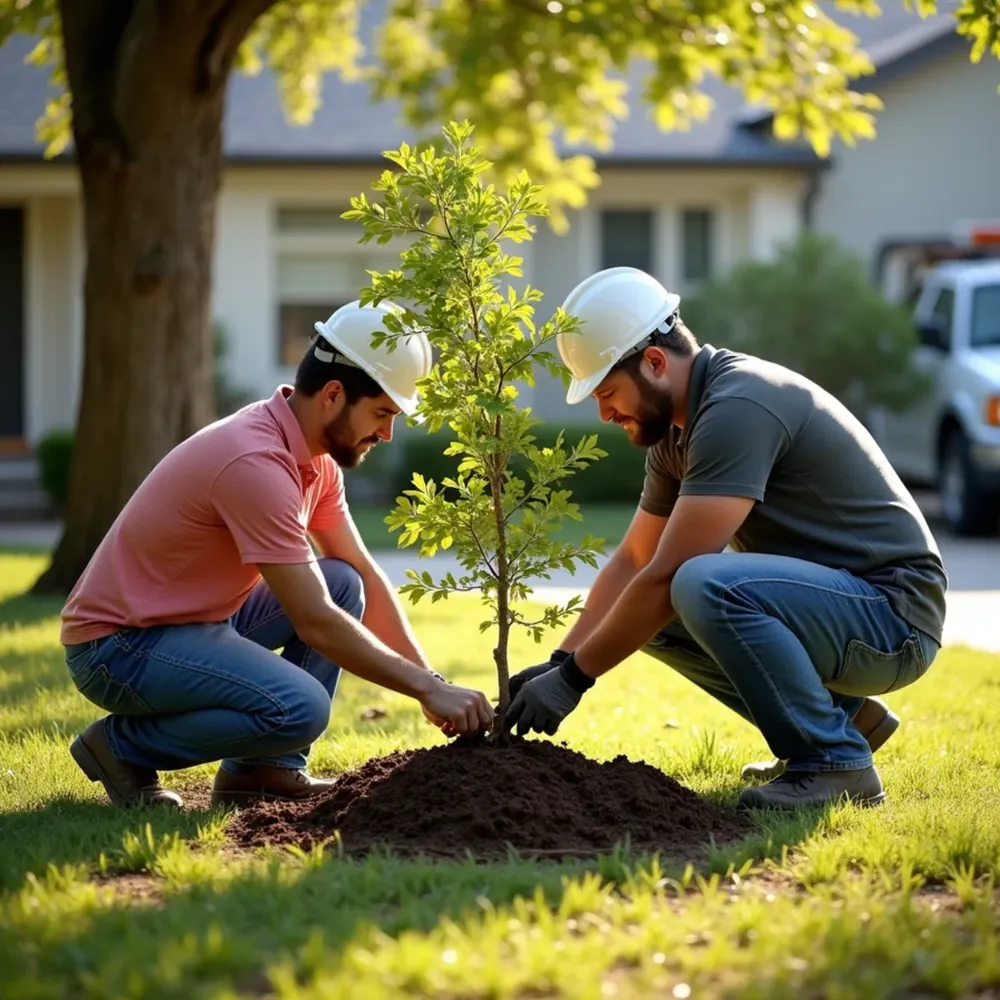
A lot of the tree work we do in San Antonio traces back to a planting decision made decades ago: a fast-growing tree that didn't last, a big species planted too close to the house, or a tree jammed under a power line. Choosing the right tree is the cheapest tree care there is.
Here are trees that hold up in San Antonio's heat, drought, and alkaline soils, the ones we'd skip, and how to plant so the tree actually thrives.
Key Takeaways
- Choose trees that handle heat, drought, and alkaline soil — cedar elm and native oaks are reliable shade picks.
- White oaks like chinquapin and bur oak are generally less susceptible to oak wilt than live and red oaks.
- Skip Arizona ash, invasive Chinese tallow and chinaberry, and Bradford pear.
- Plant October through February, well away from the house and lines, and water deeply for two summers.
What a San Antonio Tree Has to Handle
A good tree here has to tolerate long, hot summers, drought, and alkaline soil — thin soil over limestone on the north and west sides, heavy clay on the east and south. It also has to live with oak wilt, which affects live oaks and red oaks. Native and well-adapted species handle all of this far better than many trees sold for fast results.
Large Shade Trees Worth Planting
For shade over a yard or house, these hold up well when given room:
- Cedar elm: A tough native that handles drought and both clay and rocky soils. Prune young trees for good structure.
- Chinquapin oak: A native white oak with good drought tolerance. White oaks are generally less susceptible to oak wilt than live and red oaks.
- Monterrey (Mexican white) oak: Semi-evergreen, handles heat and alkaline soil, and has become a popular street and yard tree.
- Bur oak: Large, long-lived, with big acorns; needs plenty of space.
- Live oak: Iconic and long-lived, but plant it with oak wilt in mind — avoid wounds in spring and don't crowd it with other oaks.
- Bald cypress or Montezuma cypress: Excellent where there's room and some moisture; tolerates more water than most trees.
Small and Ornamental Trees
For smaller yards, patios, and spots near lines or the house:
- Texas redbud: Pink spring flowers, small size, drought-tolerant.
- Mexican plum: White spring flowers and fruit for wildlife.
- Texas mountain laurel: Evergreen with fragrant purple spring flowers; slow-growing.
- Desert willow: Long summer bloom and very drought-tolerant.
- Eve's necklace: A small native with pink flowers and bead-like seed pods.
- Possumhaw holly: Bright red berries on female plants through winter.
Trees to Think Twice About
These show up often in San Antonio yards and in our removal schedule:
- Arizona ash: Fast shade but relatively short-lived and prone to decay.
- Chinese tallow and chinaberry: Invasive species that spread aggressively into natural areas.
- Bradford (callery) pear: Weak forks that split apart as the tree matures.
- Silver maple: Weak wood and poorly suited to our heat and alkaline soils.
- Red oaks next to live oaks: In oak-wilt areas, infected red oaks produce spore mats that spread the disease.
Right Tree, Right Place
Plan for the tree's mature size, not the size in the pot. A common guideline is to plant large shade trees at least 15 to 20 feet from the house and keep them out from under power lines; small ornamentals can go closer. Leave room for roots away from driveways, slabs, and septic systems. A tree planted in the right spot needs far less pruning over its life.
When and How to Plant
Plant from fall through winter — roughly October through February — so roots grow before summer heat. Dig a hole about as deep as the root ball and two to three times as wide, set the root flare at or slightly above grade, backfill with the native soil, and spread mulch in a wide ring kept off the trunk. Water deeply and regularly through the first two summers; that's when most new trees fail. Our structural pruning guide for young trees covers what to do in the years after planting.
Related Services & Areas
Frequently Asked
When is the best time to plant a tree in San Antonio?
What's a fast-growing shade tree that's still a good choice for San Antonio?
How far from my house should I plant a shade tree?
The Bottom Line
The right tree in the right spot is the cheapest tree care you'll ever buy. Choose a long-lived, well-adapted species, plan for its mature size, and plant in the cool season so it gets established before summer.
Need Help With Your Trees?
Get a free, no-pressure written estimate from a local, fully insured crew. Same-day and 24/7 emergency service available across San Antonio, Bexar County & the Texas Hill Country.