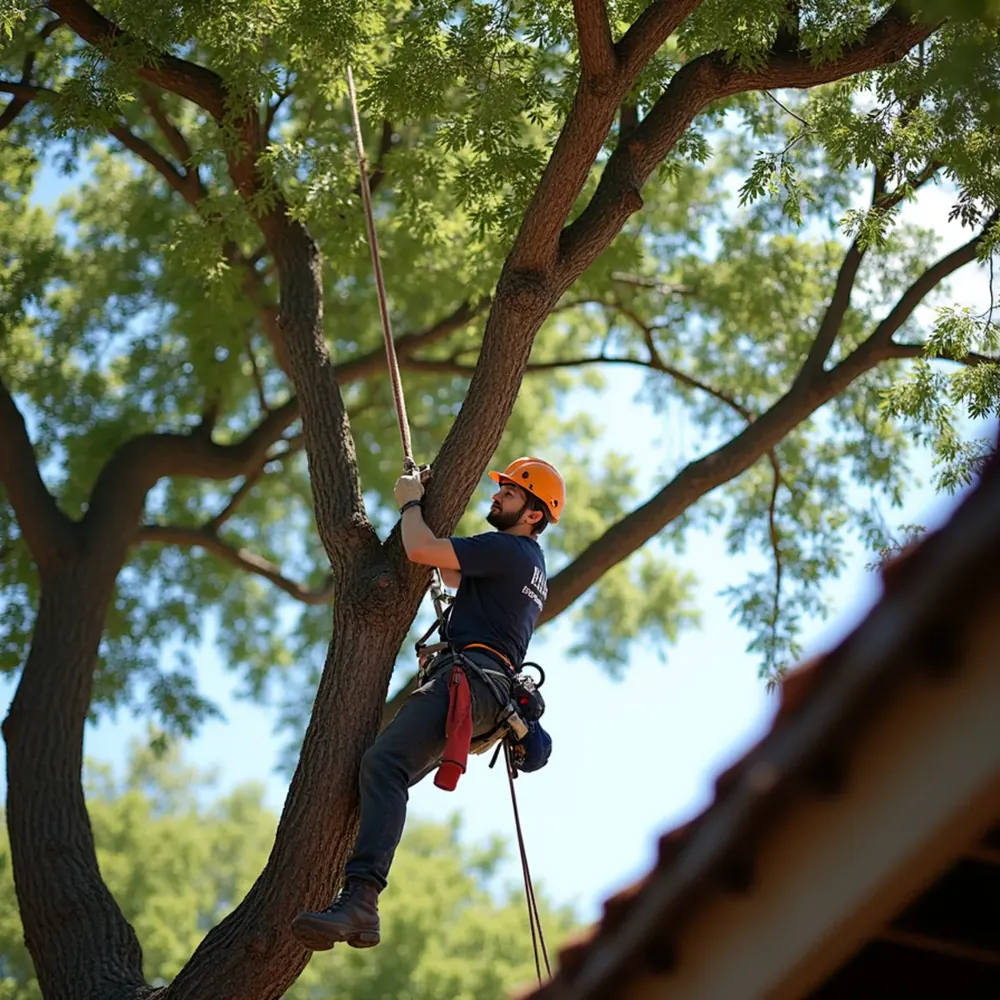
The pecan is the Texas state tree, and in older San Antonio neighborhoods and river bottoms, pecans are often the biggest trees around. They're beautiful, productive, and fast-growing — and their long, heavy limbs are among the most common things we remove from roofs after storms.
Good pecan care is mostly about structure, water, and timing. Here's what matters most for pecans in San Antonio yards.
Key Takeaways
- Prune pecans in the dormant season; they aren't affected by oak wilt timing rules.
- Reducing long, heavy horizontal limbs is the best defense against limb drop.
- Most pests are manageable; trunk decay and cracked unions are the real safety concerns.
- Water deeply during dry spells, especially in late summer when nuts are filling.
How Pecans Differ From Oaks
Pecans aren't affected by oak wilt, so they don't carry the February-to-July pruning restriction that applies to live oaks and red oaks. They do grow fast and develop long, horizontal limbs with relatively brittle wood, which is why structural pruning matters more on a pecan than on many other shade trees.
Pruning a Mature Pecan
The best time for routine pecan pruning is the dormant season, late fall through winter, when the structure is easy to see and the work is done before spring storms. Good pecan pruning focuses on:
- Deadwood removal: Dead limbs are brittle and fall in moderate wind.
- End-weight reduction: Shortening the longest horizontal limbs back to laterals lowers the load on them.
- Clearance: Raising and reducing limbs over roofs, driveways, and play areas.
- Weak forks: Correcting tight unions early, or supporting them with cabling on older trees.
Why Pecans Drop Big Limbs
Pecans shed limbs in storms, but they can also drop large, healthy-looking limbs on hot, calm days — a pattern arborists call sudden limb drop, reported in pecans, oaks, elms, and other species. The cause isn't fully understood. Long, heavy, horizontal limbs are the usual candidates, so reducing their length and weight is the best prevention, especially over areas where people park and play.
Common Pests and Nut Problems
Most pecan problems in yards are manageable:
- Fall webworms: Silky tents on branch tips in late summer and fall. Mostly cosmetic on healthy trees; prune out reachable nests.
- Aphids and honeydew: Sticky drip and black sooty mold on leaves, cars, and patios.
- Pecan nut casebearer: Larvae that bore into young nuts in spring and early summer, a concern mainly for people harvesting nuts.
- Zinc deficiency: In alkaline soils, pecans may show small, crinkled leaves bunched at shoot tips. Texas A&M AgriLife recommends zinc foliar sprays for producing trees.
- Nut drop: Pecans naturally shed some young nuts in several drops; drought stress and insects can add to it.
Watering Pecans in San Antonio
Pecans use a lot of water, especially in late summer when nuts are filling. A deep, slow soak across the root zone every couple of weeks during dry spells keeps the tree healthier than frequent light watering. Spread mulch under the canopy and keep it off the trunk. Follow the current SAWS watering rules.
Signs Your Pecan Needs Attention
Call for an inspection if you notice any of these on a pecan near your home:
- Dead limbs in the crown: Brittle, leafless branches that will eventually fall.
- Cracks at major forks: Splits where large limbs meet the trunk.
- Cavities or fungus: Soft wood, hollows, or conks on the trunk or root flare.
- Limbs resting on the roof: Contact that wears shingles and gives pests access.
- Thinning canopy: Sparse leaves and early drop after drought or root damage.
When to Cable or Remove a Pecan
A healthy old pecan with one weak fork or a very heavy limb is often a good candidate for cabling and bracing combined with weight-reduction pruning. A pecan with extensive trunk decay, a cracked main union, or major dieback over the house is usually safer removed. An inspection tells you which situation you're in before you spend money either way.
Related Services & Areas
Frequently Asked
When should pecan trees be pruned in San Antonio?
Why is my pecan tree dropping green nuts?
Do pecan trees in San Antonio need zinc?
The Bottom Line
Pecans reward good structure and steady water. Prune in winter, keep the longest limbs in check, water through dry spells, and get an inspection before deciding whether an old pecan needs support or removal.
Need Help With Your Trees?
Get a free, no-pressure written estimate from a local, fully insured crew. Same-day and 24/7 emergency service available across San Antonio, Bexar County & the Texas Hill Country.