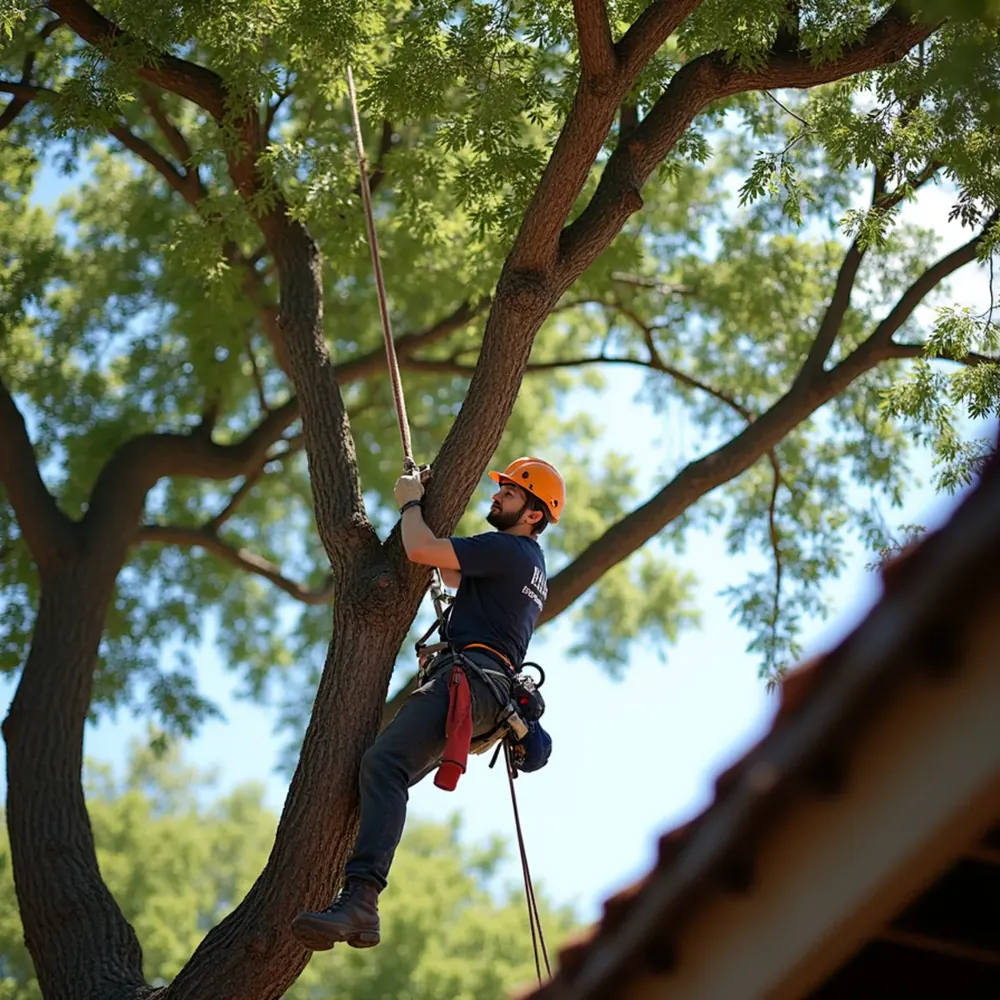

Crape myrtles are everywhere in San Antonio — lining medians, framing porches, and blooming through the hottest part of summer. Every winter, many of them also get chopped down to thick, knuckled stubs. It's so common that people assume that's how crape myrtles are supposed to be pruned. It isn't.
Here's when to prune crape myrtles in San Antonio, how to prune them so they keep their natural shape, and how to deal with the bark scale that has turned so many trunks black.
Key Takeaways
- Prune crape myrtles in late winter (about January–February), before new growth starts.
- Skip "crape murder" — topping every stem creates weak, floppy shoots and permanent knobs.
- Remove suckers, crossing branches, dead wood, and inward growth instead of shortening everything.
- Black, sooty bark often means crape myrtle bark scale — scrub it, and treat heavy cases per the label.
The Best Time to Prune
Late winter — generally January through February, while the tree is dormant and before new growth starts — is the best time for structural pruning. You can see the branch structure clearly, cuts close quickly once spring growth begins, and the tree still blooms on new growth that summer.
Crape myrtles aren't affected by oak wilt, so the February–July restriction that applies to live oaks doesn't apply here. Light trimming, like removing suckers or dead twigs, can be done any time.
What "Crape Murder" Is and Why to Skip It
Crape murder is the habit of cutting every main stem back to the same height each year, leaving thick stubs. The tree answers with a cluster of long, whippy shoots at each cut. Those shoots are weakly attached, often flop under the weight of their blooms, and build ugly knobs over time.
Texas A&M AgriLife Extension horticulturists have long recommended against topping crape myrtles. A crape myrtle that's too big for its spot is better replaced with a dwarf or intermediate variety than cut back every year.
How to Prune a Crape Myrtle the Right Way
Good crape myrtle pruning is mostly about removing things, not shortening everything:
- Remove suckers: Cut sprouts at the base and along the lower trunks flush to where they start.
- Take out crossing and rubbing branches: Remove the weaker of any two branches that rub or cross through the center.
- Thin inward growth: Open the center so air and light reach the interior.
- Remove dead wood: Cut back to live tissue or to the branch collar.
- Limb up if you like: Remove lower side branches on the main trunks to show off the bark.
- Use proper cuts: Cut back to a side branch or the branch collar, never to a stub in the middle of a limb.
Is It Too Late to Prune in Spring?
Once new growth is well underway, heavy pruning can delay or reduce blooms that summer. You can still remove suckers, dead wood, and broken or crossing branches in spring; save bigger structural changes for the next late-winter dormant season.
Removing spent seed heads after the first bloom is optional. On smaller trees it can encourage a second flush of flowers.
Black Trunks? Check for Crape Myrtle Bark Scale
If your crape myrtle's bark is turning black, look closely for small white or gray felt-like spots on the trunk and branches, which ooze pink fluid when crushed. That's crape myrtle bark scale, an invasive insect that has spread across Texas. The black coating is sooty mold growing on the sticky honeydew the insects produce.
AgriLife Extension recommends combining approaches: gently scrubbing infested trunks with soapy water and a soft brush, and for heavy infestations, treating with products labeled for scale, applied according to the label. Healthy, well-watered trees tolerate infestations better.
When to Call a Pro
Large, multi-trunk crape myrtles that have been topped for years may need several seasons of corrective pruning to regain a natural shape — choosing the strongest shoots at each knuckle and removing the rest. It's slow, careful work, and it's worth doing right. We prune crape myrtles as part of residential trimming visits, along with the oaks and shade trees around them.
Related Services & Areas
Frequently Asked
When should crape myrtles be pruned in San Antonio?
What is crape murder?
Is it too late to prune crape myrtles in spring?
The Bottom Line
Crape myrtles don't need to be cut back to bloom. Prune them lightly in late winter, remove what's dead, crossing, or sprouting from the base, and keep an eye out for bark scale. You'll get a stronger tree that looks good all year.
Need Help With Your Trees?
Get a free, no-pressure written estimate from a local, fully insured crew. Same-day and 24/7 emergency service available across San Antonio, Bexar County & the Texas Hill Country.