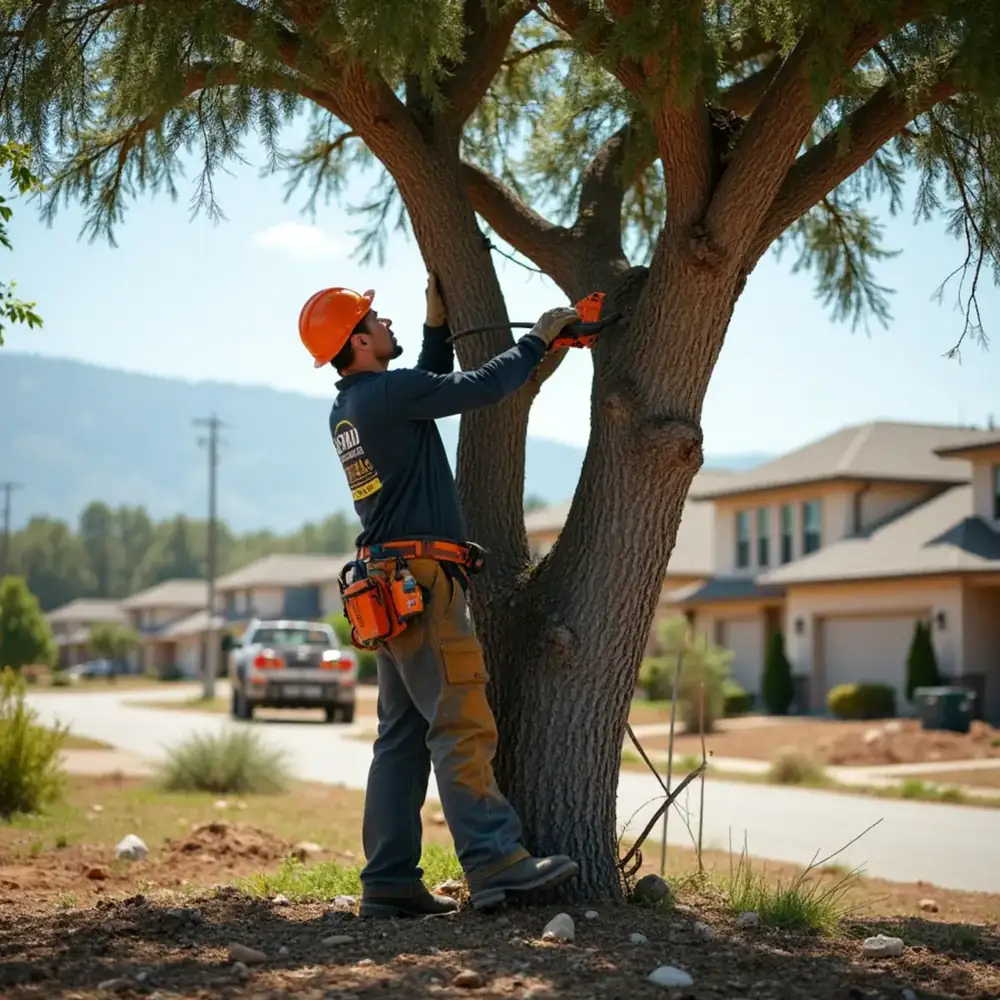
If you bought a new home in one of San Antonio's booming subdivisions, you probably inherited a few builder-planted trees — young oaks, elms, or pistaches staked in the yard. What you do with them in the first five years determines whether they grow into strong, safe shade trees or expensive problems. The good news: early structural pruning is cheap, quick, and hugely valuable.
Key Takeaways
- The first five years of pruning set a tree's structure for its whole life.
- Aim for one dominant central leader with well-spaced, well-attached scaffold branches.
- Fix competing leaders and tight, included-bark forks while they're finger-thick.
- Don't strip the lower branches all at once — raise the canopy gradually.
Why the First Years Matter Most
A young tree is like a young athlete — train it right early and it develops good structure for life; ignore it and bad habits become permanent. Small corrective cuts on a sapling prevent the massive, expensive removals of weak limbs decades later. The branches you shape now, when they're finger-thick, would be major surgery once they're the size of your leg.
The Goal: One Strong Leader
For most shade trees, the aim of structural pruning is a single dominant central leader — one main trunk — with well-spaced, well-attached side branches. Left alone, many young trees develop competing leaders (two or more trunks racing for the top) that form weak, included-bark unions destined to split in a storm. Selecting and encouraging one leader early is the most important thing you can do.
What Early Pruning Looks Like
Structural pruning on a young tree is light and precise, not heavy:
- Pick the leader: Choose the strongest vertical stem and subordinate or remove competitors.
- Fix weak forks: Remove or shorten branches forming tight, included-bark V's.
- Space the scaffolds: Keep main side branches well distributed up and around the trunk, not clustered.
- Remove the problems: Take out dead, crossing, or rubbing branches — but keep plenty of canopy for growth.
Don't Over-Prune
A common mistake is stripping a young tree's lower branches all at once for a 'clean' look. Those lower limbs help the trunk grow strong and thick — remove them too fast and you get a weak, top-heavy tree. Structural pruning is a gradual, multi-year process: a little each year, raising and shaping the canopy slowly as the tree grows.
A Neighborhood-Wide Opportunity
In fast-growing areas like Converse and Alamo Ranch, entire streets were planted with young trees at the same time — which means a whole neighborhood's canopy is being shaped (or neglected) right now. Homeowners who invest a little in structural pruning during these years will have dramatically better, safer, more valuable trees than the neighbors who wait. It's the definition of cheap insurance.
Related Services & Areas
Frequently Asked
When is the best time to schedule preventive tree pruning in San Antonio?
Can I prune a live oak between February 1 and July 1?
How much does tree service cost in San Antonio?
The Bottom Line
Train young trees right and you'll never pay to fix them later. A little structural pruning now, across the first five years, is the difference between a strong shade tree and an expensive problem.
Need Help With Your Trees?
Get a free, no-pressure written estimate from a local, fully insured crew. Same-day and 24/7 emergency service available across San Antonio, Bexar County & the Texas Hill Country.