In a dry San Antonio summer, a lot of live oaks look rough. Leaves brown at the edges, the canopy thins, and owners start worrying about oak wilt. Sometimes they're right. Often the tree is simply thirsty.
The difference matters. Drought stress usually improves with water and time. Oak wilt is a fatal fungal disease that spreads from tree to tree through connected roots, and every week of delay can let it reach more of your oaks. Here's how to tell them apart.
Key Takeaways
- Veinal necrosis — yellow or brown veins on live-oak leaves — is the signature oak wilt symptom.
- Oak wilt spreads through connected roots, so infected live oaks appear in expanding groups.
- Drought shows as scorched leaf edges, even canopy thinning, and recovery after rain.
- When a valuable oak is in doubt, test it — Texas A&M AgriLife's diagnostic lab can confirm oak wilt.
How Oak Wilt Looks on Live Oaks
The signature symptom on live oaks is veinal necrosis: leaves with yellow or brown veins while the tissue between them stays green for a while. Affected leaves often drop in large numbers, and a tree can lose much of its canopy within weeks, frequently in spring or early summer.
Oak wilt also leaves a pattern on the property. Because the fungus moves through root grafts, infected live oaks tend to appear in an expanding group, with dead and dying trees at the center and newly symptomatic trees at the edges. One oak declining next to a neighbor's dead oak is a red flag.
How Oak Wilt Looks on Red Oaks
Texas red oaks and Spanish oaks are extremely susceptible. Infected red oaks can wilt and turn brown rapidly, often dying within weeks. Dead and dying red oaks can also form fungal mats under the bark that attract sap-feeding beetles — the main way the disease jumps to new areas. That's why diseased red oaks need careful handling, and their wood shouldn't be stored as firewood unless it's been properly treated or cured.
How Drought Stress Looks
Drought symptoms tend to be more uniform and gradual:
- Leaf scorch: Browning starts at the leaf edges and tips rather than along the veins.
- Whole-tree pattern: The entire canopy thins evenly, often starting at the top and outer edges.
- Slow progression: Decline builds over weeks or months of heat and dry weather.
- Recovery after rain: New growth appears after a good soaking or a wet spell.
- The neighbors look the same: Trees across the area show similar stress, not a single spreading group.
When Both Are Possible, Test
Symptoms overlap, and a drought-stressed tree can also be infected. When a valuable oak shows suspicious symptoms, a lab test gives a definite answer. Texas A&M AgriLife's Plant Disease Diagnostic Laboratory tests samples for oak wilt, and the Texas A&M Forest Service's oak wilt resources explain how samples should be collected. An arborist can take samples correctly — branch sections from symptomatic but still-living limbs work best.
What to Do in Each Case
For drought stress: water deeply and slowly around the drip line rather than at the trunk, every few weeks during long dry spells, following current SAWS watering rules. Spread a few inches of mulch over the root zone, keep it off the trunk, and skip fertilizer on a drought-stressed tree.
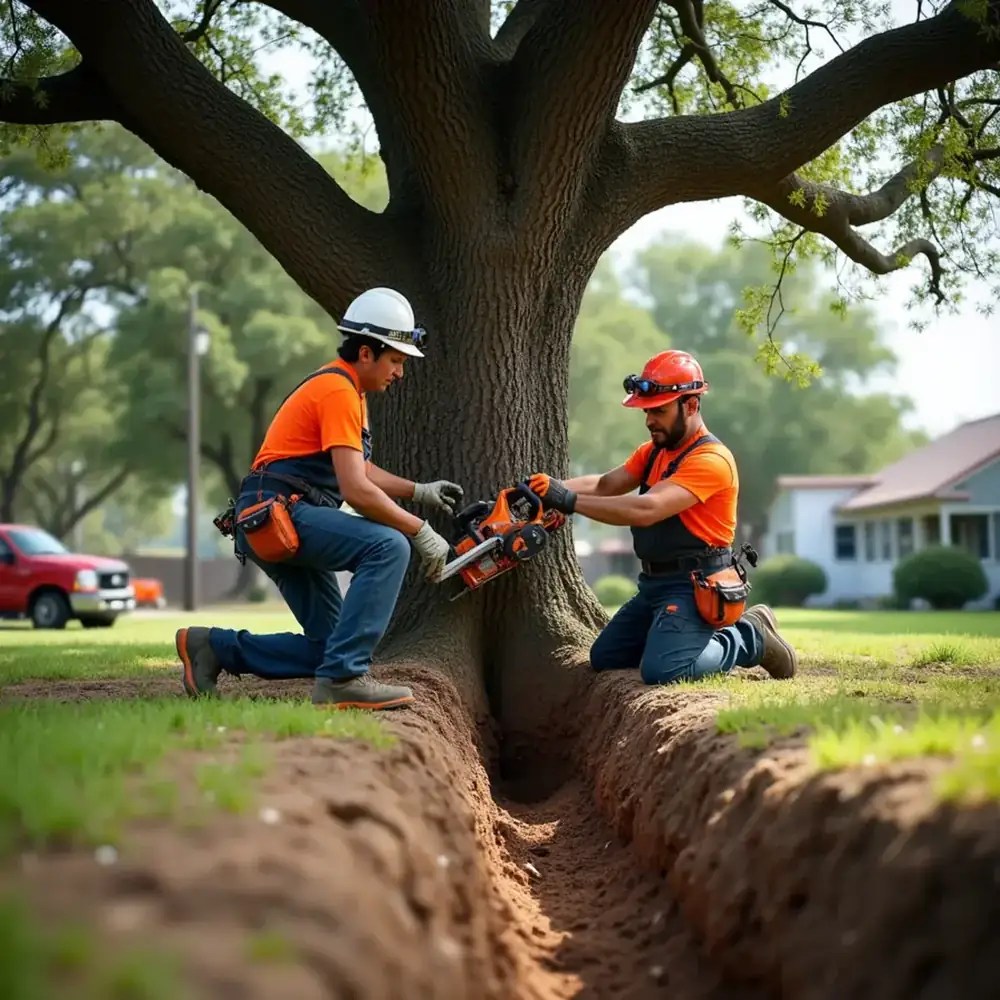
For suspected oak wilt: act quickly. Treatment options include trenching to break root connections around an infection center and injecting high-value live oaks with a systemic fungicide to protect them. Avoid pruning or wounding oaks between February 1 and July 1, and paint any unavoidable wound immediately.
Other Look-Alikes
A few other problems get confused with both. Hypoxylon canker shows up as crusty gray or brown patches on the trunks of stressed trees. Root damage from construction, trenching, or added soil causes decline that mimics drought. And normal spring leaf drop on live oaks — when old leaves fall as new ones emerge — alarms owners who aren't used to it.
Related Services & Areas
Frequently Asked
How can I tell oak wilt from drought stress?
What is oak wilt and how does it affect Central Texas live oaks?
How should I water trees during a San Antonio drought?
The Bottom Line
Most browning oaks in a hot San Antonio summer are thirsty, not infected. But oak wilt moves fast and kills, so when leaves show veinal browning or oaks decline in a spreading group, get a professional assessment and a lab test right away.
Need Help With Your Trees?
Get a free, no-pressure written estimate from a local, fully insured crew. Same-day and 24/7 emergency service available across San Antonio, Bexar County & the Texas Hill Country.