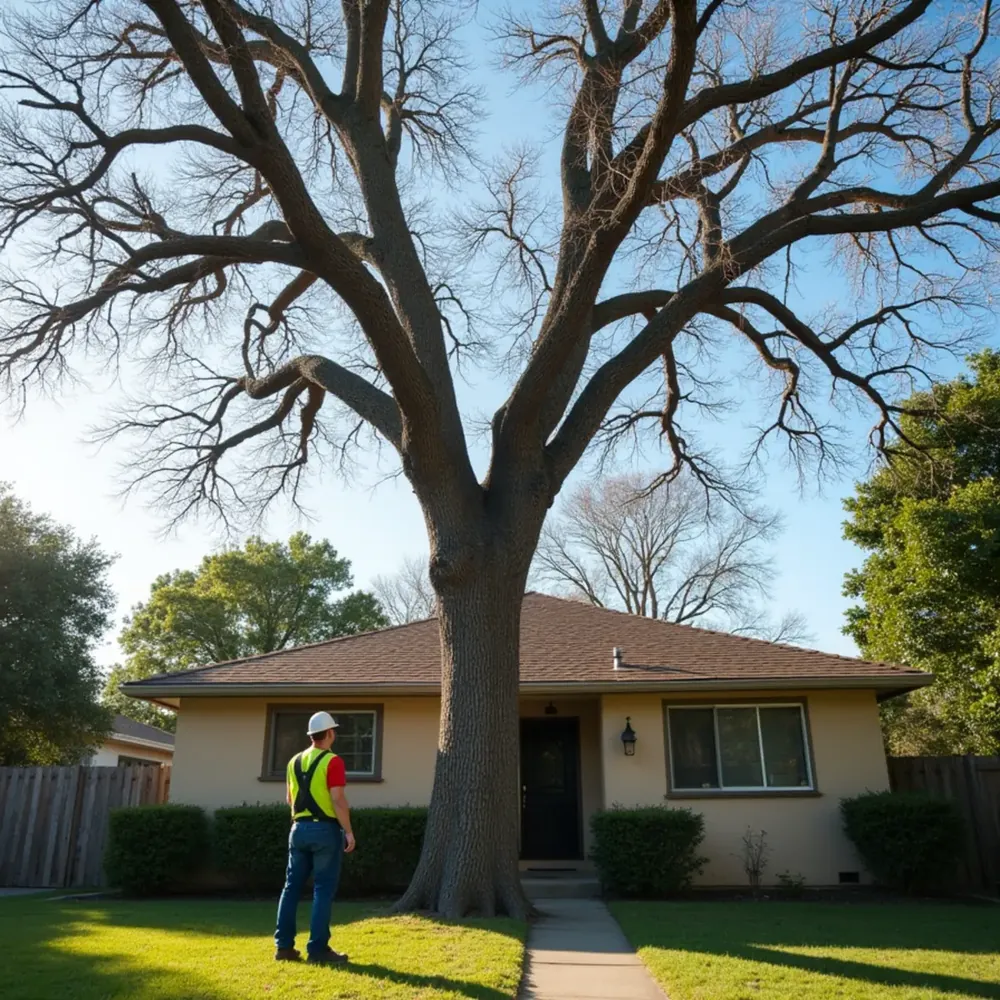
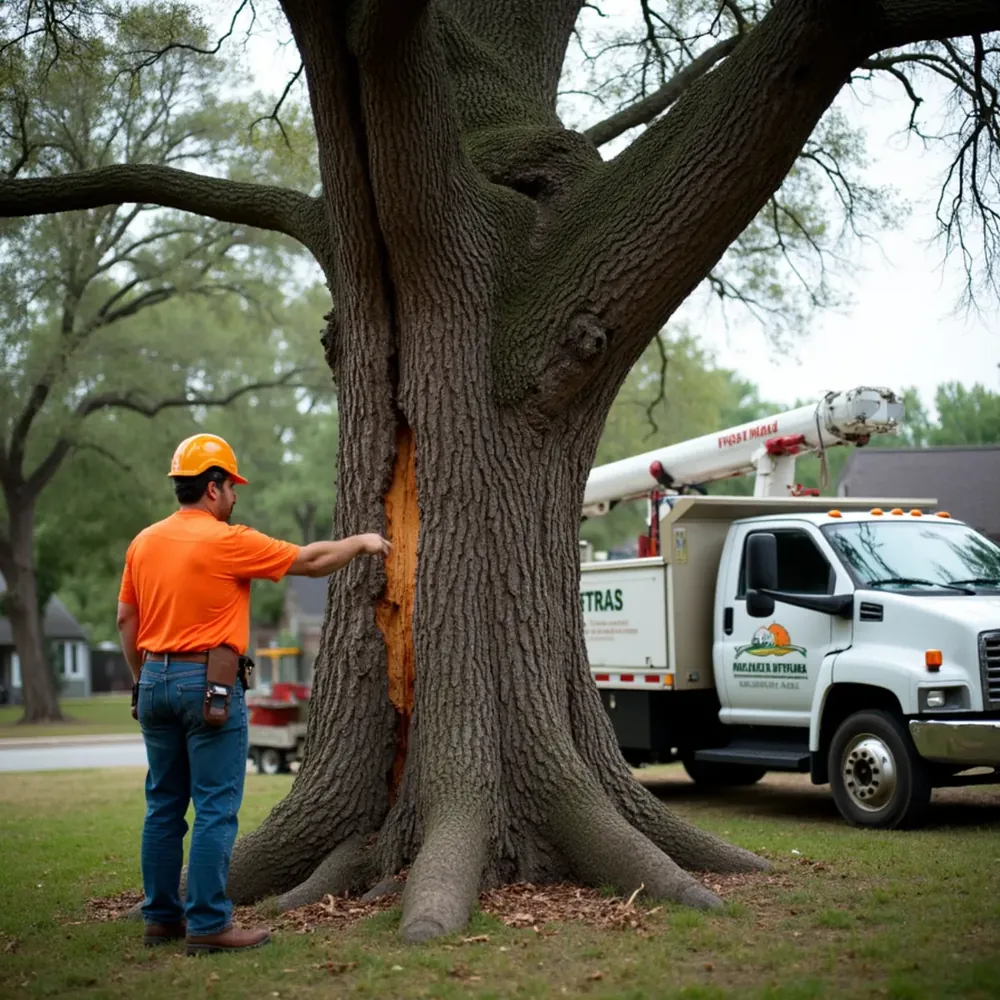
Trees rarely die overnight. In San Antonio, decline usually builds over a few seasons of drought, heat, root damage, or disease before the canopy finally gives up — and the signs show up earlier if you know where to look.
Spotting decline early matters for two reasons. A stressed tree caught in time can often be saved. A dying tree left standing becomes brittle and unpredictable, and the cost of removing it safely tends to rise the longer it waits.
Key Takeaways
- A thinning canopy, spreading deadwood, fungus, cracks, cankers, and a new lean are the clearest warning signs.
- The scratch test shows whether a twig is alive, but not whether the trunk or roots are sound.
- Drought-stressed trees can often recover; advanced rot, hypoxylon, and red-oak oak wilt usually can't be reversed.
- Dead trees get more brittle — and costlier to remove safely — the longer they stand.
9 Signs Your Tree Is in Trouble
Any one of these is worth a closer look. Several together usually mean serious decline:
- Thin or bare canopy: Fewer leaves than last year, or whole sections that didn't leaf out in spring.
- Dead limbs that keep multiplying: Brittle, leafless branches, especially high in the crown.
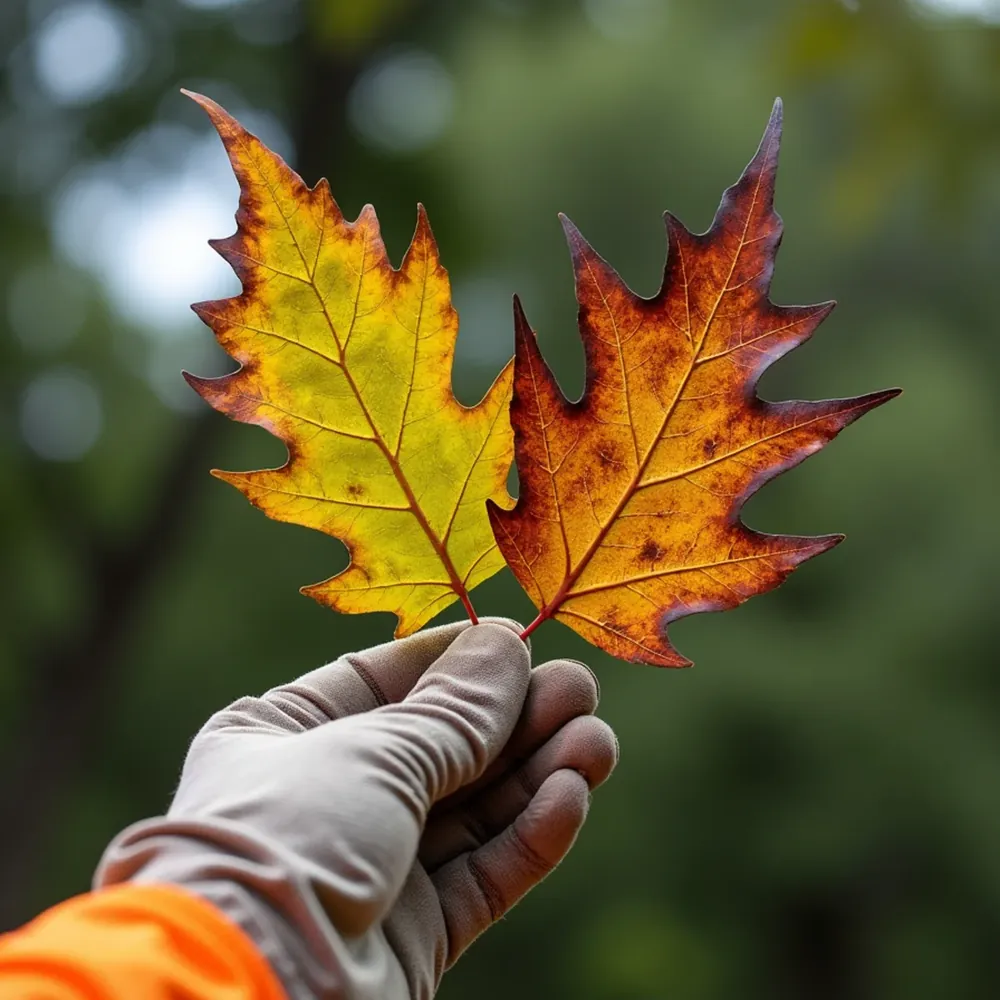
- Brown or scorched leaves in season: Leaves browning from the edges or along the veins well before fall.
- Bark falling off: Loose or peeling bark exposing bare wood on a species that shouldn't shed it.
- Fungus at the base or on the trunk: Mushrooms, shelf-like conks, or crusty growth, which signal internal decay.
- Cracks and splits: Vertical cracks in the trunk or splits at major forks.
- Cankers: Sunken, dead patches of bark — hypoxylon canker shows as gray-brown crust on stressed oaks.
- Sprouts along the trunk: Clusters of small shoots on the trunk or base, often a stress response.
- Soil heaving or a new lean: Raised or cracked soil at the base, or a lean that appeared recently.
Try the Scratch Test
To check whether a branch is alive, use a fingernail or pocketknife to scrape a small patch of bark on a twig. Moist, green tissue underneath means that part is alive. Brown, dry tissue means it's dead. Work from the tips toward the trunk: if the twigs are dead but larger limbs are green, the branch may still recover.
The scratch test only tells you about the spot you scratched. A tree can have green twigs and serious root or trunk decay, so treat it as a starting point, not a diagnosis.
Can a Dying Tree Be Saved?
Sometimes. Trees declining from drought stress, compacted soil, or poor pruning often recover with deep watering, mulching, and corrective care — especially when the problem is caught before a large share of the canopy is lost. Some diseases can be managed too: high-value live oaks threatened by oak wilt can be protected with fungicide injection as part of a broader plan.
Other problems can't be reversed. Advanced root rot, a trunk hollowed by decay, hypoxylon canker on a severely stressed tree, and oak wilt in red oaks usually mean the tree has to come down. The honest answer depends on the cause, which is why diagnosis comes before treatment.
A Dead Tree With Green Leaves?
It happens more often than people expect. A tree can push out a last flush of leaves from stored energy even as its roots or trunk fail, and sprouts from the base or trunk can stay green on an otherwise dead tree. Green leaves don't guarantee a healthy tree; structure and root condition matter more.
How Long Can a Dead Tree Stand?
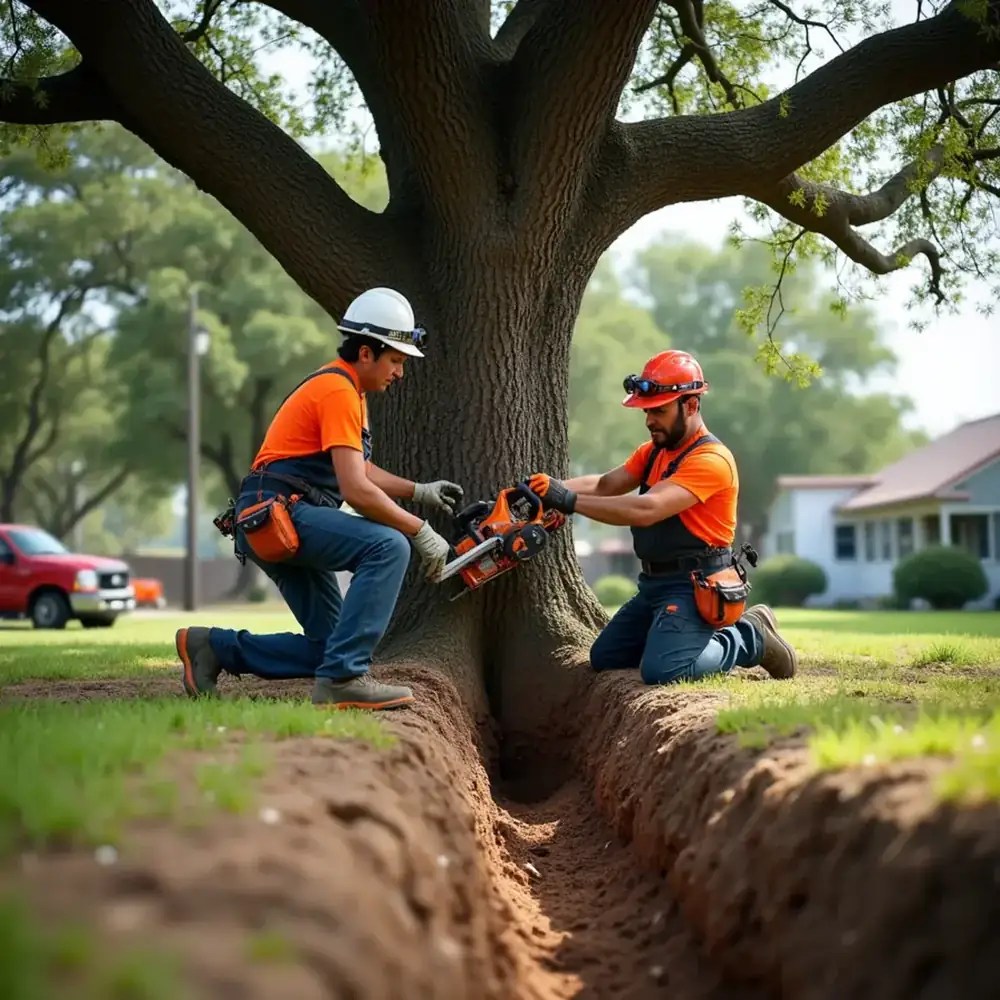
There's no reliable timeline. Some dead trees stand for years; others drop large limbs within months. What is predictable is that dead wood dries out, turns brittle, and loses strength, which makes it more dangerous to climb and remove. A dead tree near a house, driveway, play area, or power line should be dealt with sooner rather than later, and badly decayed dead trees often need a bucket truck or crane instead of a climber.
When to Call an Arborist
If your tree shows several of these signs, stands near something valuable, or declined quickly, have it inspected. An on-site assessment looks at the canopy, trunk, root zone, and site history to separate a stressed tree that can recover from one that has become a hazard — and we'll tell you plainly which one you have.
Related Services & Areas
Frequently Asked
Can a dying tree be saved?
How do I do a scratch test on a tree?
How do I know whether a damaged tree needs removal?
The Bottom Line
A dying tree gives warning signs. Catch them early and many trees can be saved; wait too long and you're paying for a harder, riskier removal. When in doubt, have the tree assessed before deciding either way.
Need Help With Your Trees?
Get a free, no-pressure written estimate from a local, fully insured crew. Same-day and 24/7 emergency service available across San Antonio, Bexar County & the Texas Hill Country.