Look up at almost any older tree in San Antonio and you'll see them: fist-sized gray-green tufts clinging to the branches. That's ball moss, and it's one of the most misunderstood things in the local landscape. Homeowners are told it's killing their trees and rush to have it stripped out — often unnecessarily.
Here's what ball moss actually is, when it matters, and when it's fine to leave alone.
Key Takeaways
- Ball moss is an epiphyte, not a parasite — it doesn't feed on your tree.
- Heavy ball moss usually signals a shady, low-airflow interior canopy, not a disease.
- Proper thinning discourages regrowth far better than picking tufts off by hand.
- On a healthy tree, some ball moss is harmless and can be left alone.
It's Not a Parasite
First, the big one: ball moss (Tillandsia recurvata) is not a parasite. It's an epiphyte, a relative of the pineapple and Spanish moss that perches on branches and pulls moisture and nutrients from the air and rain — not from the tree. It doesn't sink roots into the wood or steal the tree's sap. A healthy tree can carry a lot of ball moss without harm.
So Why Does It Show Up?
Ball moss thrives in shady, humid, low-airflow conditions — exactly the interior of a dense, under-pruned canopy. That's the real signal worth paying attention to: heavy ball moss often means the tree's interior is too shaded and stagnant, which can itself lead to interior branch dieback (from lack of light, not from the moss).
In other words, a tree loaded with ball moss isn't being killed by the moss — but it may be telling you the canopy needs attention.
When Removal Actually Helps
There are legitimate reasons to reduce ball moss, especially on aging trees:
- Very heavy loads: On a struggling or aging tree, a huge ball-moss load adds weight and shades out interior growth.
- Alongside proper pruning: Thinning the canopy to improve light and airflow discourages regrowth far better than picking off moss.
- Aesthetics: Some homeowners simply prefer a cleaner look — a valid reason, done correctly.
The Right Way to Handle It
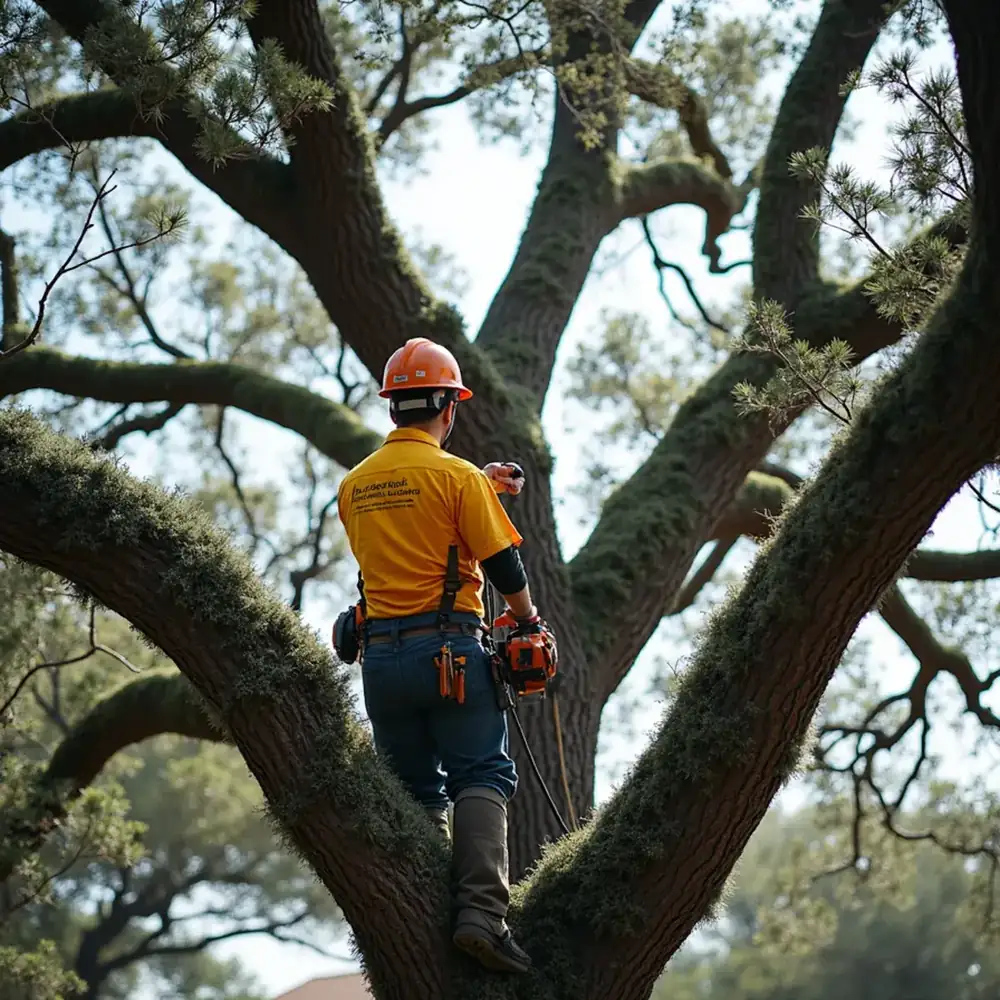
The most effective approach isn't stripping every tuft by hand (it grows back) — it's proper structural and thinning pruning that opens the canopy to light and air, which naturally discourages ball moss. On aging pecans and oaks in older neighborhoods like Windcrest, we often combine deadwood removal with canopy thinning; the tree gets healthier and the ball moss has a harder time reestablishing.
Beware anyone selling a 'ball moss spray' as a cure-all — treatments exist but are situational, and the underlying fix is almost always light and airflow.
The Bottom Line
If your healthy shade tree has some ball moss, relax — it's not hurting the tree. If an aging tree is heavily loaded and thinning inside, that's worth a look, not because the moss is a killer but because it flags a canopy that could use professional thinning. When in doubt, an assessment costs far less than unnecessary moss-stripping.
Related Services & Areas
Frequently Asked
When is the best time to schedule preventive tree pruning in San Antonio?
Can I prune a live oak between February 1 and July 1?
How do I know whether a damaged tree needs removal?
The Bottom Line
Ball moss is a messenger, not a murderer. If a tree is heavily loaded and thinning inside, book a proper thinning; if it's healthy with a few tufts, save your money.
Need Help With Your Trees?
Get a free, no-pressure written estimate from a local, fully insured crew. Same-day and 24/7 emergency service available across San Antonio, Bexar County & the Texas Hill Country.