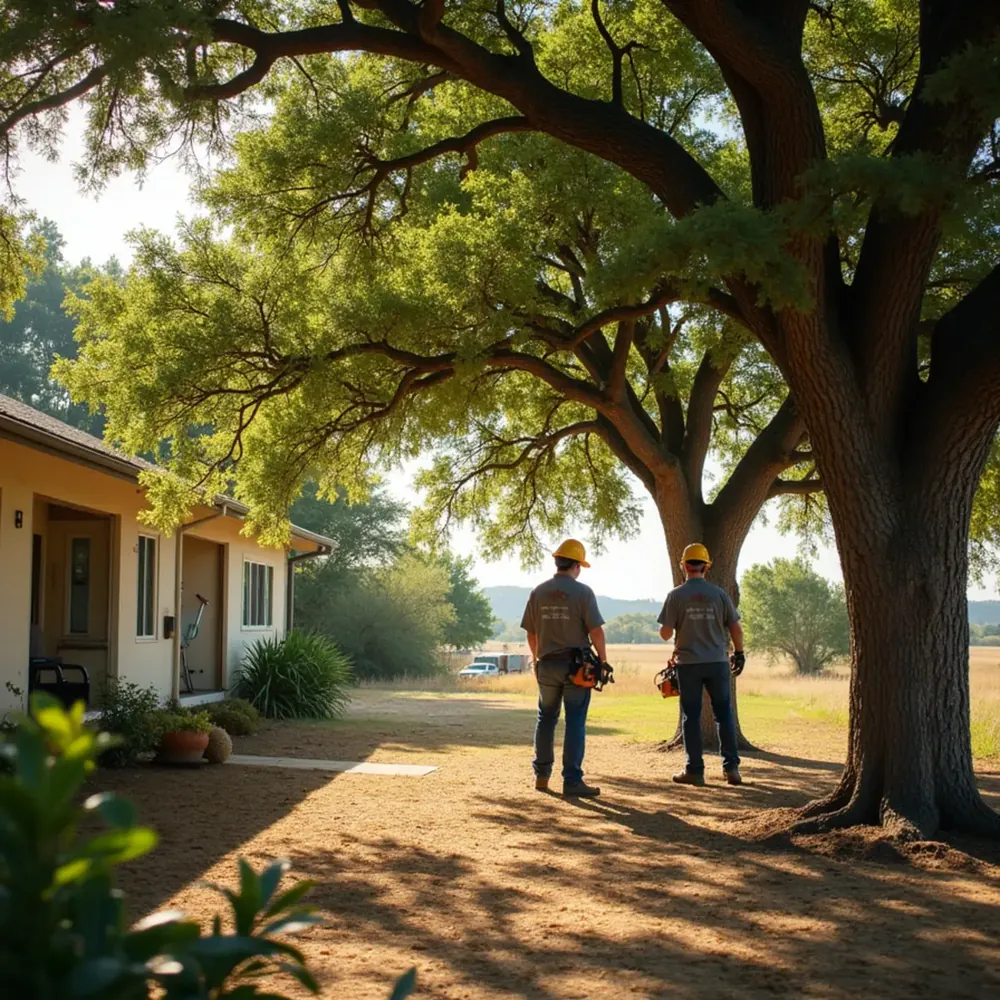
Few trees split opinion in South Texas like mesquite. In a yard, a mature honey mesquite gives light, airy shade, handles drought without complaint, and has a shape people love. On pasture and homesites to the south and west of San Antonio, the same tree spreads into thickets that are hard to clear and harder to keep cleared.
Here's how to keep a good mesquite healthy, and how to get rid of the ones you don't want so they don't come right back.
Key Takeaways
- A well-pruned yard mesquite is a tough, low-water shade tree.
- Mesquite resprouts from buds at and below the soil line, so surface cutting creates thickets.
- Grubbing or grinding below the bud zone, or label-directed treatment, gives lasting control.
- On acreage, pair mulching with follow-up treatment, and keep a few good mesquites for shade.
Why Mesquite Thrives Here
Honey mesquite is built for dry country. It sends down deep roots, fixes its own nitrogen, and tolerates poor, alkaline soil and long droughts. Its seeds pass through livestock and wildlife, which is why it spreads so quickly into grazed land. Those same traits make it a tough, low-water shade tree in a yard.
Trimming a Yard Mesquite
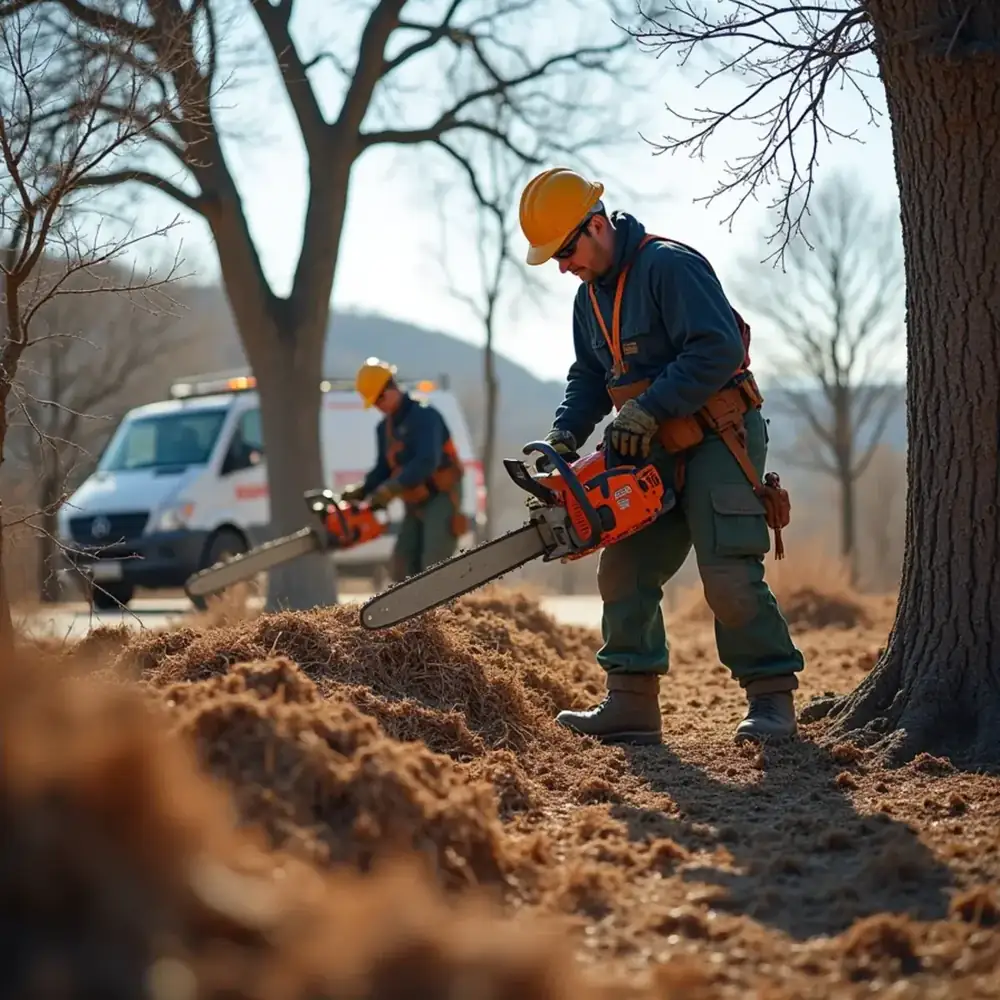
A well-pruned mesquite holds up better in storms and looks better. Focus on:
- Thinning: Mesquite grows dense, crossing branches; thinning lets wind pass through the crown.
- Raising the canopy: Lifting low limbs gives clearance for people, mowers, and vehicles.
- Deadwood and crossing limbs: Removing them reduces breakage and rubbing wounds.
- Multi-trunk balance: Mesquites often have several trunks; reducing the heaviest leaders prevents splits.
Common Mesquite Problems
Mesquite twig girdlers are beetles that chew rings around small branches, which then die and drop — usually more annoying than harmful. Mistletoe clumps grow on many mesquites and should be pruned out where reachable. Multi-trunk mesquites can split apart in strong winds or under heavy, dense crowns, which is why thinning and balancing matter.
Why Mesquite Keeps Coming Back
Mesquite has a ring of dormant buds at and just below the soil surface. Cut the tree at ground level and those buds sprout, often producing several new stems where there was one. That's why mowing, shredding, or chainsawing mesquite without dealing with the bud zone tends to make a thicket worse over time.
Removing Mesquite for Good
Lasting control means dealing with the bud zone:
- Grubbing: Removing the plant below the bud zone with a grubbing attachment or by digging.
- Deep stump grinding: Grinding a yard mesquite stump below the bud zone stops most regrowth.
- Label-directed treatment: Herbicides labeled for mesquite, applied exactly as the label directs, control resprouts and standing plants.
- Follow-up: Expect to spot-treat a few sprouts the following season, whichever method you use.
Mesquite, Fire Safety, and Your Home
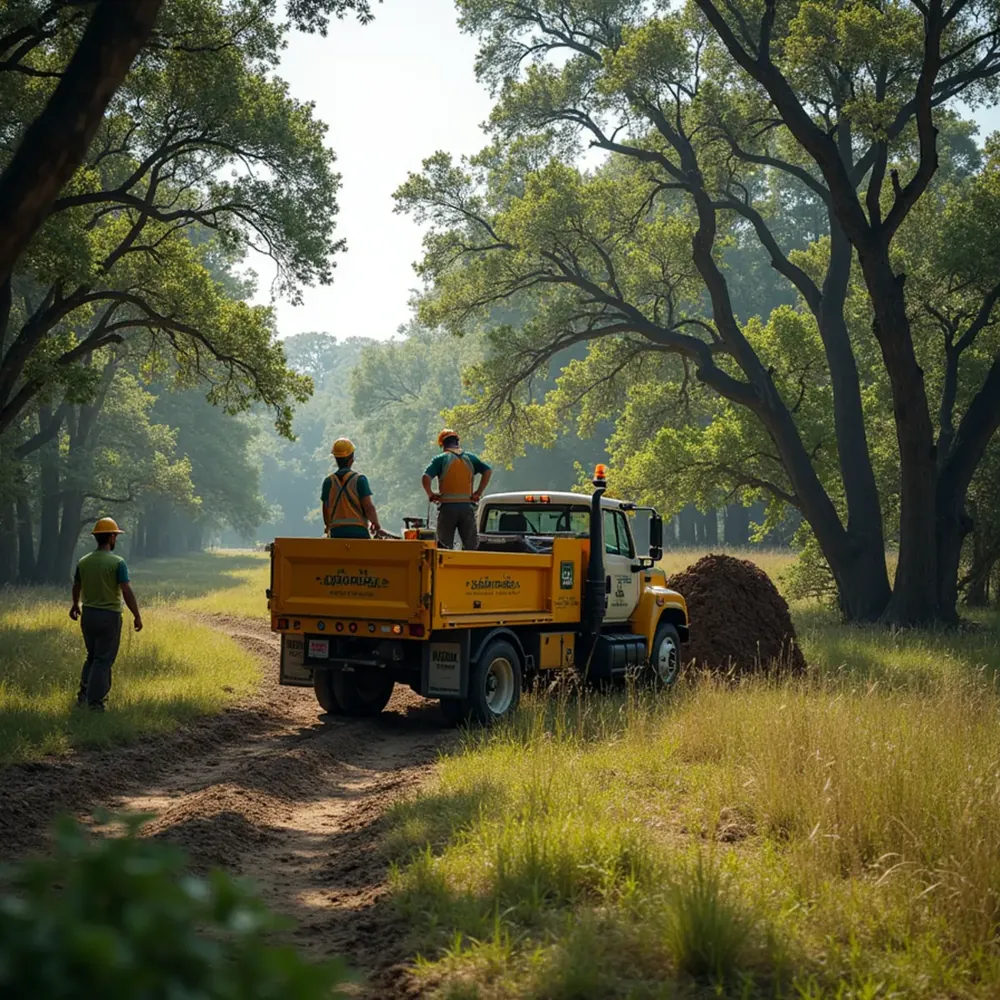
Dense mesquite and dead wood near houses, barns, and equipment burn hot during dry, windy spells. Keep a cleared zone around structures, remove dead mesquite and fallen limbs, and lift the canopy of the trees you keep so fire can't climb from the grass into the crown. Mesquite wood is also prized for smoking and grilling, so ask to have cut wood left in usable lengths if you want it.
Thorns make mesquite work slow and hard on equipment and hands, which is one reason clearing and trimming quotes for mesquite can run higher than for the same amount of other brush.
Clearing Mesquite on Acreage
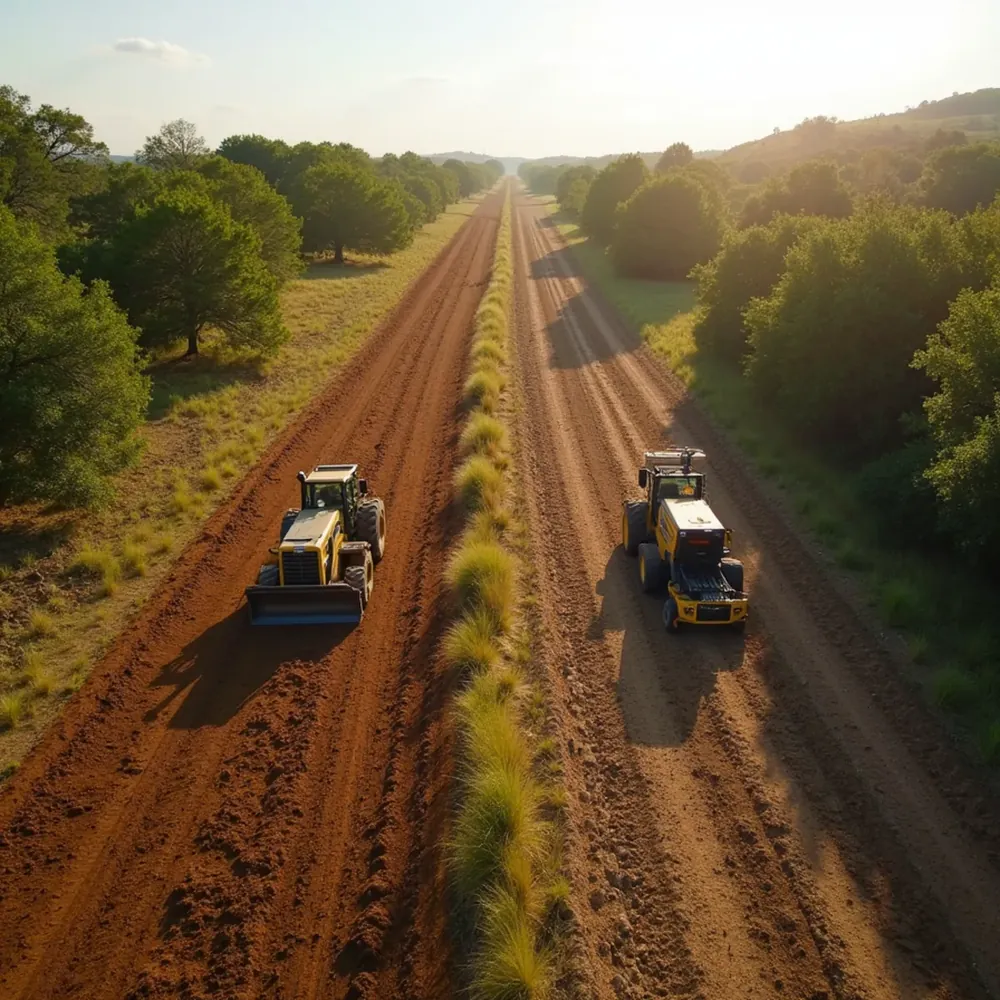
On larger tracts, the method depends on the goal. Forestry mulching clears quickly and leaves ground cover but doesn't stop mesquite from resprouting, so it's usually paired with follow-up treatment. Grubbing costs more up front but gives longer-lasting control. Many owners keep a few well-shaped mesquites near the house or pens for shade while clearing the rest. Our land clearing team can walk the property and recommend a plan.
Related Services & Areas
Frequently Asked
Why does mesquite keep coming back after I cut it?
When should I trim a mesquite tree?
Is mesquite a good yard tree?
The Bottom Line
Mesquite is an asset in the right spot and a lasting chore in the wrong one. Prune the keepers, deal with the bud zone on the rest, and plan for a light follow-up the season after clearing.
Need Help With Your Trees?
Get a free, no-pressure written estimate from a local, fully insured crew. Same-day and 24/7 emergency service available across San Antonio, Bexar County & the Texas Hill Country.