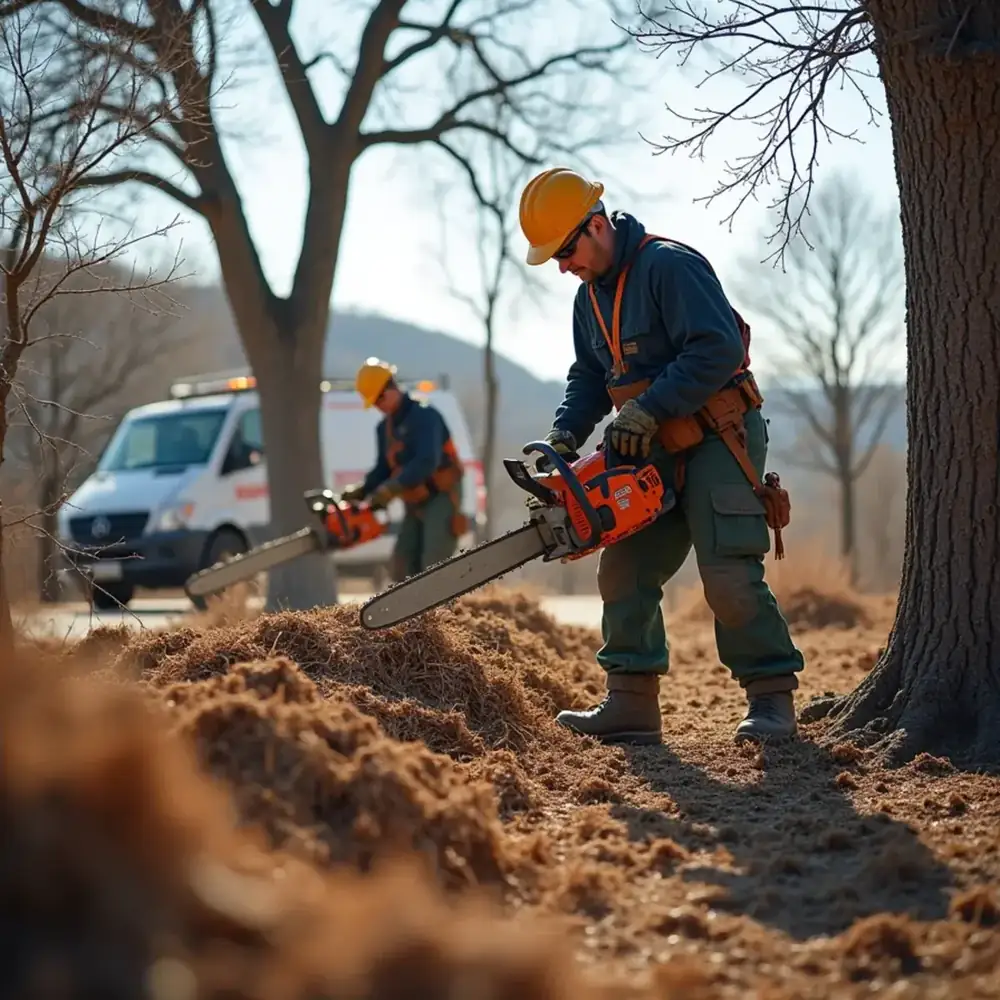
Every December, San Antonio and the Hill Country brace for cedar fever — the runny noses, itchy eyes, and misery that hit when the male Ashe junipers release their pollen. It's one of the most potent seasonal allergens in the country. And that same tree, cedar, is the one crowding lots, drinking groundwater, and fueling wildfire across the region.
Here's why winter is the smart time to deal with it.
Key Takeaways
- The 'cedar' behind cedar fever is Ashe juniper, and clearing it near the house cuts local pollen exposure.
- Late fall through winter is the ideal clearing window — cooler, safer for oaks, quieter for wildlife.
- Clear selectively: keep the oaks, remove the juniper crowding them.
- If any oak must be cut while clearing, paint the wound immediately.
Cedar Isn't Really Cedar
The 'cedar' everyone complains about is actually Ashe juniper (Juniperus ashei). It's native, but with a century of fire suppression it has spread far beyond its natural range, choking out grasses and oaks across the Hill Country. A mature juniper can transpire a remarkable amount of water, competing with the trees and springs you'd rather keep.
Why Winter Is Prime Clearing Time
Late fall through winter is ideal for cedar clearing for several reasons. The weather is cooler for crews doing heavy work, there's less risk to nesting wildlife than in spring, and — crucially in oak country — it's the safe season to work near oaks without the peak oak-wilt risk of February through June. Clearing your cedar in December through early February lets you open up the lot while the oaks are dormant and the beetles are quiet.
The Cedar Fever Bonus
There's a direct payoff for allergy sufferers, too. The male junipers that release pollen are the culprits behind cedar fever. Thinning the cedar on and around your property won't cure regional cedar fever — the pollen travels for miles — but reducing the dense stands right by your house can cut your immediate exposure. Many Hill Country homeowners clear as much for their sinuses as for their views.
Clear Smart, Not Bare
Good cedar clearing is selective, not a scrape-it-all bulldozer job:
- Keep the oaks: Mark and protect live oaks and other hardwoods; clear the juniper crowding them.
- Create defensible space: Prioritize clearing cedar close to structures for wildfire safety.
- Mulch on site: Chipping cleared cedar into mulch reduces hauling and returns organic matter to the soil.
- Watch oak wounds: If any oaks must be cut during clearing, paint the wounds immediately.
A Job for Winter Booking
Because winter is peak clearing season, the calendar fills up — in cedar-heavy areas like Timberwood Park and Helotes, we book clearing work well ahead. If you're planning to reclaim a lot, create defensible space, or open a view, getting on the schedule in fall means the work gets done in the ideal window.
Related Services & Areas
Frequently Asked
Can I prune a live oak between February 1 and July 1?
How much does tree service cost in San Antonio?
When is the best time to schedule preventive tree pruning in San Antonio?
The Bottom Line
Cedar-fever season and cedar-clearing season are the same season for a reason. Book winter clearing to open your lot, reduce fuel and pollen, and protect your oaks while they're dormant.
Need Help With Your Trees?
Get a free, no-pressure written estimate from a local, fully insured crew. Same-day and 24/7 emergency service available across San Antonio, Bexar County & the Texas Hill Country.