San Antonians remember Winter Storm Uri for the power outages and burst pipes. But the trees took a beating too — and unlike a broken pipe, tree damage from that February 2021 freeze is still showing up years later, sometimes suddenly and dangerously.
If your trees 'came through it okay,' it's worth understanding why that might not be the whole story.
Key Takeaways
- Evergreen live oaks hold leaves in winter, so ice loads them far more heavily than bare trees.
- Uri created invisible damage — cracked unions and torn limbs — that still fails years later.
- A cracked union can hold for a season, then let go on a calm day.
- Restoration pruning and cabling can save many damaged trees; severe splits mean removal.
Why Our Trees Are So Vulnerable to Ice
San Antonio's signature live oaks are evergreen — they hold their leaves through winter. That's beautiful most of the year, but during an ice event it means every leaf becomes a surface for ice to cling to, dramatically increasing the weight load on the canopy. Cedar elms and other species added their own brittle limbs to the toll. Uri's prolonged, deep freeze overwhelmed trees that almost never see that kind of ice.
The Damage You Saw — and the Damage You Didn't
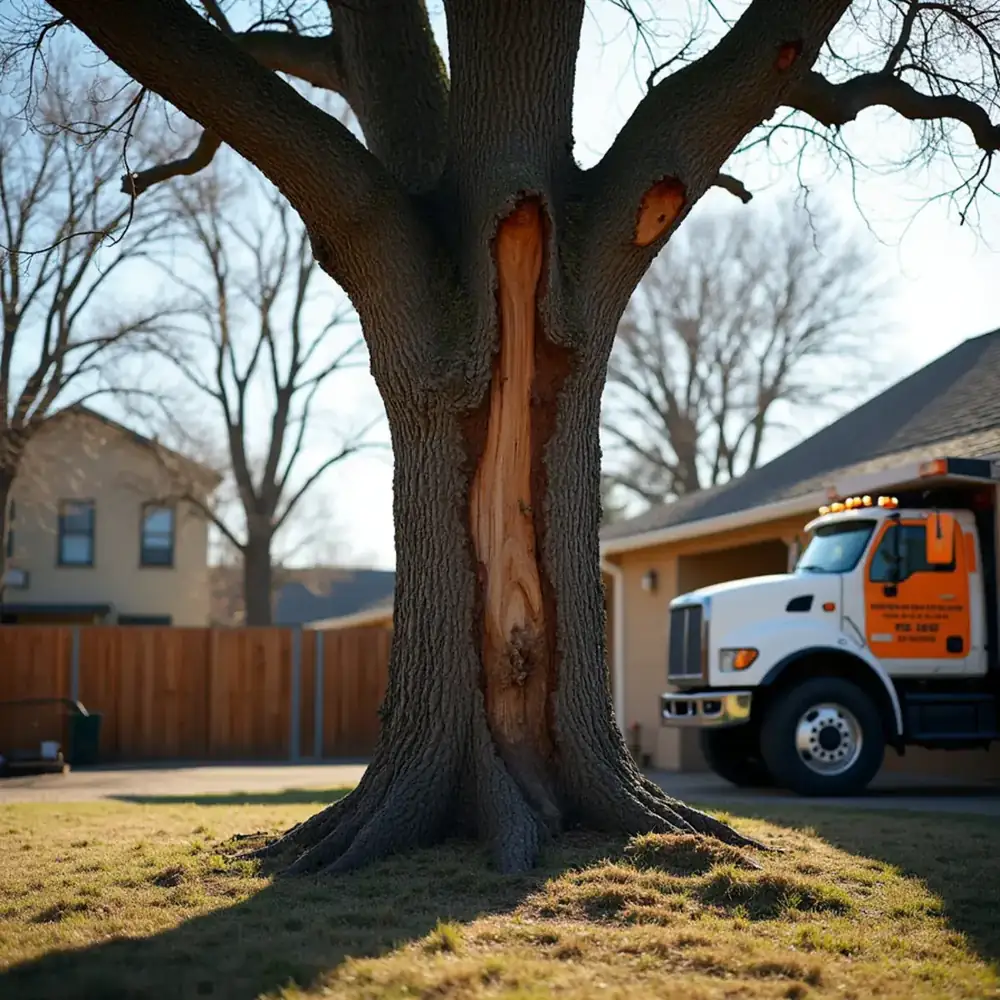
The immediate breakage was obvious: snapped limbs, split trunks, whole trees bent to the ground. But ice also created invisible damage — hairline cracks in branch unions, partially torn limbs that stayed attached, and stressed root systems. Those weakened points don't heal; they sit there as latent failures, waiting for the next wind, drought, or heavy rain to finish the job.
Why Limbs Are Still Failing Years Later
A cracked union can hold for a season or two, then let go on a calm day with no storm in sight. Decay often creeps into old wounds, weakening them further over time. This delayed failure is exactly what we still see across the city — trees dropping limbs that trace directly back to Uri-era cracks. Military-turnover areas like Universal City, with lots of mature trees and homes changing hands, are a common place for these hidden problems to surface at inspection.
How to Catch Hidden Damage
A professional inspection can find the cracks you can't see from the ground:
- Look for old wounds: Torn bark, sealed-over cracks, and stubs from past breakage mark weak points.
- Check the unions: V-shaped forks with included bark are prime candidates for delayed failure.
- Watch for dieback: Branches that never fully leafed out after the freeze may be dying back internally.
- Note any lean changes: A tree that shifted during or after the freeze needs a closer look at its roots.
What Can Be Done
Not every Uri-damaged tree needs removal. Restoration pruning can clean up torn wounds and rebalance a canopy over a season or two; cabling can support a weakened but salvageable union on a valued tree. Where the damage is too severe — a split main trunk, extensive decay — removal is the safe call. The key is catching it before the tree decides for you, ideally before the next storm season.
Related Services & Areas
Frequently Asked
How do I know whether a damaged tree needs removal?
Does homeowners insurance cover storm-damaged tree removal and cleanup?
When is the best time to schedule preventive tree pruning in San Antonio?
The Bottom Line
Uri's bill is still coming due across San Antonio. An inspection now finds the hidden cracks while they're still a pruning job — not an emergency.
Need Help With Your Trees?
Get a free, no-pressure written estimate from a local, fully insured crew. Same-day and 24/7 emergency service available across San Antonio, Bexar County & the Texas Hill Country.