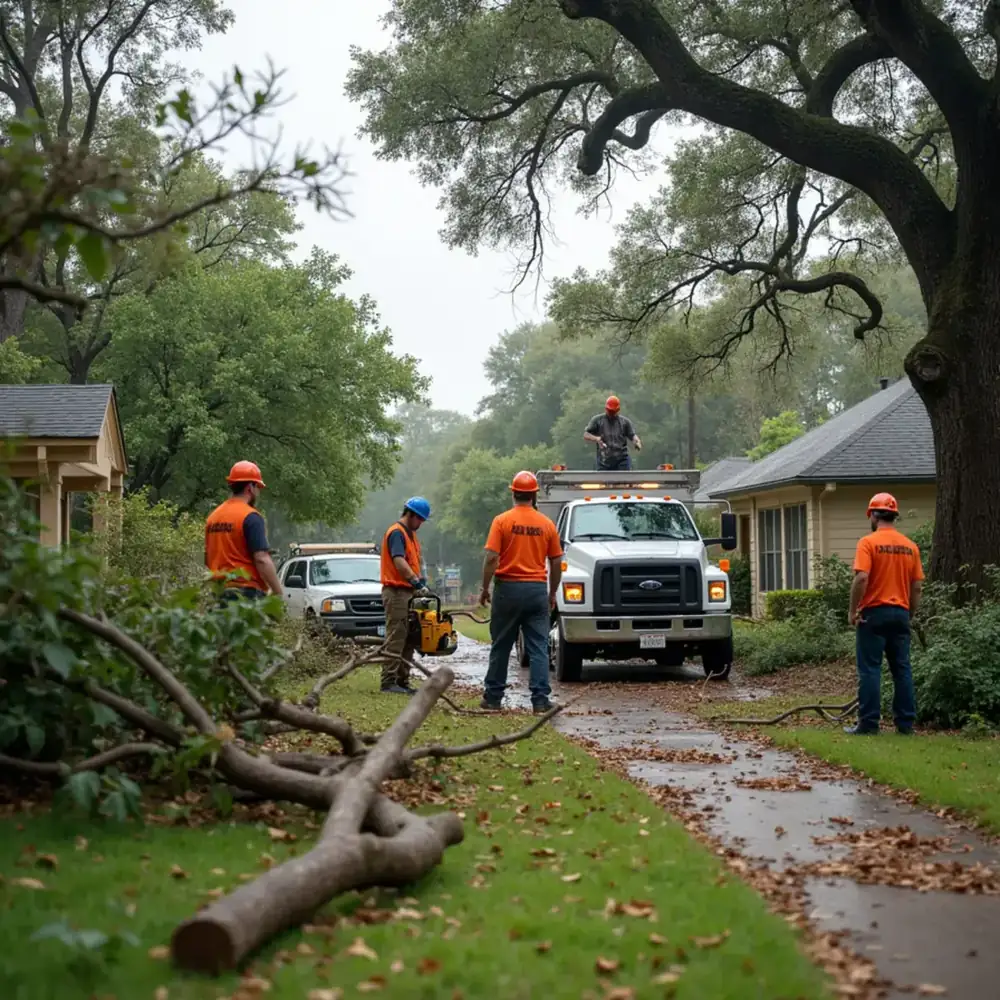
San Antonio sits in a corridor that gets hit with everything: springtime hail the size of golf balls, straight-line winds that snap limbs, and the occasional ice event. When the weather clears and your yard is a tangle of broken branches, the cleanup can feel overwhelming.
The good news is that storm cleanup follows a predictable order. Knowing it helps you stay safe, avoid storm-chaser scams, and give your insurance claim the best shot.
Key Takeaways
- Separate emergencies (trees on structures, cars, or lines) from cleanup — handle the hazards first.
- Document everything with dated photos before debris is hauled if you plan to file a claim.
- Verify a San Antonio Tree Maintenance License and insurance before letting any crew work.
- A post-storm thinning pass on the survivors prevents the next round of failures.
First, Separate Emergencies from Cleanup
A limb on the ground can wait an hour. A tree on the house, a trunk on a car, a limb tangled in a power line, or a tree leaning hard toward a structure cannot. Handle life-safety hazards first: keep clear, call CPS Energy or 911 for any line contact, and call an emergency tree crew for anything threatening a structure.
Once the true emergencies are handled, the rest is cleanup — and cleanup rewards patience and documentation.
Why Storm-Damaged Trees Are Dangerous to DIY
A broken limb hung up in the canopy is a 'widow-maker' waiting to drop. A bent-over sapling or a limb pinned under another is springloaded and can whip back when cut. Partially uprooted trees can slam back into place. This is exactly the situation where homeowners get hurt with chainsaws.
A trained crew reads the tension in a damaged tree and cuts in the right order so nothing releases unexpectedly.
Save the Evidence Before You Clean Up
If you're filing a claim, document before anything is hauled away. Photograph the whole scene, the close-up damage, any structure or vehicle damage, and the debris — all from safe ground. Note when the storm hit, and keep your estimate, invoice, and disposal details.
- Photograph everything: Whole tree, close damage, roofs, fences, vehicles, and debris, all dated.
- Keep paperwork: Estimate, invoice, and disposal records for the adjuster.
- Ask your insurer: Confirm what's covered — removal, stump work, temporary protection — before assuming.
Beware the Storm Chasers
After every big storm, out-of-town crews flood San Antonio neighborhoods offering cheap, cash-only work. Some are fine; many are unlicensed, uninsured, and gone by the time a problem surfaces. San Antonio requires a Tree Maintenance License for tree work inside city limits, with at least $300,000 in general liability insurance. Ask for the license number and a current insurance certificate before anyone touches your trees.
What a Full Cleanup Includes
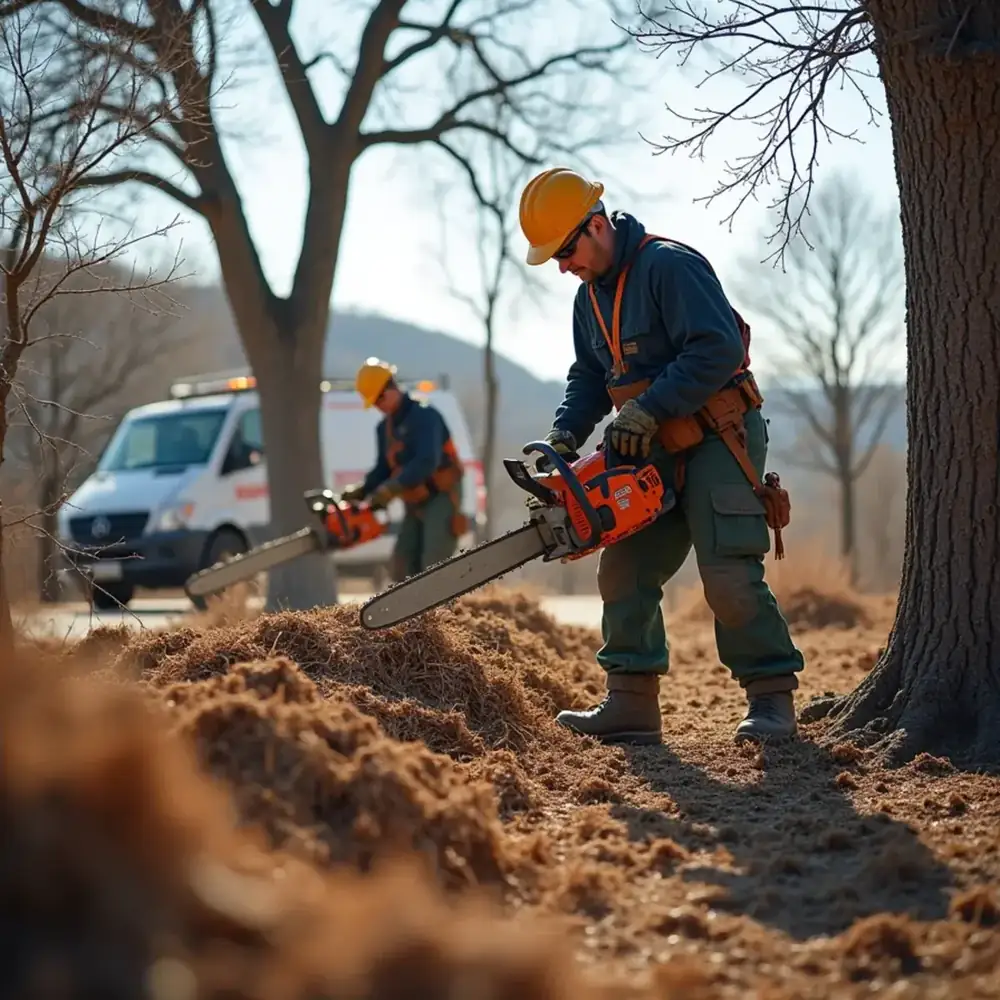
Proper storm cleanup runs from hazard assessment through final haul-off: clearing the priority hazards, cutting and chipping debris, evaluating which damaged trees can be saved with restoration pruning versus removed, and raking the site clean. In storm-prone areas like Kirby, where cedar elms and hackberries drop limbs in nearly every event, a post-storm thinning pass on the survivors is worth its weight in avoided future calls.
Related Services & Areas
Frequently Asked
Does homeowners insurance cover storm-damaged tree removal and cleanup?
What should I photograph for an insurance claim?
What standards should a professional tree crew follow?
What should I do if a tree touches a power line?
The Bottom Line
Storm cleanup rewards patience and documentation. Clear the hazards, save the evidence, use a licensed local crew, and deal with the walking-wounded trees before the next front rolls through.
Need Help With Your Trees?
Get a free, no-pressure written estimate from a local, fully insured crew. Same-day and 24/7 emergency service available across San Antonio, Bexar County & the Texas Hill Country.