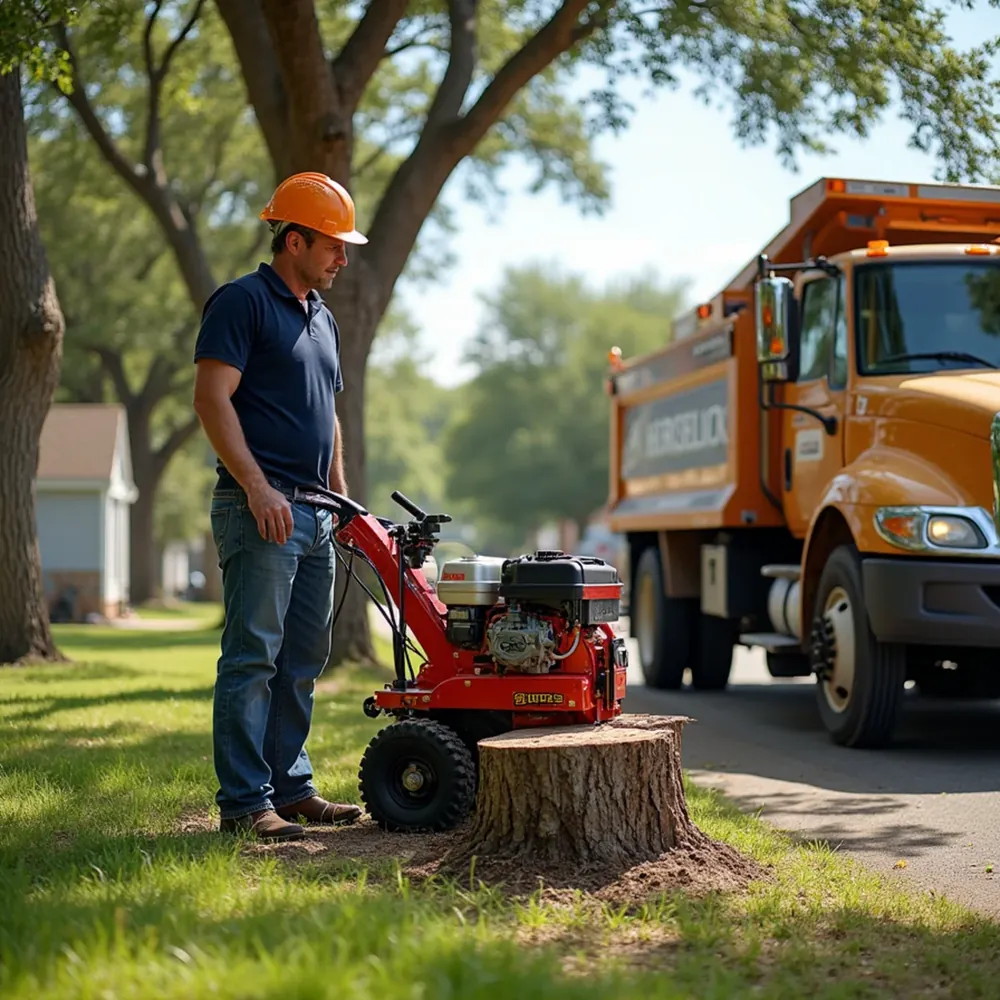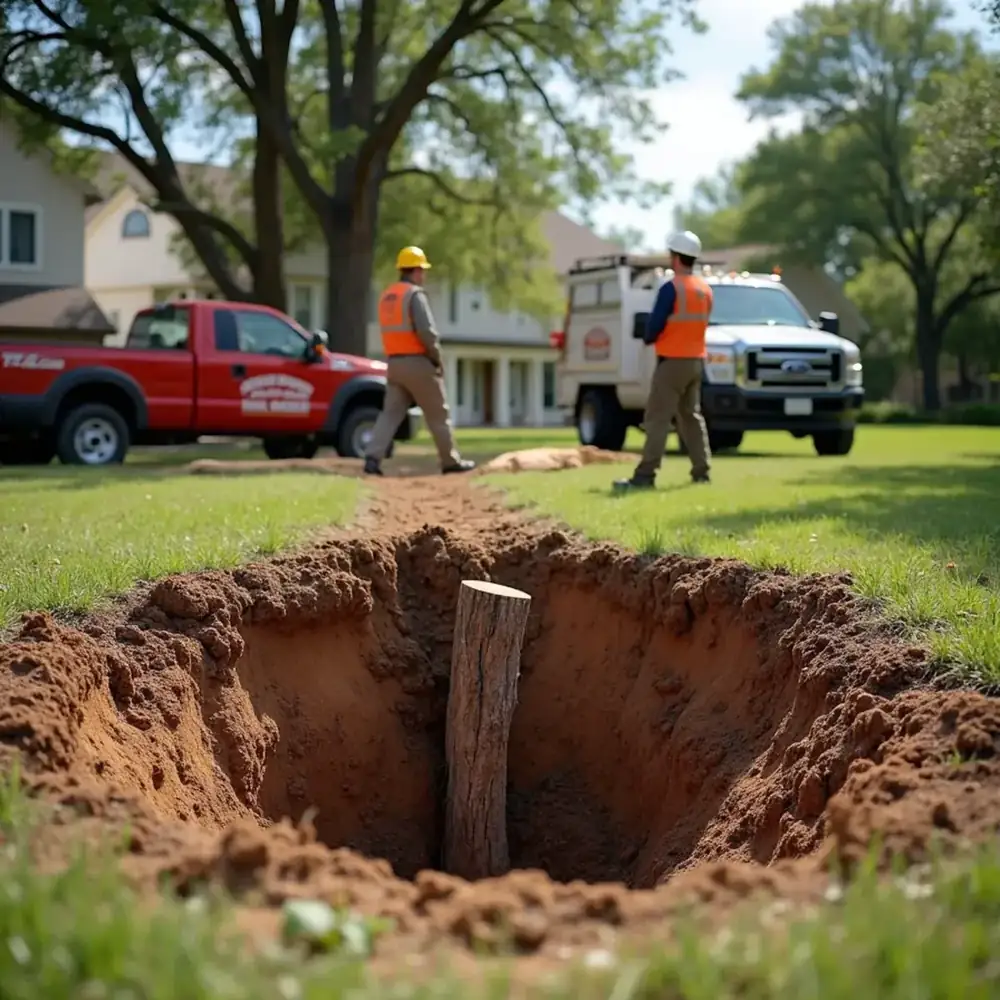
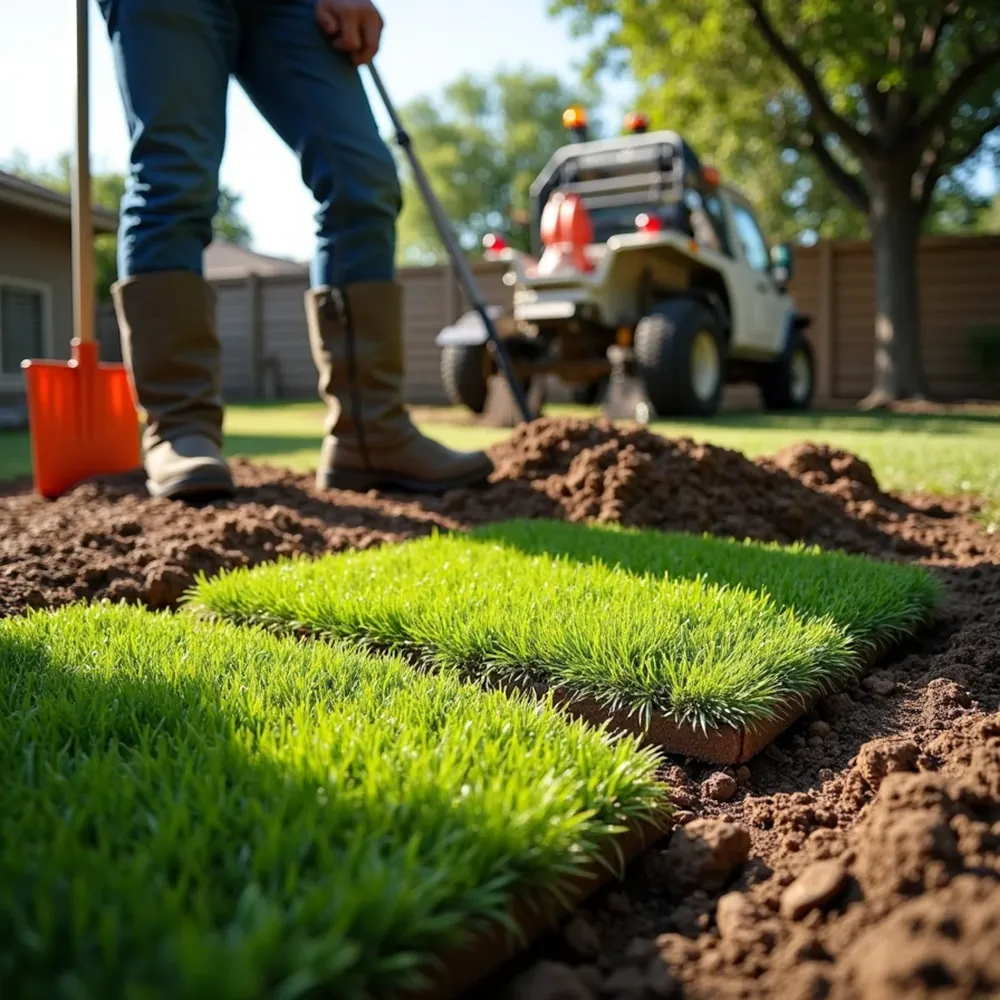
When the grinder rolls away, the stump is gone, but the job in your yard isn't quite finished. You're left with a pile of wood chips and soil, a shallow hole full of shredded root, and a spot that won't look like lawn for a while.
What you do next depends on what you want there — grass, a flower bed, a path, or a new tree. Here's how to handle each one in San Antonio's soils and heat.
Key Takeaways
- Use grindings as mulch for beds, but replace them with topsoil where you want grass or a new tree.
- Fill the hole slightly above grade and expect it to settle; top it up before laying sod.
- Lay warm-season grass like St. Augustine or Bermuda in late spring and summer.
- Plant a replacement tree a few feet away from the old stump, in undisturbed soil, in the cool season.
Decide What to Do With the Grindings
Grindings are a mix of wood chips, sawdust, and soil. They make decent mulch for beds and around shrubs, but they're a poor base for grass or a new tree, because fresh wood ties up nitrogen as it breaks down and the patch stays soft for months.
If you're planting grass or a tree in the same spot, remove most of the grindings and replace them with topsoil. If you're turning the spot into a mulched bed or a path, you can rake the grindings back into the hole and level them. Keep piles of grindings away from your foundation — decaying wood near the slab can attract termites.
Fill and Level the Hole
After clearing the grindings, fill the hole with a quality topsoil or a soil-and-compost blend, slightly mounded above grade. Water it in and tamp it lightly. The fill will settle over the next few weeks, especially after rain, so plan to top it up once or twice before laying sod.
On thin, rocky lots on the north and west sides of town, you may hit limestone just below the ground-out area. A few inches of good soil over the rock is enough for turfgrass; a tree needs a better spot.
Getting Grass Back
Most San Antonio lawns are warm-season grasses, so timing matters as much as soil:
- St. Augustine: Patch with sod or plugs from late spring through summer, when it's actively growing. Keep it moist until it roots in.
- Bermuda: Sod, plugs, or seed once soil is warm in late spring. Bermuda needs full sun, so it may struggle where the old tree's neighbors still shade the spot.
- Zoysia: Sod or plugs in late spring and summer. It establishes more slowly, so expect the patch to take longer to blend in.
- Fall or winter grinding: If the stump comes out in the cool season, fill and level the spot now and lay sod in spring.
Replanting a Tree in the Same Area
Planting right in the old stump hole is rarely ideal. The old roots are still decaying, the soil is loose, and the spot may settle. Shifting the new tree a few feet to the side, into undisturbed soil, usually gives better results. If it has to go in the same place, ask for a deeper grind that removes more of the root mass, then backfill with good soil.
Choose the replacement with its mature size in mind, plant in the cool season — roughly October through February — and water deeply through its first two summers. Our guide to the best trees to plant in San Antonio covers species that handle our heat and soils.
What Happens to the Roots Left Underground
Grinding removes the stump and the top several inches of root, but the larger roots below stay in the ground and decay over the next several years. As they break down, you may see a little settling in the lawn or mushrooms popping up after rain. Both are normal. Top-dress low spots with soil, and mow over the mushrooms.
Watch for Sprouts
Some species — hackberry, mesquite, cedar elm, and Chinese tallow among them — can send up sprouts from roots left behind. Cut or mow them as they appear, and if they keep coming, a deeper grind of the root crown usually ends it. Our guide on stopping stump sprouts explains the options.
Related Services & Areas
Frequently Asked
Can you plant grass right after stump grinding?
Why is the ground sinking where the stump was?
Why are mushrooms growing where my stump was ground?
The Bottom Line
Grinding removes the stump; a little follow-through turns the spot back into lawn, a bed, or a home for a new tree. Handle the grindings, give the fill time to settle, and plant at the right time of year.
Need Help With Your Trees?
Get a free, no-pressure written estimate from a local, fully insured crew. Same-day and 24/7 emergency service available across San Antonio, Bexar County & the Texas Hill Country.