Once a tree is down, the stump is the last thing standing between you and a clean yard. But 'stump grinding' and 'stump removal' aren't the same thing, and choosing the wrong one can mean overpaying — or being left with a hole big enough to swallow a wheelbarrow.
Here's how the two differ and which one your project actually calls for.
Key Takeaways
- Grinding chips the stump below grade — faster, cheaper, less disruptive; the roots decay naturally.
- Full removal pulls the whole root ball — needed for building or pools, but leaves a big hole.
- For lawns and replanting, grinding (deeper if replanting) is almost always the right call.
- Grinding is a separate line item from tree removal — confirm the depth on your quote.
What Stump Grinding Is
Stump grinding uses a machine with a rotating cutting wheel to chip the stump and major surface roots down below grade — typically 4 to 10 inches, or deeper if you're replanting. It leaves a pile of wood grindings that backfill the hole, and it's faster, cheaper, and far less disruptive than digging the whole thing out. The main root system stays in the ground and decays naturally over time.
What Full Stump Removal Is
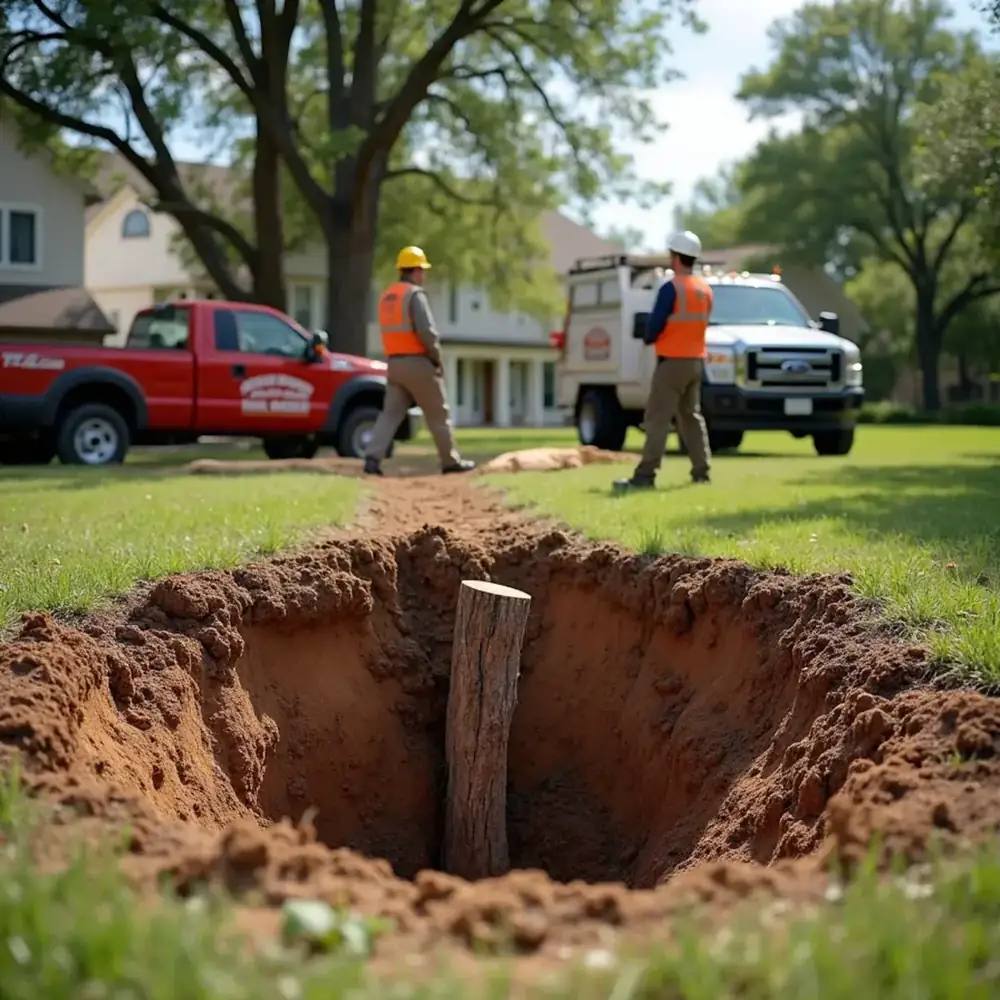
Full stump removal pulls the entire stump and its root ball out of the ground, usually with an excavator or by hand-digging for smaller stumps. It removes the roots completely but leaves a large hole that needs backfilling, and it's more expensive, more disruptive to the surrounding yard, and harder on tight-access lots.
Which Should You Choose?
For most homeowners, grinding is the right answer. Choose full removal only when you specifically need the roots gone:
- Grind it if: You want a clean lawn, plan to mulch or plant grass over it, or just want the eyesore and trip hazard gone.
- Remove it if: You're building, pouring a slab or pool, or installing something that can't have roots in the way.
- Grinding + deeper cut if: You want to plant a new tree in nearly the same spot and need more root mass cleared and soil added.
What About the Grindings and the Hole?
After grinding, we can backfill the hole with the grindings and rake it smooth — they settle over a few weeks — or haul the excess and top with soil if you're planting. One thing to know: wood grindings are low in nitrogen as they break down, so if you're seeding grass over a ground stump, adding topsoil and a little fertilizer helps the lawn establish. In new-build areas like Alamo Ranch where homeowners are actively landscaping young yards, planning for that from the start saves a do-over.
One Job or Two?
Remember that stump work is separate from tree removal — even when the same crew does both. On your estimate, look for grinding listed as its own line with the depth spelled out, so you know exactly what you're getting. If you've got an old stump left behind by someone else, we're happy to grind it out on its own, too.
Related Services & Areas
Frequently Asked
Is stump grinding included in a typical tree removal estimate?
How much does tree service cost in San Antonio?
Why do tree removal prices vary so much in San Antonio?
The Bottom Line
Grinding suits nearly every homeowner; full removal is for construction. Match the method to your end goal — lawn, planting, or building — and you'll only pay for what the job actually needs.
Need Help With Your Trees?
Get a free, no-pressure written estimate from a local, fully insured crew. Same-day and 24/7 emergency service available across San Antonio, Bexar County & the Texas Hill Country.