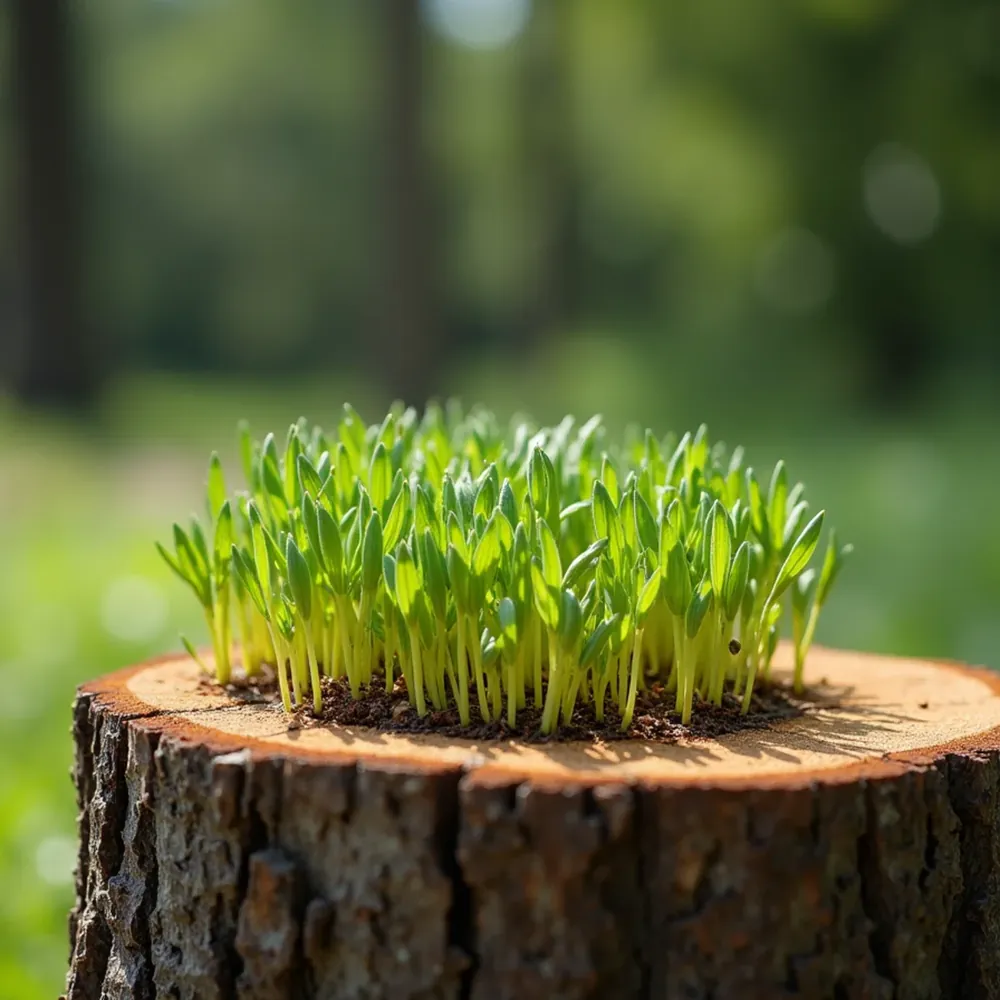
You had the tree cut down, maybe even had the stump ground, and a few weeks later a ring of green shoots pops up around it. Some species don't take being cut down as the end. Their roots are still alive and full of stored energy, and they respond by pushing out new sprouts from the stump, the root crown, or roots several feet away.
Here's why it happens, which San Antonio trees are the worst offenders, and the methods that actually stop it.
Key Takeaways
- Stumps sprout because the roots are alive and full of stored energy, not because the tree is coming back.
- Mesquite, hackberry, cedar elm, Chinese tallow, huisache, and live oak are common resprouters; cedar is the exception.
- Deeper grinding of the root crown, repeated cutting of sprouts, or label-directed stump treatment all work.
- Be careful with herbicides near live oaks — shared root grafts can carry products to trees you want to keep.
Why Stumps Sprout
A tree's root system stores starch to fuel spring growth and recovery from damage. When the top is removed, many species activate dormant buds on the stump or roots and try to regrow a canopy. Those shoots — sprouts or suckers — are the root system's attempt to keep feeding itself.
Sprouts mean the roots are alive, not that the tree is coming back the way it was. Left alone, though, some species will form a thicket of new stems within a season or two.
Trees That Sprout Most in San Antonio
Some species resprout aggressively; others rarely or never do:
- Mesquite: One of the most persistent; it regrows from a bud zone below ground level, so cutting at the surface often isn't enough.
- Hackberry and cedar elm: Commonly push sprouts from the stump and nearby roots.
- Chinese tallow and chinaberry: Invasive species that sucker heavily from their roots.
- Huisache and retama: Brushy natives that come back quickly after cutting.
- Live oak: Often sends up root sprouts — the same habit that forms live-oak mottes in the first place.
- Ashe juniper (cedar): The notable exception: cedar cut below its lowest green branch doesn't resprout.
Option 1: Grind Deeper and Wider
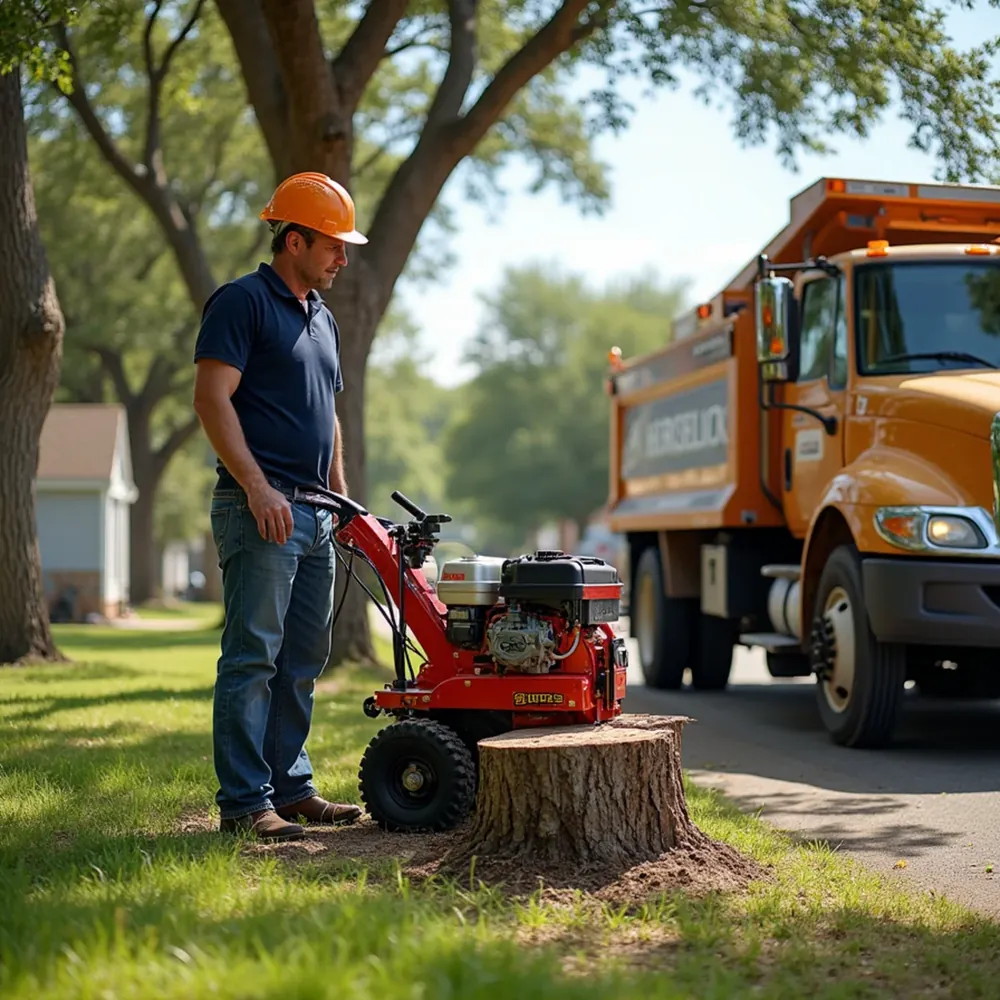
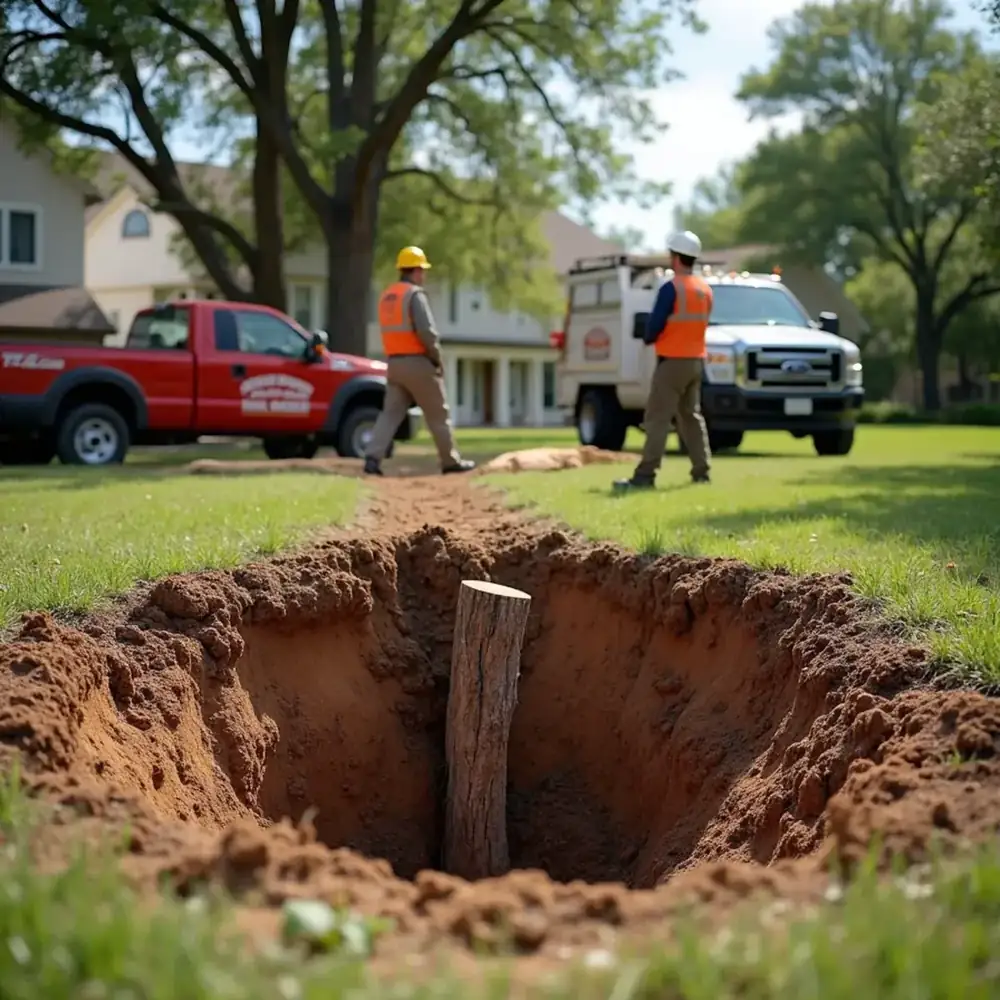
Standard stump grinding goes 4 to 10 inches below grade, which is enough for grass. For sprouting species we grind deeper and chase the root crown and major surface roots, removing more of the tissue that holds dormant buds. For mesquite, grinding below the bud zone is often what finally stops the regrowth.
Deeper grinding doesn't kill every root in the yard, so a few sprouts can still appear farther out. Those are usually weaker and easy to manage.
Option 2: Keep Cutting the Sprouts
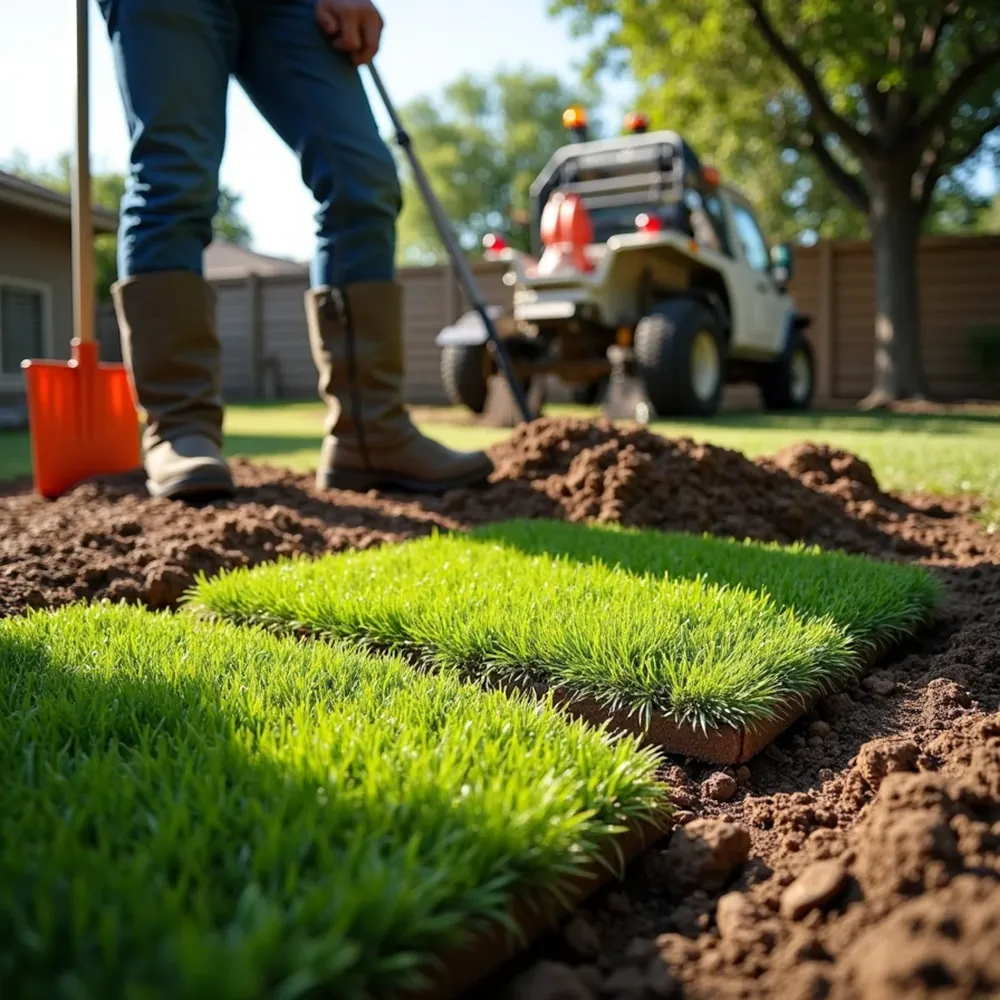
Every time a sprout is cut, the roots spend stored energy to grow another. Cutting new shoots back to the ground whenever they appear — or simply mowing over them — slowly exhausts the root system. It takes persistence over a season or more, but it uses no chemicals and works well for scattered suckers in a lawn.
Option 3: Label-Directed Stump Treatment
Herbicides labeled for cut-stump treatment can stop resprouting when they're applied to the freshly cut surface as the label directs, usually right after the cut. Always read and follow the product label — that's the legal requirement for any pesticide use.
There's an important local caution: live oaks can share root systems with neighboring oaks through natural root grafts. A product applied to one oak stump can move into connected trees and damage them. Near live-oak mottes or any trees you want to keep, talk with an arborist before treating a stump.
Don't Confuse Stump Sprouts With a Stressed Tree
Sprouts on a tree that's still standing are a different story. Shoots along the trunk or at the base of a living tree — water sprouts or epicormic shoots — can be a stress signal after drought, root damage, or heavy pruning. If a standing tree is suddenly covered in them, have it checked for decline instead of just cutting the shoots off.
Related Services & Areas
Frequently Asked
Will a tree grow back after the stump is ground?
How do I stop a stump from sprouting?
Which trees sprout from the stump in San Antonio?
The Bottom Line
Stump sprouts are the root system's last push. Grind out the root crown, wear the roots down by cutting, or use a properly labeled treatment where it's safe — and with oaks nearby, get advice before using anything that can travel through shared roots.
Need Help With Your Trees?
Get a free, no-pressure written estimate from a local, fully insured crew. Same-day and 24/7 emergency service available across San Antonio, Bexar County & the Texas Hill Country.