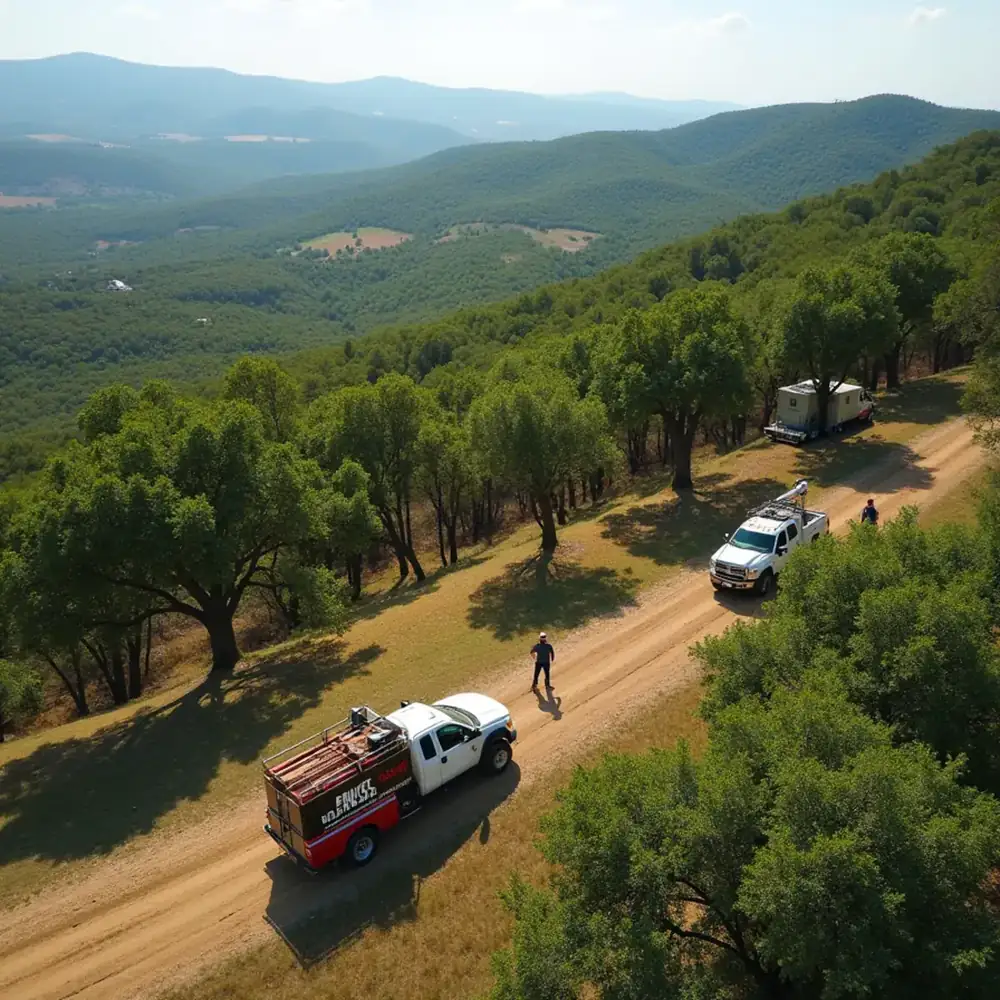
Drive west from San Antonio into the Hill Country and you'll pass through some of the most oak-wilt-ravaged land in Texas. The area roughly bounded by Bandera, Kerrville, and Comfort — dense with interconnected live oaks — has become a proving ground for how to slow, contain, and live with the disease.
Understanding this fight helps every oak owner in Central Texas, because the same principles protect a single backyard tree.
Key Takeaways
- The Hill Country's dense, root-grafted live oaks make it prime oak-wilt territory.
- Red oaks fuel overland spread by forming spore mats; live oaks spread it through connected roots.
- Containment combines trenching, injection, red-oak removal, and strict wound discipline.
- Early detection saves far more trees than late-stage heroics.
Why the Hill Country Got Hit So Hard
Oak wilt thrives where oaks are abundant and interconnected — and the Hill Country is wall-to-wall live oak. These trees don't just grow near each other; they graft their roots together underground, forming vast connected networks. When the fungus enters one tree, it can travel root-to-root across an entire hillside. Add the region's red oaks, which produce the spore mats that fuel overland spread, and you have the perfect storm.
How It Spreads Through a Community
In towns like Bandera — the Cowboy Capital, and squarely in the worst of the zone — oak wilt often moves in a visible, expanding circle. A center starts, then radiates outward through root grafts, killing rings of live oaks over successive years. Meanwhile, careless pruning during the spring risk window or unpainted wounds open new, separate infection points elsewhere. It's this double threat — underground spread plus new overland introductions — that makes the disease so relentless.
The Tools That Actually Work
Communities and property owners fight back with a combination of proven methods:
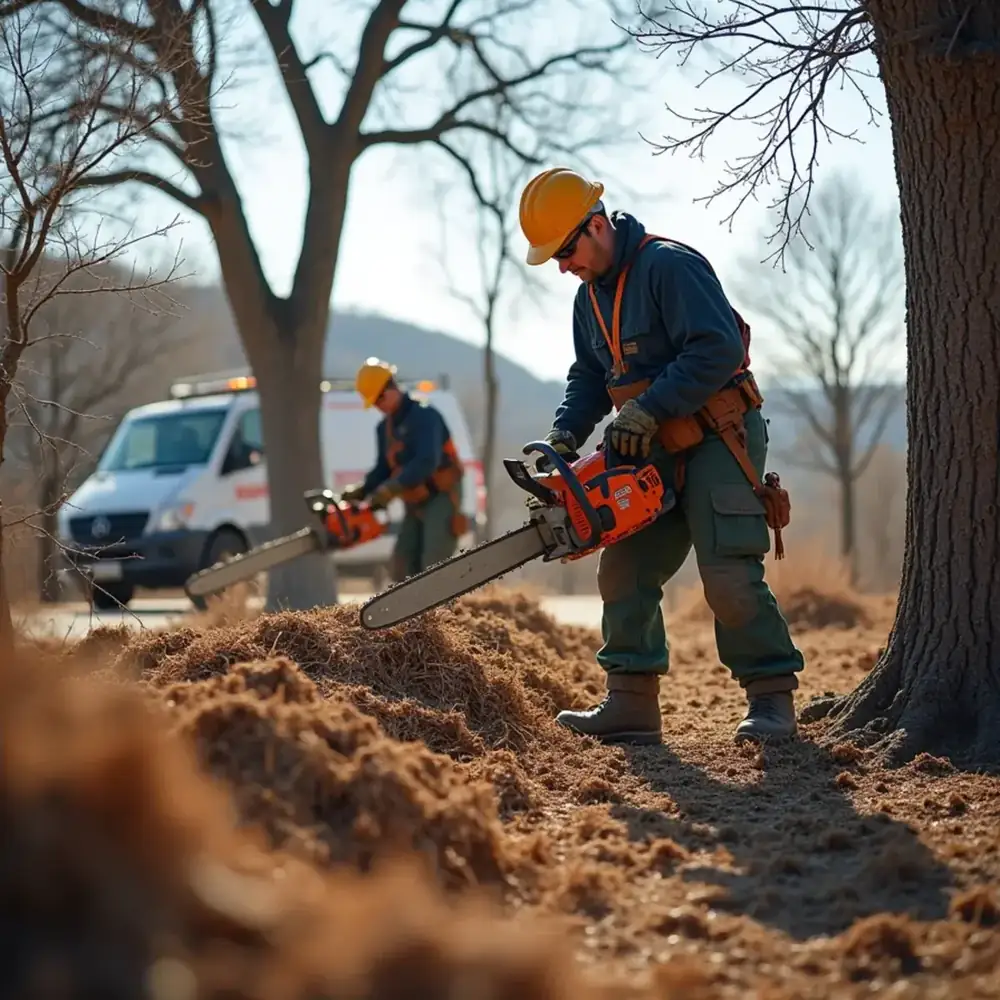
- Trenching: Cutting deep trenches to sever root grafts and stop the underground advance of a center.
- Injection: Protecting high-value, uninfected live oaks with propiconazole (by a licensed applicator).
- Red oak management: Promptly removing and properly handling infected red oaks that form spore mats.
- Wound discipline: No unnecessary oak pruning Feb 1–July 1; paint every wound immediately, year-round.
Lessons for Every Oak Owner
You don't have to live in Kerrville to apply what the Hill Country has learned. Whether you have one heritage oak or a whole stand, the playbook is the same: prevent new infections with wound timing and painting, watch for the early signs (sudden thinning, veinal browning on live oaks, quick death of red oaks), and act fast when you see them. Early detection and containment save far more trees than late-stage heroics.
Fighting for Every Oak
The Hill Country's oaks are worth fighting for — they define the landscape, shade the ranches, and take a century to replace. In and around Bandera, Kerrville, and Comfort, we work oak wilt on a scheduled basis, combining trenching, injection, and prevention to hold the line tree by tree. If you're in oak-wilt country, the best time to build a plan is before the disease reaches your fence line.
Related Services & Areas
Frequently Asked
What is oak wilt and how does it affect Central Texas live oaks?
Can I prune a live oak between February 1 and July 1?
Does San Antonio require a Tree Maintenance License for tree contractors?
The Bottom Line
The oaks around Bandera, Kerrville, and Comfort are worth fighting for — and the playbook works anywhere in Central Texas: prevent, detect early, contain, and protect what's left.
Need Help With Your Trees?
Get a free, no-pressure written estimate from a local, fully insured crew. Same-day and 24/7 emergency service available across San Antonio, Bexar County & the Texas Hill Country.