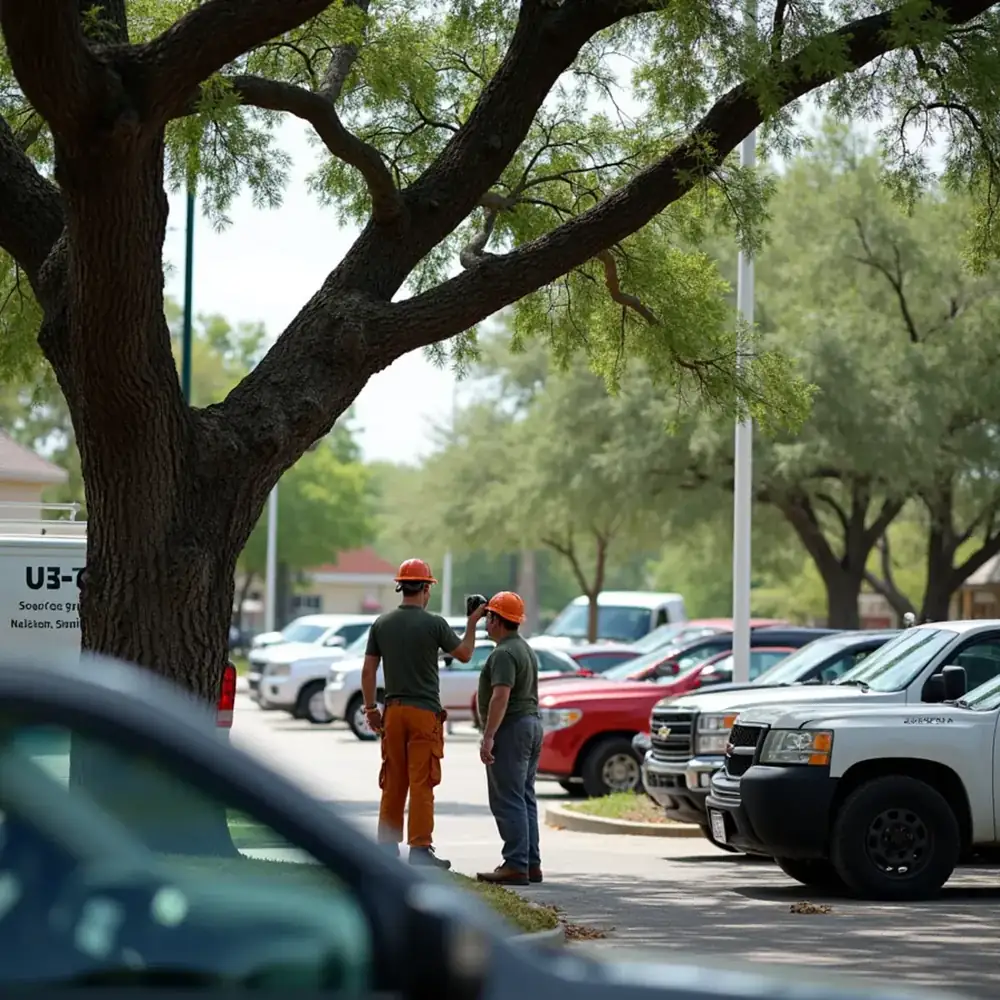
For commercial property owners and managers in Texas, trees carry a responsibility most people don't think about until something fails. If a tree on your property drops a limb on a customer, a car, or a neighboring building, the question becomes: should you have known it was dangerous? Understanding your duty of care — and documenting that you meet it — is essential risk management.
This is general information, not legal advice; consult an attorney for your specific situation.
Key Takeaways
- Owners have a duty to address hazards that are known or reasonably knowable — trees included.
- 'We didn't know' is weak when a defect was visible to a professional inspection.
- Higher-traffic areas (lots, walkways, entrances) carry a higher standard of care.
- Regular inspections plus records are your best defense in a claim.
What 'Duty of Care' Means for Trees
Generally, a property owner has a duty to take reasonable steps to address known or reasonably knowable hazards on their property — and that includes trees. The key phrase is 'reasonably knowable.' A hidden defect no one could have spotted is different from an obviously dead tree leaning over a parking lot that was ignored for months. Courts and insurers look at whether the owner acted reasonably given what they knew or should have known.
Why 'We Didn't Know' Is a Weak Defense
The trouble with claiming ignorance is that many tree hazards are visible to a professional: dead limbs, obvious lean, trunk cracks, fungal conks, and dead trees are all detectable in a routine assessment. If a hazard was there to be found and the owner never bothered to look, 'we didn't know' can actually work against them — it suggests a failure to exercise reasonable care. Regular professional inspection flips this: it shows you were actively managing risk.
Higher Traffic, Higher Duty
The standard of care scales with the situation. A tree deep in a wooded corner of a property is lower-risk than one over a busy walkway, parking lot, or retail entrance. Commercial and retail properties — like the busy corridors in Live Oak — draw the public, which raises both the likelihood of harm and the expectation that hazards are managed. High-traffic areas deserve the closest attention.
Don't Forget the Permit Side
Liability isn't only about failures — it's also about compliance. Removing a large protected or heritage tree without the proper San Antonio permit can bring fines and mitigation costs. The dead/diseased/dangerous exemption exists, but it generally requires documentation. So the same professional assessment that manages hazard risk also keeps your removals compliant, documenting condition when a protected tree genuinely needs to come down.
How to Protect Your Property
Risk management here is straightforward and affordable relative to a claim:
- Schedule regular inspections: Periodic professional assessments catch hazards before they fail.
- Act on findings: Address identified hazards promptly — and document that you did.
- Keep records: A paper trail of inspections and work is your best defense in a claim.
- Use licensed, insured pros: Verify the city Tree Maintenance License and insurance for anyone working on site.
Related Services & Areas
Frequently Asked
What standards should a professional tree crew follow?
Does San Antonio require a Tree Maintenance License for tree contractors?
Do I need a permit to remove a tree in San Antonio?
How do I know whether a damaged tree needs removal?
The Bottom Line
On commercial property, trees are a managed risk. Inspect on a schedule, act on what's found, keep the records, and use licensed pros — that's how you protect both the public and the business.
Need Help With Your Trees?
Get a free, no-pressure written estimate from a local, fully insured crew. Same-day and 24/7 emergency service available across San Antonio, Bexar County & the Texas Hill Country.